THE NO BULLSHIT YOGA TEACHER BOOSTER

You're certified.

Now become the teacher you want to be.  

If you're missing skills in anatomy, sequencing, yoga philosophy, breathwork and more, this is where we fill them so you can step fully into your power as a yoga teacher. 🙌

100

continuing education hours

25

teaching skill modules

lifetime access

Your 200-hour was probably great.

And you STILL might not feel confident teaching to a room full of eager students.


I'm not here to knock your teacher training. If it was anything like the trainings my students tell me about, it was probably incredible.

You probably cried at least once, made friends you still text, and walked out of that room feeling like a genuinely different person.

And, you can also still feel shaky about teaching half of what was covered.

Both can be true at the same time.

There's a real difference between being introduced to something and being able to teach it, live, in front of people who are all looking at you and waiting.


You were introduced to a lot in those 200 hours - there's SO MUCH to cover! But introduced is not the same as trained.

And if it's been a few years since your training? Knowledge doesn't wait around for you to dig around in your brain and find it again.

The stuff you don't use every week either fades significantly, or is lost entirely.

You know you learned the Koshas and the Kleshas.... but you're not sure that you could currently explain them to a room without opening a manual...

And look...in and of itself that isn't an issue. Google is free.

But the truth stings a little more than that:

These gaps aren't just sitting in your head being mildly annoying. 
They're making decisions about your classes.

Every time you think, "I'm not confident in this, so I'll leave it out..."

You're doing what a completely rational and responsible teacher would do. 

You're not going to wing an assist you weren't taught. Good!

But it adds up. What you leave out becomes the shape of what you teach.

And your students never find out what they missed, because they only ever see the version of you that stays inside the lines.

Here's what that actually looks like:

→ SEQUENCING

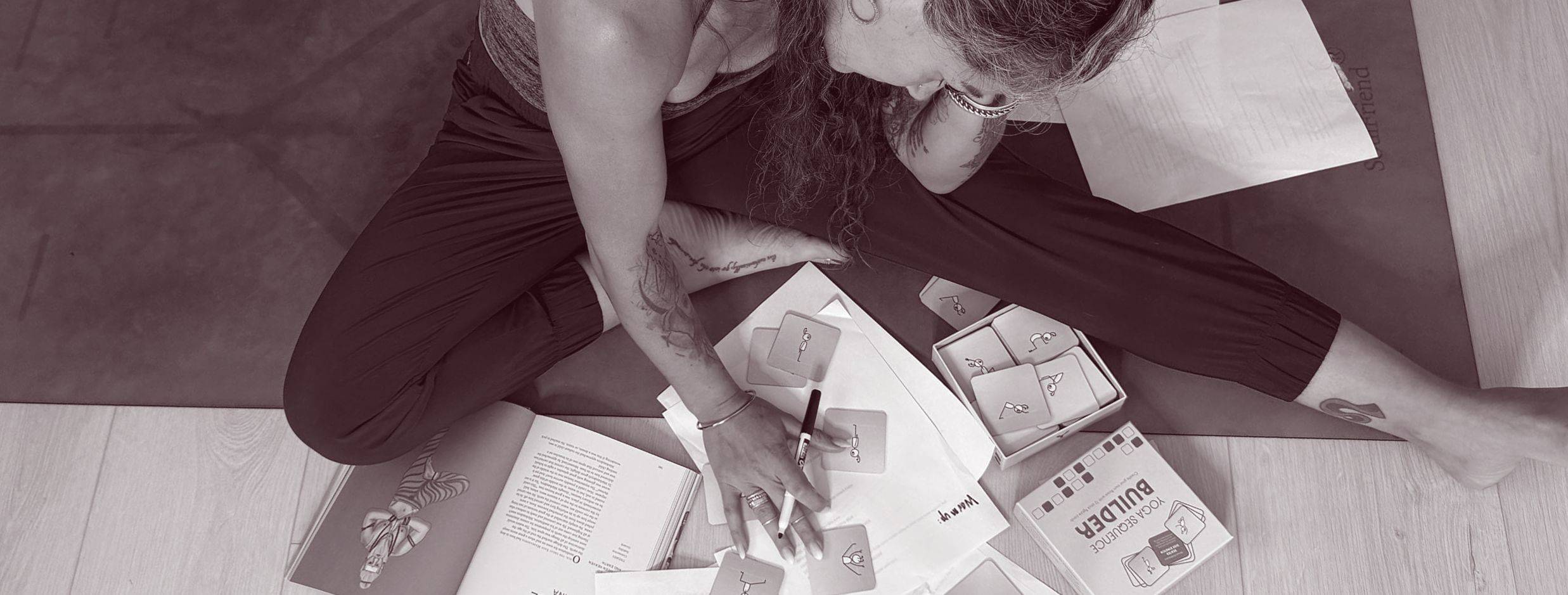
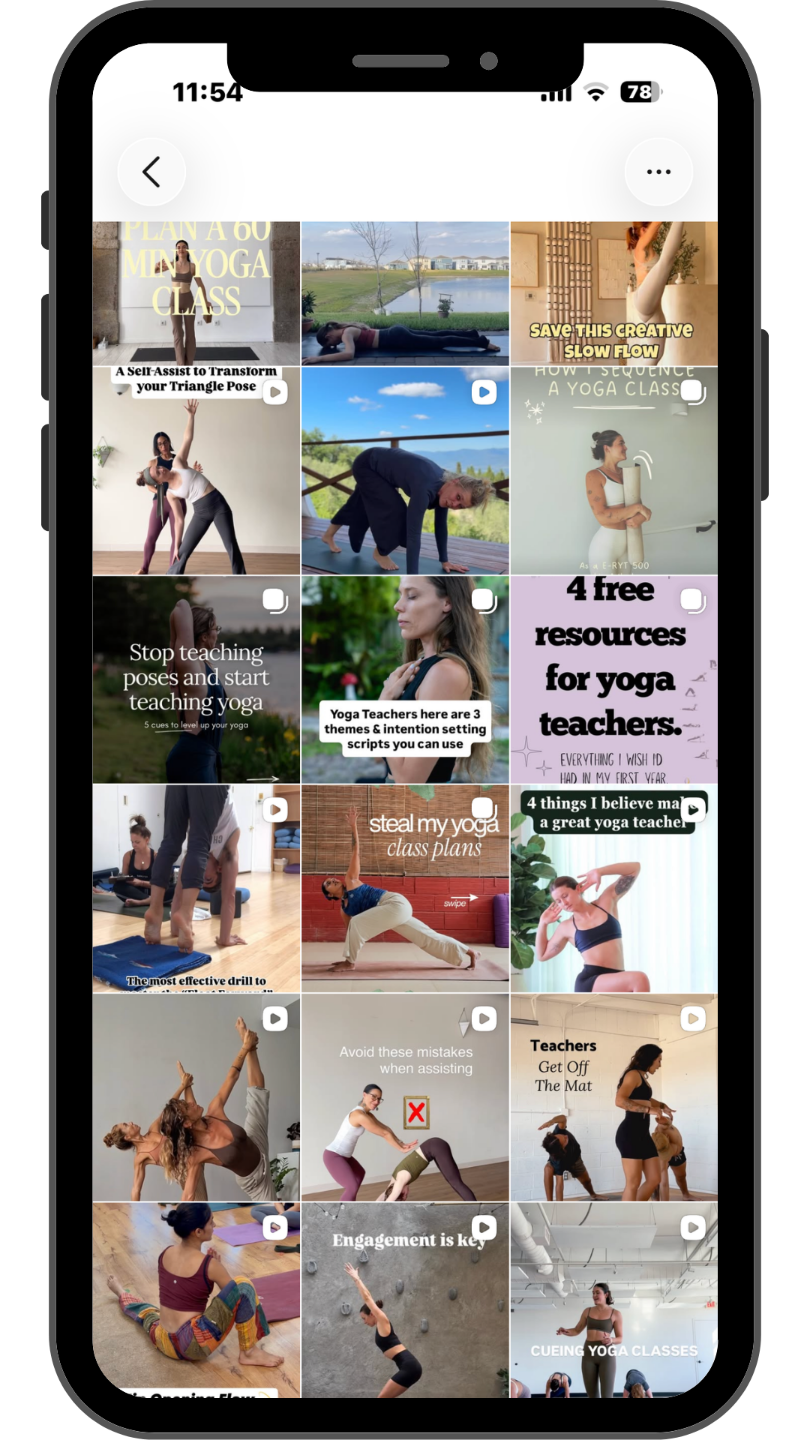
You're shaky on sequencing, so you spend way too much time searching for sequence ideas, asking ChatGPT and saving "inspiration" from IG reels that you never actually flesh out into a full class.

→ CUEING

You're not always sure what to say, so you over-cue and talk the whole time, or freeze up and go quiet, and the room can feel it.

→ ANATOMY

You can name the muscles, but you can't connect the anatomy to the actual body in front of you, so you avoid the poses you're not sure how to break down and you hope no one says anything.

→ MODIFICATIONS

Someone shows up pregnant, or with a bad knee, or in a bigger body, and you panic instead of confidently offering them a way in.

→ PHILOSOPHY

You're not solid on philosophy, so your classes stay on the surface, and the deeper stuff that makes yoga yoga rarely makes it into the room.

→ PRANAYAMA

You're not comfortable guiding most pranayama, so you skip it, and your students miss one of the most powerful tools they have to regulate themselves when they leave your class.

→ HANDS ON ASSISTS

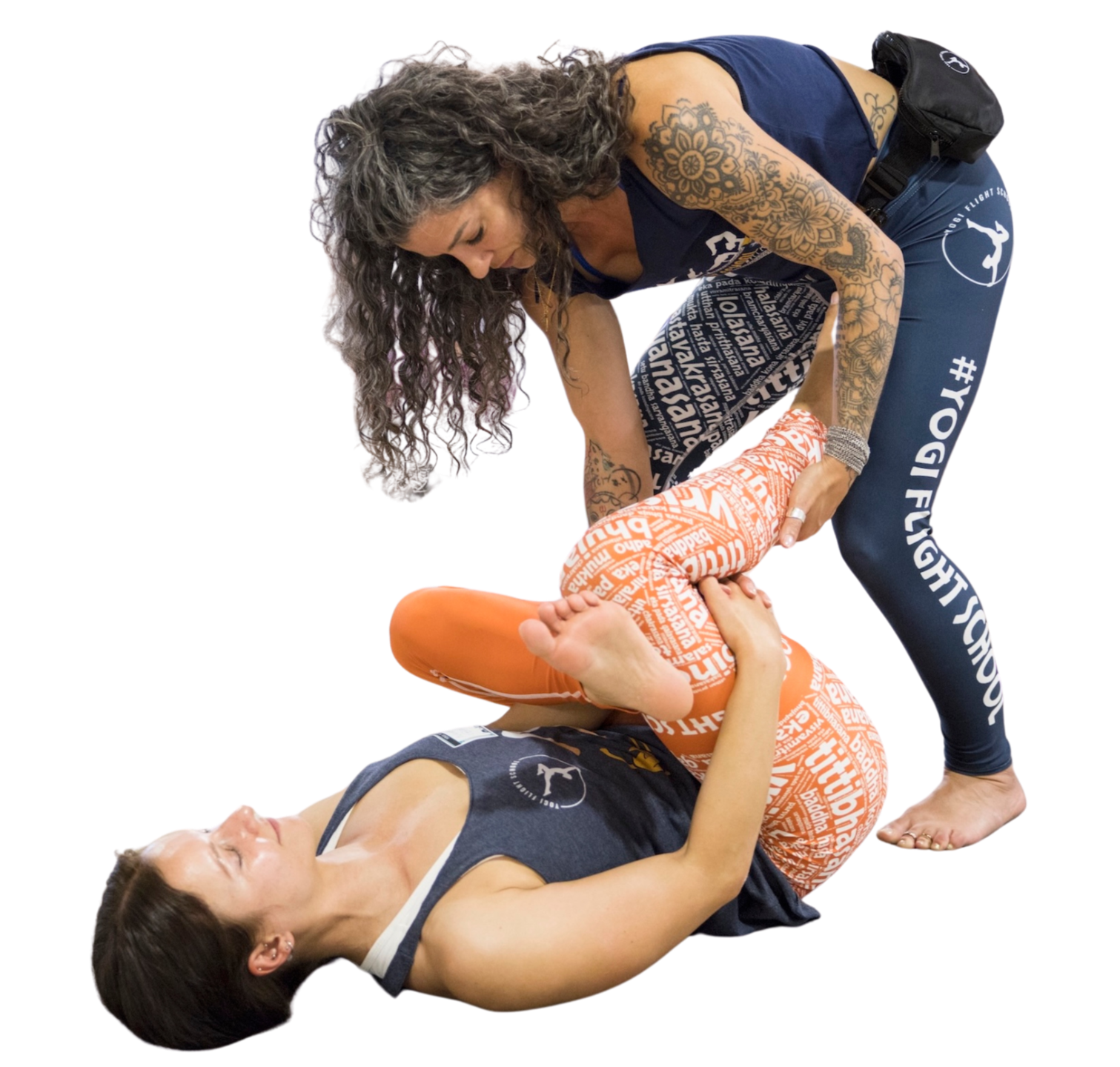
You'd never lay hands on a student, because the conversation is SO loaded around this right now... and assists were barely covered so you leave one of your best teaching tools on the table.

→ YOUR VOICE

You find yourself trying to sound like your favorite, most influential teachers... but it just feels off. You want to find "your voice" but you're not sure how.


If you walk into to class with the feeling of "I'm not really confident in this so I'll leave it out," I get it. I've been there too.

The ability to walk in and facilitate a multi-layered practice is something that not every training focuses on. 

So you've been teaching around the holes in your knowledge ever since, hoping nobody asks too specific a question.... wondering if you need a 300 hour training before you're allowed to feel like you know what you're doing. 

You don't. But you DO need to become confident on the parts that you feel shaky on. 

We don't acknowledge this enough in the yoga world, but...

200 hours is barely enough time to scratch the surface.

If some of the above hit you in the feels, I want to hear me loud and clear. This is not a YOU problem. It's a problem with the industry.

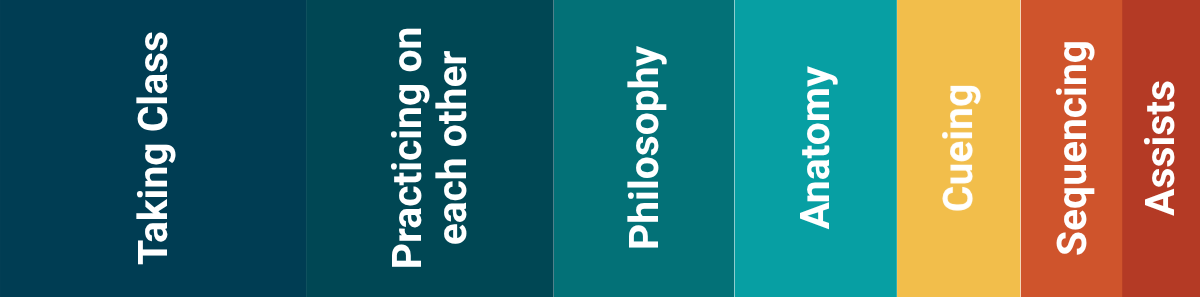
Two hundred hours sounds like a lot until you start breaking it down.

A chunk goes to taking class.
A chunk to practicing on each other.
A weekend gets handed to philosophy, another to anatomy, and just like that the time is gone.

So even a great 200-hour has to move fast.

The stuff that makes you a confident teacher: a repeatable sequencing framework, effective cueing, applied anatomy, hands-on assists - get a fraction of the time they need, or get covered once, beautifully, and then never practiced regularly enough to stick.

So you walked out certified.

But you didn't walk out fully equipped, and you've probably been coping in one of a few ways since.


Maybe you're teaching from a script you're terrified to deviate from, because the second you go off plan you don't trust yourself to think on your feet. 

Maybe you're not teaching at all. The certificate is sitting in a drawer because you don't feel ready, and every month that passes makes it feel harder to start.

Or maybe you're doing the thing a lot of good teachers do: shopping. Looking at 300-hours. Bookmarking things. Thinking that the next credential is the one that'll finally make you feel legitimate.


Let's be clear about one thing:

Your gap isn't a knowledge-hours gap. It's a set of skills you were introduced to, but never got to BUILD.


You can't fix that by being introduced to MORE things.

It's not like you haven't tried to fill these gaps.


❌ You bought the sequencing templates.
❌ You've saved four hundred reels you're (probably) not going to use.
❌ You've followed the big Instagram teachers and borrowed their flows, and it kinda feels like wearing someone else's clothes.
❌ You've queued up another YouTube class the night before, trying to reverse-engineer something you can call your own.

It's not like you haven't tried to fill these gaps.


❌ You bought the sequencing templates.
❌ You've saved four hundred reels you're (probably) not going to use.
❌ You follow the big Instagram teachers and borrowed their flows, and it kinda feels like wearing someone else's clothes.
❌ You've queued up another YouTube class the night before, trying to reverse-engineer something you can call your own.

None of it really sticks though, because it doesn't teach you how to build and lead a class yourself, from your own two feet, without copying anyone's anything. 

That's the difference between borrowing a class and being a teacher.

None of it really sticks though, because it doesn't teach you how to build and lead a class yourself, from your own two feet, without copying anyone's anything. That's the difference between borrowing a class and being a teacher.

I didn't set out to build this course.

I built it because I couldn't ignore what I kept seeing.

For years running Yogi Flight School, the same request has landed in my inbox over and over: "when are you running a 300-hour training?"

So in 2022, I did.

And within the first few sessions, I hit a problem that I genuinely did not see coming.

Many of the teachers in that room didn't need advanced training. They needed the training they were supposed to have already had.

These were good, committed, experienced teachers. Certified. Some of them years into teaching. And they were sitting there without the foundations their 200-hour was meant to give them. Not because they'd slacked off, but because their first training never actually got that far.

So we spent four months going backwards, filling in gaps that should have been filled years earlier. It held the entire training back.

And it wasn't just that group.

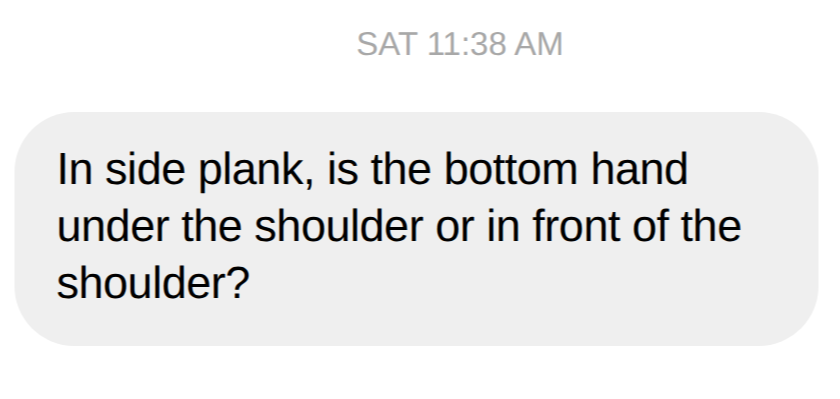
Every single week I get emails and DMs.

Real questions.

From certified teachers.

About things nobody should have to feel weird asking.

That's when it clicked for me.

Teachers don't need more certification.

They need experience, and they need training on the specific things that actually show up in the room.


Nobody should walk into a 300-hour, or into a class they're about to teach- going "shit... should I know this already?"

So I built the thing that fills the gaps instead.

THIS IS IT


My entire 200-hour teaching curriculum, rebuilt as a self-study course for teachers who are already certified.


The sequencing framework, cueing methodology, anatomy you can actually use on a live body, philosophy you can teach out loud, pranayama you can lead without Googling first, and step-by-step, pose-specific assists.

Everything your 200-hour training didn't have time for.


Now let me be straight with you about what this is.

This is not a weekend. It's not a mini-course. And it's not four videos with a PDF.

It's 25 modules. 90+ poses broken down. 100 hours of continuing education. It is, genuinely, all the training you need to become a confident, effective, and informed yoga teacher.

So here's how it actually works:

Everything unlocks the moment you enroll. No drip, no cohort, no start date, no Zoom calls at 6am your time. Nothing expires, ever.

Some people go start to finish, module by module, and treat it like the training they wish they'd had.

Some people go straight to sequencing because that's the thing making them crazy right now, and come back to the rest as it gets relevant: modifications at 9pm the night before a prenatal shows up, the subtle body module the week after a student asks about the chakras.

Both work. It's yours, so use it however it's useful.

What I'll tell you either way is that this isn't a quick training.

There's a lot in here, and it's meant to be that way, because shallow is exactly what left you with these gaps in the first place. You've already done the version where everything gets one fast pass. You're here because it didn't stick.

So take your time with it. And then keep it. This is the thing you reach for in six years when you're teaching something you haven't touched since your training.

The full scope

Everything you wish you had retained from your 200-hour, in the depth it always deserved.

This is Yogi Flight School's complete 200 hour curriculum, broken down piece by piece. Here's the scale of what's actually inside.

100
hours of CE credit
90+
pose breakdowns, each with modifications and props
30+
hands-on assists
11
pranayama techniques
6
meditation practices
25
modules: history, philosophy and everything in between.

History & Philosophy

Teach the philosophy instead of gesturing at it

The gap: "Philosophy got one crammed weekend. I am not sure how to weave philosophy into class without sounding fake or like I don't know what I'm talking about."

This is the depth many trainings simply don't have time for. We'll dig into the history of yoga all the way back from The Vedas to modern times. We examine the texts, the lineages that have developed in Modern yoga, and how to communicate philosophical concepts in words that land with your students.

  • What is Yoga?
  • Intro to Yoga History
  • The Pre-Vedic Era
  • The Vedic Era
  • The Pre-Classical Era
  • The Classical Era
  • The Post-Classical Era
  • Modern Yoga
  • The Darshanas and Samkhya
  • The Yoga Sutras and Patanjali
  • All four Padas: important sutras
  • Intro to Hinduism and Yoga
  • The 8 Limbs of Yoga
  • All five Yamas, taught individually
  • All five Niyamas, taught individually
  • Intro to reading, understanding & breaking down Sanskrit

THE SUBTLE BODY

Understand and communicate how energy works in yoga and why it's so much more than just stretching and breathing.

The gap: "I know about the Chakras and the Koshas but I'm not really sure how to build a class around them or how they link to everything else."

Incorporate subtle body concepts into your teaching such that your students FEEL the difference.

  • Intro to the subtle body
  • The Koshas
  • Prana, Nadis and Kundalini energy
  • The Chakra system
  • Chakra journey Integration Class

Cueing and voice

Know exactly what to say, and when to say nothing

The gap: "I don't know what to say, so I talk too much or freeze."

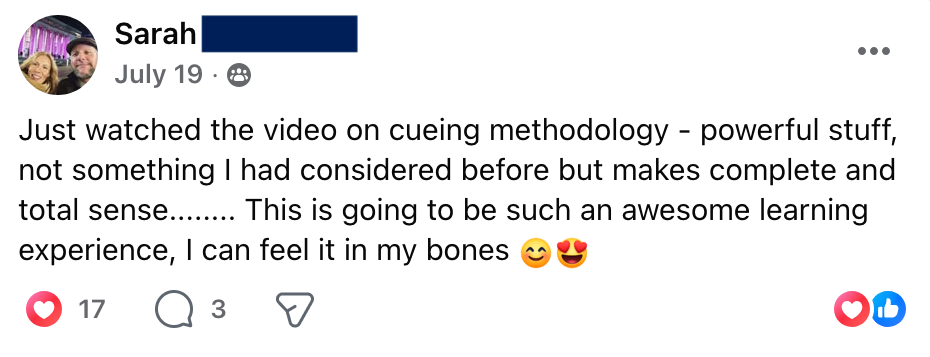
Cueing is an actual skill that has a methodology behind it: how do you communicate what someone needs to do clearly, in a way that helps them learn what they're doing (not just being a good student)? How do you cue to multiple levels in the room?

And how do you make a yoga class more than just physical instructions? Instead of handing you a personality, this training shows you how to build Dharma Talks and sequences around your own strengths, joys, and interests, so what comes through in your teaching is actually you.

  • How theme and sequence work together
  • Theming & Dharma Talks
  • Effective Use of language
  • Creativity and variety
  • Cueing anatomy
  • Cueing to the heart
  • The meaning and use of "Namaste"
  • Best practices for teaching, both in person and online

Sequencing

Build effective classes in a fraction of the time

The gap: "It takes me three hours to plan, and I start from zero every time."

Gain a full system for sequencing; not a folder of other people's flows. You'll learn to build class sequences towards a peak pose, including how to regress and progress a pose for different populations, how to recognize poses across pose families to make it easier to sequence, and how to build your classes so both beginners and more seasoned students can thrive.

  • What is Vinyasa?
  • Sequencing overview
  • Creating regression and progression
  • Grouping poses by actions
  • Recognizing shapes in different orientations
  • Teaching transitions
  • Building a sequence, with templates
  • Sequencing for beginners
  • Sequencing reference manual and template

Anatomy

Anatomy you can use on a live body, not just name on a test.

The gap: "I memorized the muscles but I can't apply any of it in the room."

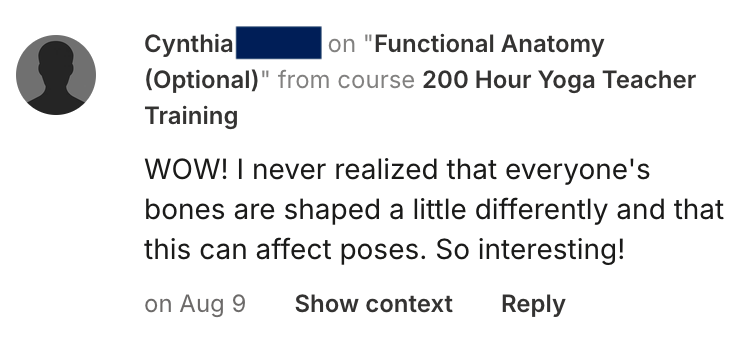
You'll review a region-by-region breakdown of the body, learn what muscles do what and what muscles restrict people from certain movements, and you'll experience functional anatomy applied directly to over 90 poses, so you understand what you're actually looking at when a student moves.

  • Anatomy overview and terms
  • Connective tissue
  • Bones, muscles and joints
  • The spine
  • The hips and pelvis
  • The knee
  • The lower leg and ankle
  • The shoulder
  • The arms and wrists
  • Functional anatomy

Modifications and props

Be ready for whoever walks in

The gap: "Someone shows up with an injury or a different body and I panic."

It's VERY normal to feel completely ill equipped to help someone who walks in to your class with a very different body, unless you were taught how. We include modifications and prop usage for over 90 poses, for the bodies that actually show up: more body to manage, limited range of motion, injuries, beginners. No guessing on your way to class.

  • How to work with props
  • Props as limb lengtheners
  • Props as angle changers
  • Props as action reinforcers
  • Props as progression tools
  • Props as support
  • Props Integration Class
  • Injury overview and scope of practice
  • Common injuries and conditions to manage
  • Yoga during pregnancy

The business of yoga

The part that matters if you want to make a living off of yoga

The gap: "Nobody told me how to get hired or make a living."

Getting certified is the first step, then what? We cover how to find work, how to price yourself, how to handle money and taxes as a yoga teacher, how to get insured, and how to build something for yourself online so you are not at the mercy of a studio, and so the skills you're gaining can actually turn into a career that pays you WELL.

  • Reframing how you think about charging for yoga
  • Finding teaching work
  • Money management
  • Insurance and certifications
  • Creating online opportunities
  • Self care and time management

Pranayama and meditation

Lead breath and meditation with confidence & authority

The gap: "Pranayama and meditation were barely touched. I don't feel qualified to lead them."

Pranayama and meditation are powerful tools, but we are often not given the knowledge we need to safely and intelligently guide students through these transformational practices. You'll learn 11 Pranayama techniques, 6 meditation techniques and the science behind both so you can guide breathwork and meditation on purpose instead of improvising and hoping (or skipping them altogether).

  • Intro to pranayama
  • The Primary Bandhas (Mula, Uddiyana, Jalandhara, Maha)
  • Pranayama contraindications
  • Sama Vritti, Ujjayi, Dirgha
  • Nadi Shodhana, Kapalabhati
  • Sitali, Bhramari
  • Viloma 1, 2 and 3
  • The Science of Breath
  • Where and how to weave pranayama into class
  • Pranayama Integration Class
  • Goals and benefits of meditation
  • Mindfulness and breath awareness
  • Yoga Nidra
  • Japa meditation and mantras
  • Loving Kindness (Metta)
  • Tratak candle gazing
  • Follow-along practices & teaching breakdowns

MANTRA & MUDRA

Deepen your class experience by combining asana with Mantra and/or Mudra.

The gap: "I know that Mantra is powerful and Mudra can add a lot to the embodiment of the practice, but I'm not sure how to incorporate them."

We can create powerful, impactful moments in class by layering in subtler practices that we rarely see in "standard" yoga classes.

  • What is Mantra
  • AUM (OM)
  • Lokah Samastah Sukhino Bhavantu
  • Asato Ma Mantra
  • Gayatri Mantra
  • Saha Navavatu
  • Common Mudras and How, Why and When to use them

Asana Fundamentals

Get solid on the stuff that makes an immediate difference even for beginner students.

The gap: "I know there are patterns and themes in yoga that make it easier for a beginner to understand, but how do I communicate those?"

Get really solid on the fundamentals of asana that appear across poses and yoga lineages, and what makes the asana practice....asana.

  • Fundamental concepts found in EVERY pose
  • Tadasana and directions of movement
  • Creating space in the joints
  • Hasta and Pada Bandha
  • Cueing methodology
  • Cueing Cat/Cow with specific cueing methodology

Detailed Pose Breakdowns

Get clear on how to cue and modify over 90 poses for all kinds of students.

The gap: "I'm not sure how to approach a pose for someone with a physical limitation, or different ways to cue xyz."

Crystal-clear cueing and pose breakdowns make the difference between students understanding what the pose is asking of them, or looking around the room confused thining they're "bad" at yoga. Each pose breakdown focuses on what is happenign in the pose anatomically, how to set it up from the ground up, how to modify for beginners or limited range of motion and how to progress them for more advanced students.

Sun Salutations

  • Urdhva Hastasana, Uttanasana, Ardha Uttanasana
  • Ardha Namaskar flow and cueing
  • Chaturanga, Bhujangasana
  • Urdhva Mukha & Adho Mukha Svanasana
  • Surya Namaskar A (plus alternate cueing)
  • What is a Vinyasa and how to modify it
  • Warrior 1 & Chair Poses
  • Surya Namaskar B Flow & Cueing
  • Sun Salutation C Flow & Cueing


Externally Rotated Poses

  • Anatomy of external rotation
  • Warrior 2
  • Reverse Warrior
  • Extended Side Angle
  • Extended Triangle
  • Extended Hand to Big Toe B
  • Tree Pose
  • Half Moon Pose
  • Malasana
  • Difference in feet: Vira 1, Vira 2, Crescent
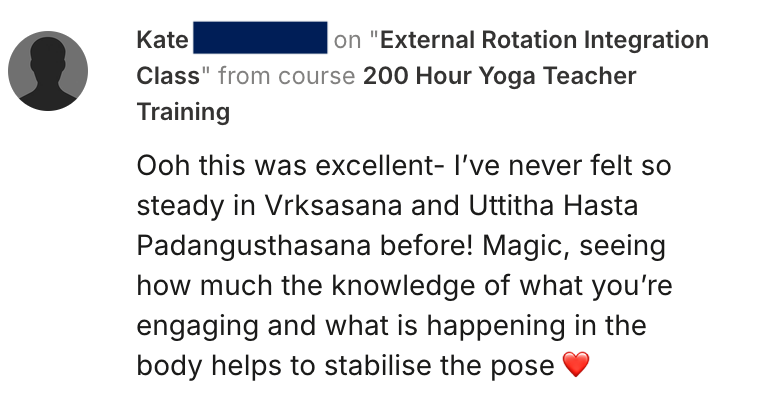
  • External Rotation Integration Class


Neutral Pelvis Poses

  • Anatomy of neutral pelvis
  • Anjaneyasana
  • Alanasana
  • Parsvottanasana
  • Prasarita Padottanasana
  • Warrior 3
  • Eagle Pose
  • Standing Splits
  • Extended Hand to Big Toe A
  • Dancer's Pose
  • Half Splits
  • Splits


Core and Upper Body Strength

  • Plank and Forearm Plank
  • Side Plank
  • Dolphin
  • Boat


Backbends

  • Anatomy of backbends
  • Bridge, Locust, Bow, Sphinx
  • Wild Thing, Upward Bow
  • Camel, Fish
  • King Pigeon 1 and 2


Hip Opening Poses

  • Pigeon, Firelog, Cow Face
  • Lotus, Bound Angle, Reclined Bound Angle
  • Frog, Lizard


Standing Twists

  • Revolved Triangle
  • Revolved Half Moon
  • Revolved Chair
  • Revolved Crescent / Side Angle


Forward Folds and Seated Poses

  • Paschimottanasana, Child's Pose
  • Upavistha Konasana, Marichyasana A
  • Halasana, Karnapidasana
  • Sukhasana and Siddhasana
  • Virasana and Supta Virasana
  • Janu Sirsasana, Ardha Matsyendrasana
  • Parivrtta Janu Sirsasana


Closing Poses

  • Shoulder Stand, Viparita Karani
  • Apanasana, Ananda Balasana
  • Pavanmuktasana, Jathara Parivartanasana
  • Savasana

Hands-on assists

Learn safe assists for 30 common poses so you can adjust with confidence

The gap: "Assists were rushed, and I'm really not sure how to make this feel safe and where to put my hands."

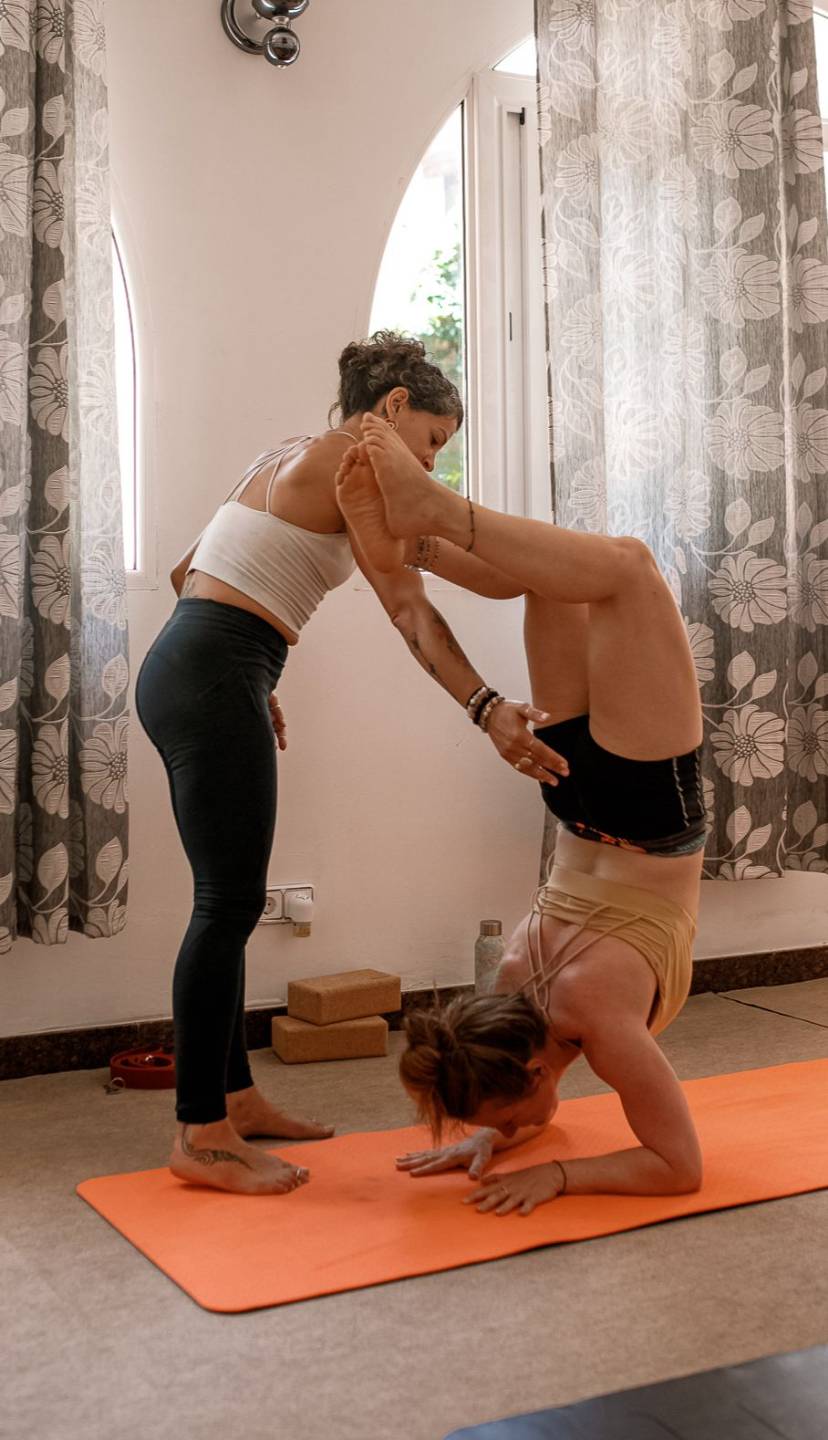
Hands-on assists are a dying art, and one of the most powerful tools we have as yoga teachers. Where our language sometimes falls short, a hands-on assist can make a huge difference - AND - they must be done properly, with consent. This is a foundation many trainings skip, but not here.

  • Tadasana
  • Urdhva Hastasana
  • Uttanasana & Ardha Uttanasana
  • Urdhva Mukha Svanasana
  • Adho Mukha Svanasana
  • Virabhadrasana 1
  • Virabhadrasana 2
  • Virabhadrasana 3
  • Alanasana
  • Utthita Parsvakonasana
  • Utthita Trikonasana
  • Prasarita Padottanasana C
  • Parsvottanasana
  • Ardha Chandrasana
  • Parivrtta Trikonasana
  • Parivrtta Ardha Chandrasana
  • Ardha Eka Pada Rajakapotasana
  • Dhanurasana
  • Urdhva Dhanurasana
  • Setu Bandhasana
  • Salamba Bhujangasana
  • Balasana
  • Jathara Parivartanasana
  • Ardha Matsyendrasana
  • Savasana
  • Sirsasana A
  • Sirsasana B
  • Pincha Mayurasana
  • Adho Mukha Vrksasana
  • Salamba Sarvangasana

And more foundations to fill any remaining gaps.

  • The difference between Yin and Restorative yoga
  • Introduction to the Science of Ayurveda
  • Important Mantras, how to chant them and how to bring mantra to your classes
  • Important Mudras, how to practice them and weave them in to your flows
  • Ethics, scope of practice and professionalism for yoga teachers (we are not doctors or therapists!)

This is not a 300-hour.

It's the depth your 200-hour didn't have time to give you. 

Turns out, no two 200-hour trainings cover the same things in the same depth. 

There's only so much you can fit into 200 hours, so every program makes choices about what to rush, skip or what to leave for later.

Which is why a lot of good teachers graduate having barely cued a pose out loud.
Or without ever designing a full class sequence from scratch.
Or without knowing what to do when someone walks into their power Vinyasa class 7 months pregnant.

This course is the "later" your 200-hour didn't have room for.

A 300-hour YTT is a bigger commitment.

→ a year of your life (usually)
→ several thousand dollars
→ earns you a different Yoga Alliance credential
→ advanced training, built on the assumption your foundations are solid

Go do one if you want the credential, or you're aiming at leading trainings yourself one day. It's a real thing and worth it if that's your goal.

The No Bullshit Yoga Teacher Booster.

self-paced, lifetime access
$497, one time
100 CE hours you have to log anyway
Fixes the foundations, now

Do this if you don't feel 100% solid on the stuff your 200 hour covered, before you add on more knowledge.

Honestly? A lot of people should do the Booster first regardless.

Why? Because an advanced training doesn't work on a foundation that has holes in it.

I'm not going to hand you my resume, so here's the short version of who's teaching you:


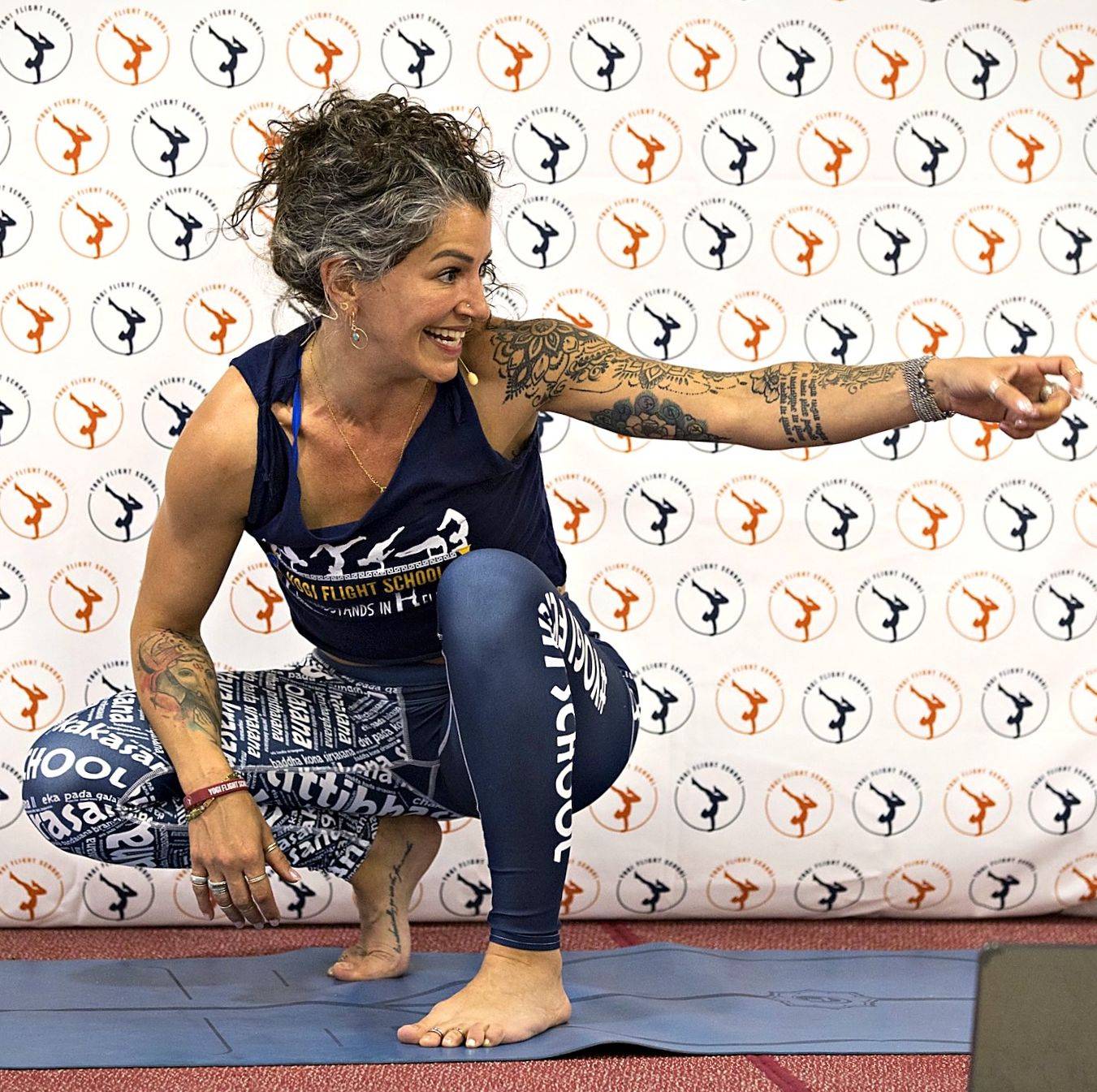
I'm Nathania Stambouli, an E-RYT 500, teaching since 2015 with over 10,000 hours in front of real classes and more than 1,000 hours of training under my belt.

This isn't theory for me.

👉 I've run seven 200-hour teacher trainings and a 300-hour, and personally certified over 150 yoga teachers.

I know exactly where 200-hour trainings leave people short, because I've spent years watching it happen and filling those gaps in person.

👉 I ran a brick-and-mortar studio from 2015 to 2020, so I've done this in the real world, not just online. And I was the one hiring so I know what a studio owner is actually looking for when a new teacher auditions, because I sat in that chair.

👉 Before any of that, I was a brand-new teacher hustling to get hired, cobbling together classes and hoping someone would give me a shot. The business side of this course is the path I actually walked - not random advice.

👉 For the last six years I've run Yogi Flight School online, and built it into one of the larger online yoga schools out there. I say that only so you know the systems in this course aren't scribbled on a napkin, but proven to work, and at scale.


Bottom line:

I've been the nervous new teacher, the studio owner doing the hiring, and the person training and certifying hundreds of teachers.

This course is everything I've learned from all three seats.

And you won't just be learning from me.

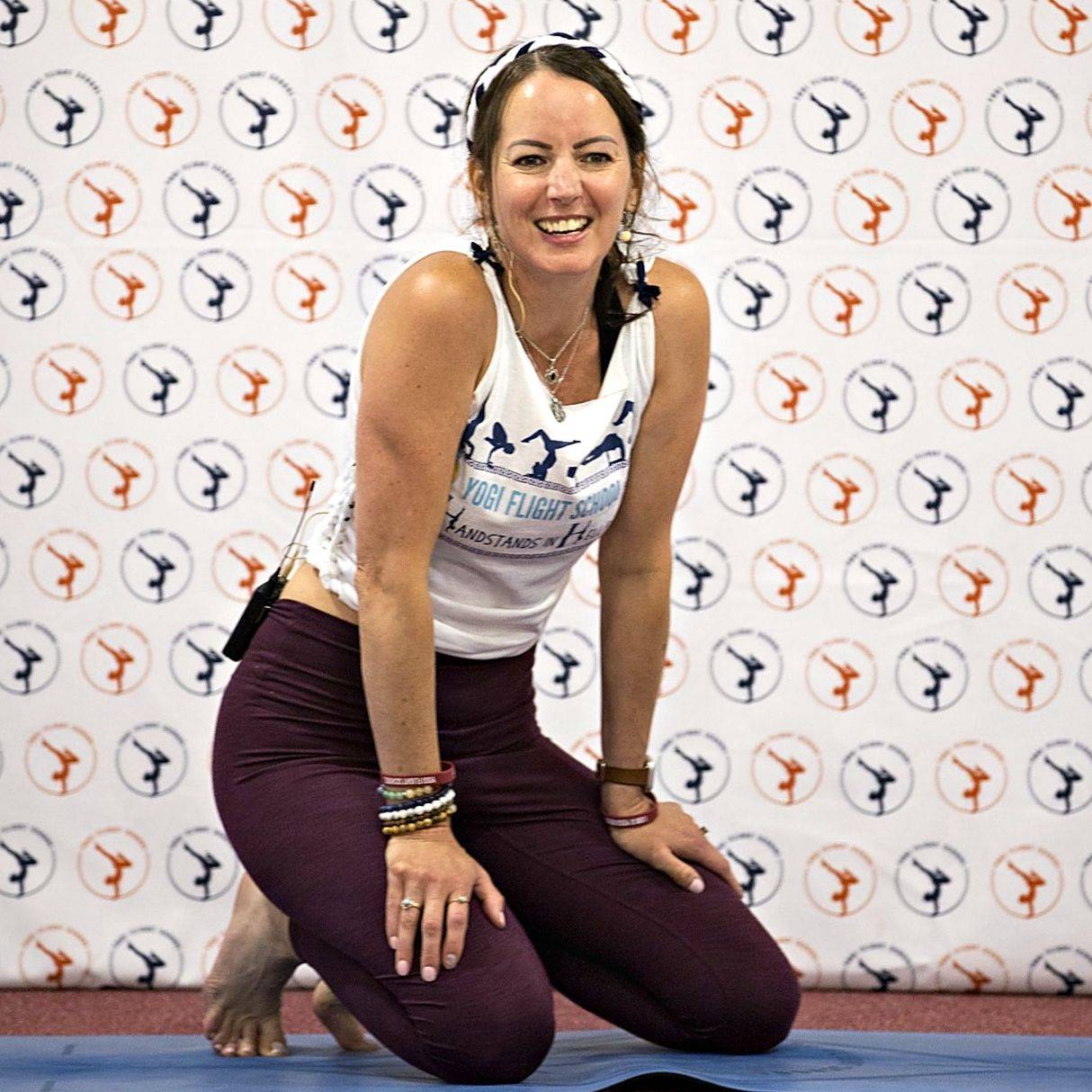
You'll also be learning from Abigail Aller, E-RYT 500 with years of experience in Sanskrit Studies and a deep knowledge of advanced yoga philosophy and Ayurveda.

Abigail has co-taught every single Yogi Flight School training alongside me since 2021, and she's right here in this course too.

Two sets of eyes, two teaching voices, and twice the depth on everything from anatomy to assists.

One last thing, so we're clear on what you're walking into.

Neither of us is here to turn you into a copy of us. We'll show you how we teach and why, hand you the knowledge behind every decision, and then help you make your own calls.

We don't want you to teach like Nathania or Abigail.

The goal is for you to finally teach like the unleashed, confident version of YOU.

I'm not going to hand you my resume, so here's the short version of who's teaching you:


I'm Nathania Stambouli, an E-RYT 500, teaching since 2015 with over 10,000 hours in front of real classes and more than 1,000 hours of training under my belt.

This isn't theory for me.

👉 I've run seven 200-hour teacher trainings and a 300-hour, and personally certified over 150 yoga teachers.

I know exactly where 200-hour trainings leave people short, because I've spent years watching it happen and filling those gaps in person.

👉 I ran a brick-and-mortar studio from 2015 to 2020, so I've done this in the real world, not just online. And I was the one hiring so I know what a studio owner is actually looking for when a new teacher auditions, because I sat in that chair.

👉 Before any of that, I was a brand-new teacher hustling to get hired, cobbling together classes and hoping someone would give me a shot. The business side of this course is the path I actually walked - not random advice.

👉 For the last six years I've run Yogi Flight School online, and built it into one of the larger online yoga schools out there. I say that only so you know the systems in this course aren't scribbled on a napkin, but proven to work, and at scale.


Bottom line:

I've been the nervous new teacher, the studio owner doing the hiring, and the person training and certifying hundreds of teachers.

This course is everything I've learned from all three seats.


And you won't just be learning from me!

You'll also be learning from Abigail Aller, E-RYT 500 with years of experience in Sanskrit Studies and a deep knowledge of advanced yoga philosophy and Ayurveda.

Abigail has co-taught every single Yogi Flight School training alongside me since 2021, and she's right here in this course too.

Two sets of eyes, two teaching voices, and twice the depth on everything from anatomy to assists.

One last thing, so we're clear on what you're walking into.

Neither of us is here to turn you into a copy of us. We'll show you how we teach and why, hand you the knowledge behind every decision, and then help you make your own calls.

We don't want you to teach like Nathania or Abigail.

The goal is for you to finally teach like the unleashed, confident version of YOU.

What Teachers Are Saying

Actually equips you to teach!

“This training actually equips you to teach while helping you resolve / transcend / grow beyond your previously held misconceptions about yourself.”

DON'T register for the next training if you are looking for an easy ride to your 200 YTT. This is NOT that.

— Yael M.

I discovered my voice.

“This training helped me discover my own unique voice within the practice of yoga.”

This training will give you everything you need and more to discover what type of yogi you really are, and where in this vast practice you can find your own unique voice and place. It's changed the game for me and I know it can for others as well.

— Xavier W.

Supportive and empowering.

“I came out of this training with a robust understanding of how to help people through the practice of yoga.”

The supportive, non-judgemental environment helps trainees find their voice as teachers.

I definitely recommend this training and would do it all over again in a heartbeat!

— Amanda J.

Profound personal growth.

“This training prepared me to go out into the world and teach yoga while experiencing profound personal growth.”

It covered so much more about the world of yoga than I could have anticipated. It prepared me to go out into the world and teach yoga, and simultaneously provided an experience of profound personal growth.
I truly could not recommend it more.

— Shira M.

The Ivy League of Yoga Teacher Trainings

“It was clear to me that I was in the Harvard equivalent of yoga teacher training programs.”

I joined this YTT because I had never been formally taught yoga and I wanted a better understanding of the asanas, proper alignment, Sanskrit pose names, breathing techniques, and the history and philosophy of yoga. Nathania & Abigail went above and beyond my wildest expectations...

— Deanna K.

From insecure to confident!

“They helped us develop from insecure novices into confident, capable teachers.”

Prior to the course I had the idea that we needed to be in person, that online was going to mean we missed out on a lot of the training. That wasn't the case.

Abigail & Nathania helped us go from insecure novices into confident speaking, capable cueing, sequencing teachers.

— Paul K.

Transformation beyond yoga.

“The training deepened my understanding of yoga’s philosophy and gave me tools to face challenges in my personal life.”

Not only did it greatly enhance my knowledge of the physical poses but the training deepened my understanding of yoga's philosophy, giving me the tools to face many challenges I had in my personal life.

— Sarah T.


Take a look inside...


How it works

The whole course is yours the moment you enroll. No waiting, no drip, no schedule.

Everything unlocks immediately and you go at your own pace.

Ask questions.


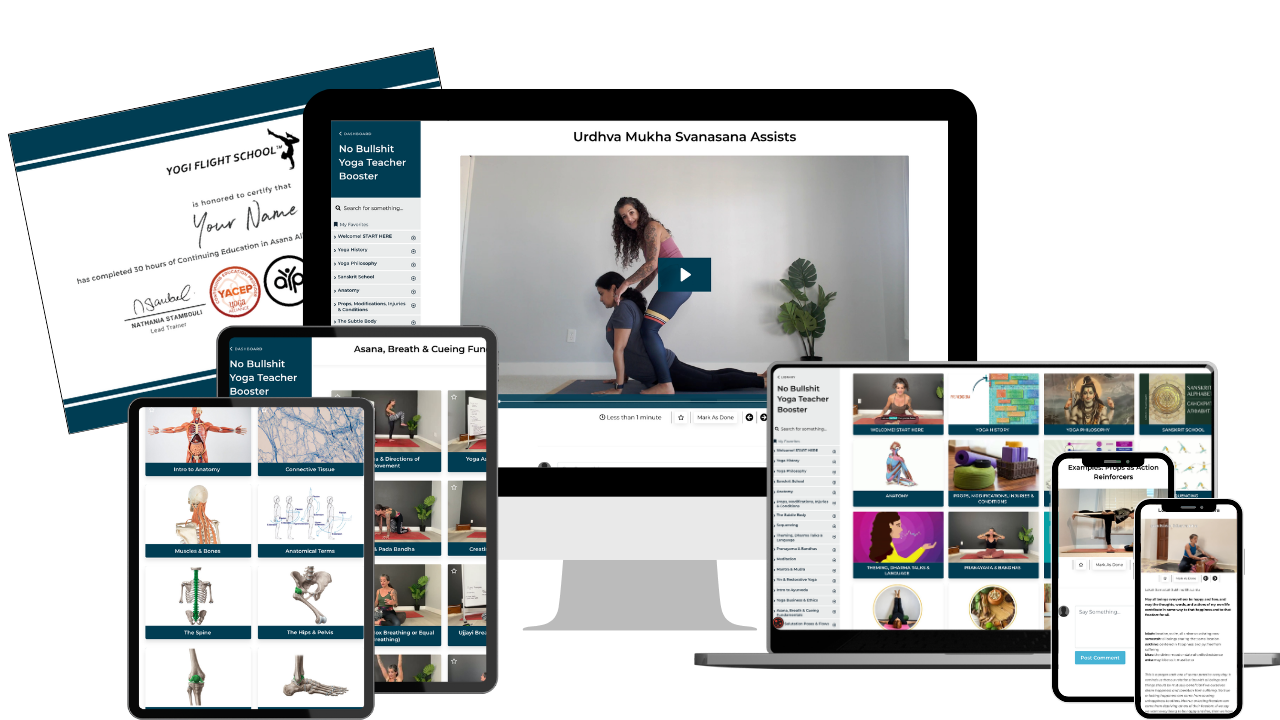
Every lesson has a comments box built in. Ask anything, and our team answers. You're doing this at your own pace, but you're not doing it alone.

Watch anywhere.


Access it on your desktop, or from the Yogi Flight School app so you can learn from your phone or screencast the videos to your TV.

Earn 100 CE hours.


Work through the course, and when you finish, head to the certificate lesson to request your certificate of completion and claim your 100 hours of continuing education credit.

Yours Forever!


Lifetime access, so you can move through it slowly, revisit any pose before you teach it, and use it as your reference library for the rest of your teaching career.

Who is the Yoga Teacher Booster for?

Be honest with yourself here. 

This is for you if

  • You're certified, but you know there's stuff you're faking or avoiding, and you actively wanna plug those holes
  • You have your certificate but haven't taught your first class yet, because you don't feel ready
  • You've got some teaching under your belt and want to go deeper without committing to a full 300-hour
  • You're barely teaching, or not teaching, because you don't know how to structure a class or what to say
  • You want to stop feeling like you're a copy of your trainer and start teaching like YOU
  • You want depth in sequencing, cueing, anatomy, philosophy, assists, and the business of yoga, on your own schedule

This is not for you if

  • You're looking for one more certificate to collect instead of getting in the room and teaching
  • You think you need MORE credentials before gaining experience (this course will stretch you to go out there and teach what you're learning!)
  • You're committed to the belief that you're not ready yet, and you want something to give you permission to start instead of just starting. Only YOU can give yourself permission.
  • You want a plug-and-play library of flows to teach from. This teaches you to build your own, which takes more from you and gives you more back.
  • You're looking for a 300 hour YTT. This is not that.
If you're iffy about the stuff that was covered (or not covered!) in your 200-hour training, this gives you every tool to teach kick-ass classes that your students will want to return to again and again. 

The No Bullshit Yoga Teacher Booster

Step fully into your power and lead class experiences that genuinely make a difference for your students.

The entire curriculum is yours to keep and return to for as long as you're teaching:

✓ 25 modules: the complete Yogi Flight School 200-hour curriculum
 Yoga history, philosophy and subtle body
✓ Applied and functional anatomy training
✓ 90+ pose breakdowns, each with modifications and props
✓ 30 step-by-step hands-on assists
✓ 11 pranayama techniques and 6 meditation practices
✓ Sequencing Framework that will cut your class planning in half
✓ 100 hours of CE credit on completion
✓ Lifetime access, on desktop or the app
✓ Comments on every lesson, answered by our team

And remember, these are CE hours you have to log anyway.
This is your chance to spend them going deep on the exact things you struggle with, instead of consuming another course on a specific topic that you may or may not ever use again.


One time payment. Lifetime access. 100 hours of CE credits once you complete the course.

Boost Your Teaching for $497!

Do the work.

If it doesn't help, get your money back.

Here's the deal, and it's fair.

Go through the Sequencing module and any two pose breakdowns. Use them to plan and teach one class. If you don't walk away more confident and better equipped than you were, email us within 30 days, show us you did the work, and we'll refund you in full.

We're not going to promise you results if you buy this and never open it. But if you actually do the thing and it doesn't deliver, you shouldn't have to pay for it. Simple as that.

Do the work.

If it doesn't help, get your money back.

Here's the deal, and it's fair.

Go through the Sequencing module and any two pose breakdowns. Use them to plan and teach one class. If you don't walk away more confident and better equipped than you were, email us within 30 days, show us you did the work, and we'll refund you in full.

We're not going to promise you results if you buy this and never open it. But if you actually do the thing and it doesn't deliver, you shouldn't have to pay for it. Simple as that.

What's this gap in your knowledge actually costing you?

Here's where the holes in your knowledge and confidence leave you...
 

The certificate sits in a drawer, the sub request comes in and you say no, and another season passes where the thing you trained for is still something you talk about in the past tense. "I did my training." Not "I teach."

Or maybe you are teaching, and the gaps are low-key shrinking your classes down to only the parts you feel safe with.

You steer around the poses you're not sure how to cue, so your students never get to attempt them.

You keep the philosophy vague because you aren't actually sure what asmita means, so your classes stay on the surface when they could go somewhere life-changing.

You avoid hands-on assists because WHAT IF you hurt them or WHAT IF they freak out, so you leave one of your most powerful tools untouched.

You never take students past Ujjayi, because you're not sure where pranayama goes or how to lead it, so a whole dimension of the practice just never shows up.

Right now, your students have only met the smaller version of you, so they don't know what they're missing.


They've met the teacher who plays it safe. Not the one you could be.

And the longer you teach around what you don't know, the more that version just becomes... who you are as a teacher. Which would be a damn shame, because you and I both know you have more inside of you. 

You can't plan your way out of being the "safe" version of you, and you definitely can't wait your way out of it.

You get out of it by learning this stuff deeply enough to use it in a room with real people, when nobody warned you it was coming.

That version of you is a lot closer than you think.

What it feels like on the other side

You sit down to plan and it takes you a fraction of the time, because you're not starting from zero. You have a system, and the class takes people on a journey because you built it to.


A student asks why you're doing this pose, and you actually have the answer.


Someone new shows up in a bigger body, or with a cranky knee, or seven months pregnant, and there's no spike of panic, because you already know the modification.

The pranayama you used to skip?

You take 3 minutes at the start of class to break it down, and immediately see the energy in the room shift, and your students really arrive.

You put your hands on a student to help them feel the shape from the inside, with consent, without second-guessing whether you're allowed to or where your hands should go.


You cue less and say more. 
You lead a guided meditation like you've done it a hundred times. 

And the knot that's lived in your stomach before every class is GONE.


Not because you got lucky that day, but because you actually know what you're doing now.

You're not "performing" the role of a yoga teacher anymore.
You know your stuff, and it shows.

That's what you got certified for.


Not just to teach the safe half of it. All of it.
The only thing between you and doing that is the depth your 200-hour didn't have time for - which is exactly what's inside.

Go get it, and become the teacher you were always meant to be.

Start the Booster for $497

100 hours of CE. Lifetime access. Do-the-work money-back guarantee.

Because we give a FAQ.