
Why Many Yoga Teachers Struggle With Sequencing
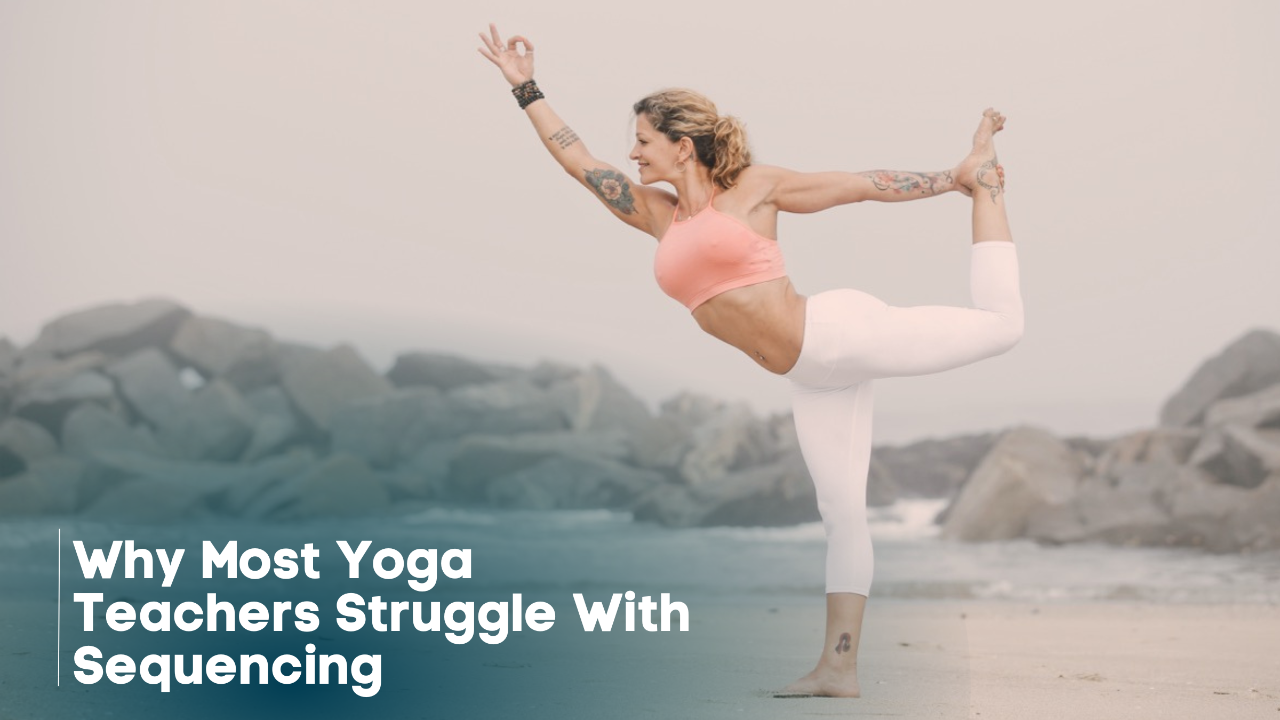
I want you to think about the best yoga class you've ever taken.
Not the hardest. Not the sweatiest. Not the one with the most impressive poses.
The one where something clicked.
Where you arrived at a pose you'd practiced a hundred times before, but somehow it felt completely different. More stable and spacious.
You probably walked away thinking, "Wow. That teacher is incredible."
And maybe they were. But what made that class land the way it did probably wasn't their personality, their playlist, or their clever transitions.
It was the sequencing.
The hip opener in minute 15 wasn't just "a hip opener." It was specifically preparing the external rotation your body would need 30 minutes later.
The core work wasn't generic "engage your core" filler. It was activating the exact stabilizers you'd need when the balance got challenging.
The standing sequence wasn't random. It was patterning the same shape as the peak pose, just in a different orientation, so your nervous system recognized it before you even got there.
You didn't notice any of that consciously. Your body just went: "Oh. I know this. I'm ready."
That's what intentional sequencing feels like from the inside.
Most yoga teachers already know what good sequencing feels like. We've all been on the receiving end of it.
But knowing what it feels like and knowing how to create it are two completely different skills.
And that gap is where a lot of teachers get stuck.
Why So Many Teachers Struggle To Sequence Classes
Most teacher trainings spend a ton of time on Chakras, Sanskrit, philosophy, and yoga history.
Then they hand you a certificate and expect you to somehow know how to build a class that isn't just a collection of poses that you happen to like.
So you graduate, get asked to teach a class... and immediately draw a blank.
From there, it usually goes one of three ways:
- You recycle a cookie-cutter sequence from training.
- You borrow something from Instagram or another teacher's class.
- You ask ChatGPT to "make a 45-minute yoga flow for abundance during Mercury retrograde."
OR WORSE - you decide not to teach all together because you're so anxious and unprepared that you've convinced yourself teaching yoga is not for you...
And honestly?
I get it.
If nobody ever taught you how to think about sequencing, what else are you supposed to do?
But memorizing sequences or getting AI to generate them only gets you so far. It gets you through Tuesday's class. But it doesn't help when you get called in last minute to teach a class on a specific pose with zero prep time.
The real skill isn't having sequences memorized. It's understanding why a sequence works so you can build one yourself, for any pose, any time.
And that understanding starts with one shift in how you look at poses:
Instead of asking "What poses am I going to string together today?"… start asking "What does the body actually need to be able to do to get to the peak pose I want to teach?"
Now you're building toward something specific. Not just picking poses you like and hoping for the best.
The "That Looks Cool" Problem
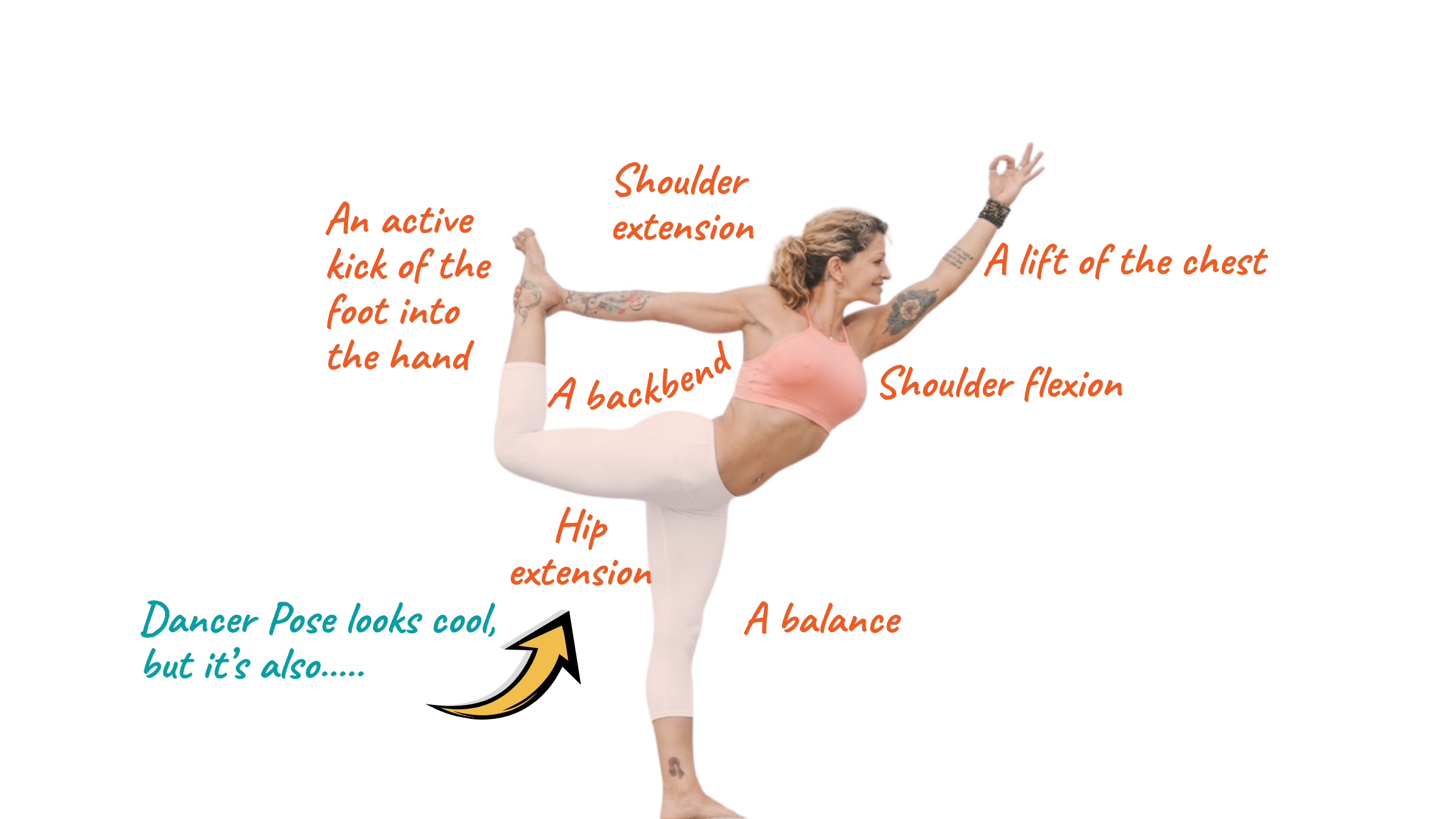
Take Dancer's Pose. It's one of those poses that gets dropped into classes because it looks cool. But looking cool and being properly set up are two different things.
Dancer isn't just a pretty shape.
It's hip extension in the lifted leg. A backbend through the spine. One shoulder in flexion, the other in extension. Plus the ability to actively kick the foot into the hand while staying lifted through the chest. All while balancing on one leg.
That's a lot for the body to manage in one moment.
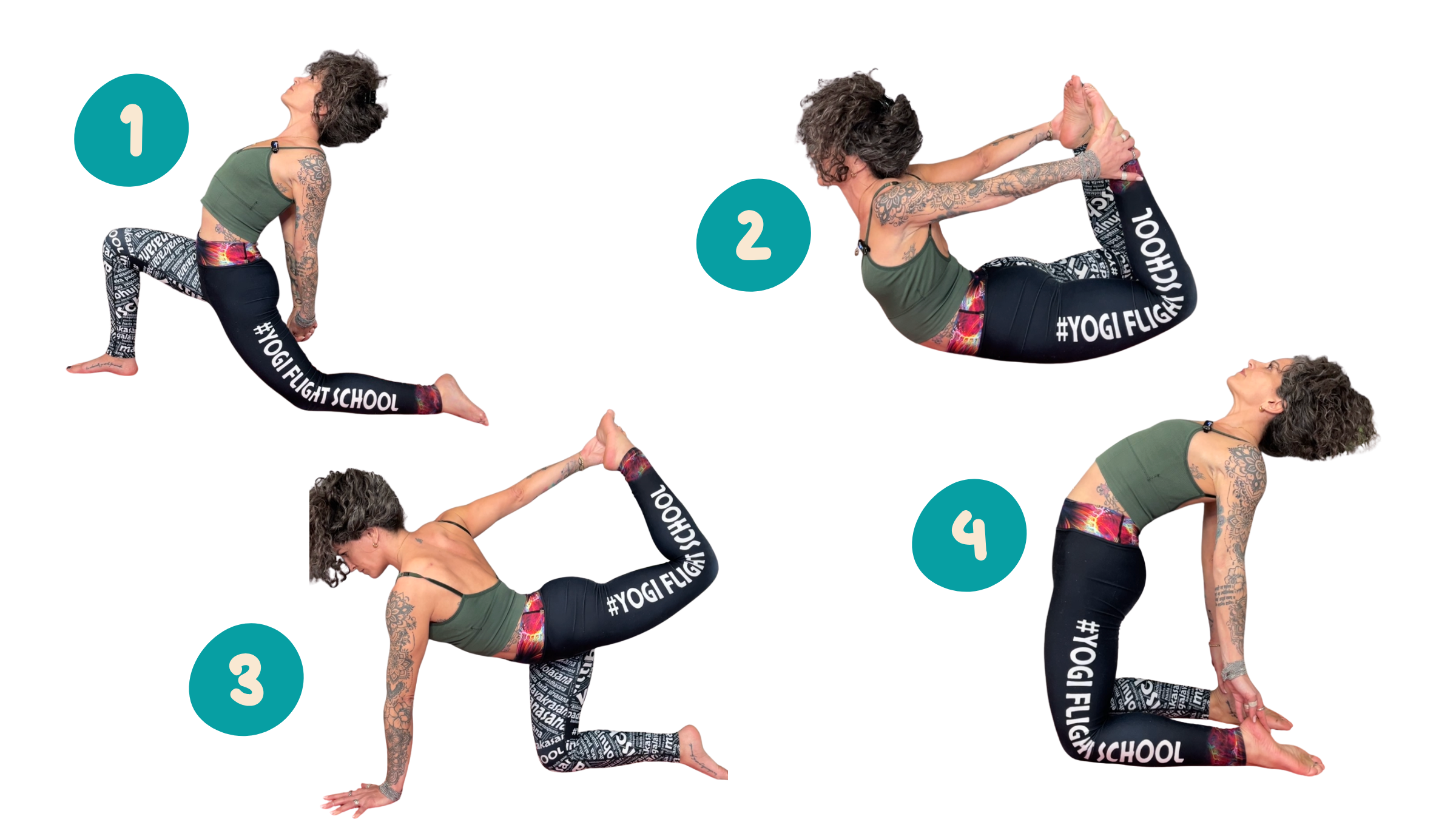
If I were sequencing toward Dancer, here's how I'd actually build toward it (because "it looks cool" is not a reliable sequencing methodology):
- Low Lunge with a bind to open the front body and begin exploring gentle hip extension, backbending AND prepping the one shoulder for extension.
- Bow Pose to introduce the feeling of actively kicking the foot back into the hands and firing up the back body.
- Bird Dog with a Foot Hold to layer in coordination between hand, foot, and chest.
- Camel Pose to reinforce lifting up and out of the pelvis instead of collapsing into the low back.
 None of these are chosen at random.
They're all giving students a chance to practice the pieces of Dancer, just without the added chaos of trying to balance on one foot at the same time.
By the time Dancer appears, it doesn't feel like a "WTF moment" for your students. It feels familiar. Because it is. The body has already been here, just in different contexts.
What This Feels Like for Your Students
When sequencing is done well, students don't consciously track what's happening.
They just feel it.
The backbends made sense, the twists had a purpose, and the bind wasn't randomly dropped into the middle of class.
So when they arrive at the peak pose they think:
"Oh. I've been here already. I've got this."
And when they don't feel that, they arrive at the peak pose and their body goes, "Nope. We did not agree to this."
That's not because the student is too stiff or too weak. It's because the sequence didn't lay the foundations.
THIS is why some classes feel completely different even when the poses are basically the same.
The difference isn't what was taught. It's how it was place together (meaning, how it was sequenced).
Straight up - sequencing is a skill that is taught. Not a personality trait or some innate gift.
It's a skill that is rarely taught in depth in a 200-hour. Or on Instagram. Or on YouTube.
But it can be learned.
And once you understand how to sequence this way, you stop staring at blank pages wondering what comes next.
You can choose any destination and confidently build the road that gets your students there.
Want to see all of this in action?
Check out my YouTube video where I walk you through how I sequence a yoga class!
