
5 Seriously Fun Arm Balances You Probably Didn't Know Existed
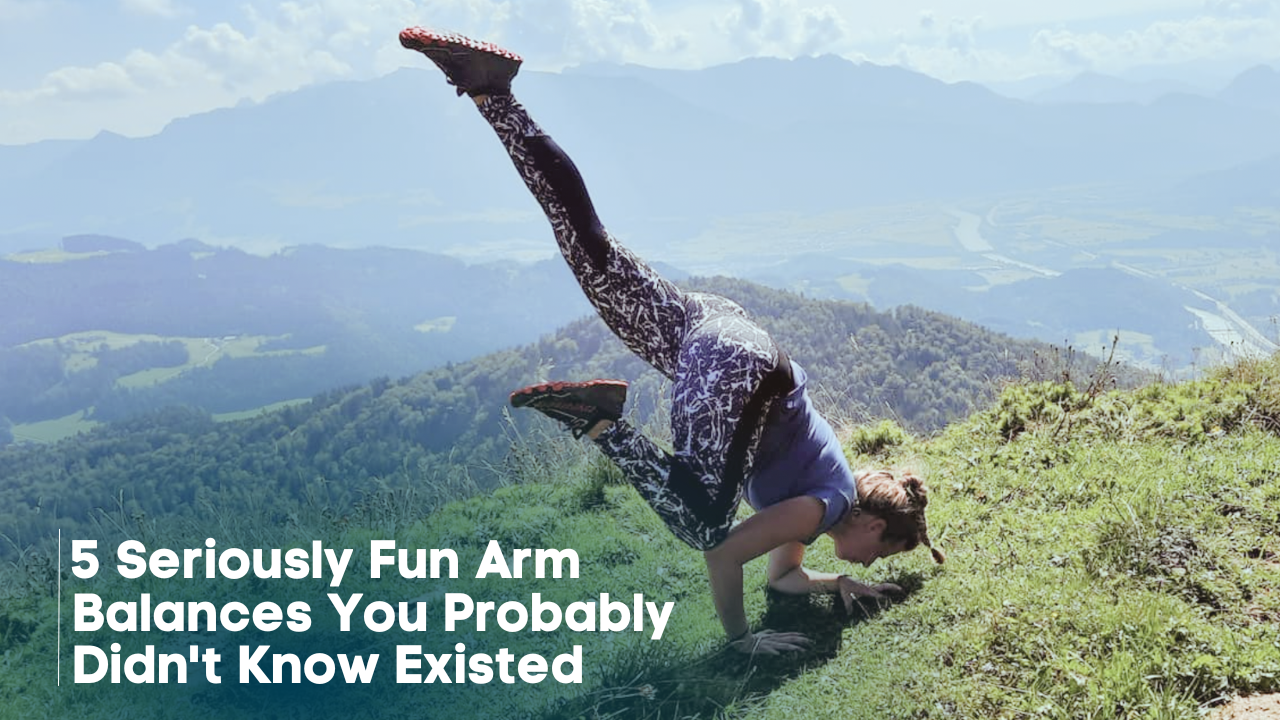
When most people think about arm balances they could realistically learn, they usually picture the same handful of poses.
Crow. Headstand. Handstand. Maybe Forearm Stand if they're feeling adventurous.
Beyond that, everything starts looking like someone paused Cirque du Soleil halfway through a performance.
The funny thing is, there are dozens of incredible arm balances that some people go their whole life not knowing about. They just don't get taught very often, so we rarely see them out in the wild (or in yoga class).
One of my favorite moments inside Yogi Flight School is introducing one of these "weird" poses for the first time. The room usually goes quiet for a second before somebody says, "Hang on... you want me to do what?" 🤣🤣
And within minutes...they're in a pretzel pose and half the time aren't even sure how they got there.
I live for it!!
Crow Pose and Headstand are really just the doorway to a whole world of amazing shapes you can make. Once you understand how balancing actually works, suddenly these poses stop looking like random acts of wizardry and start making sense.
So today I thought I'd introduce you to five of my favorites that aren't seen in every yoga class.
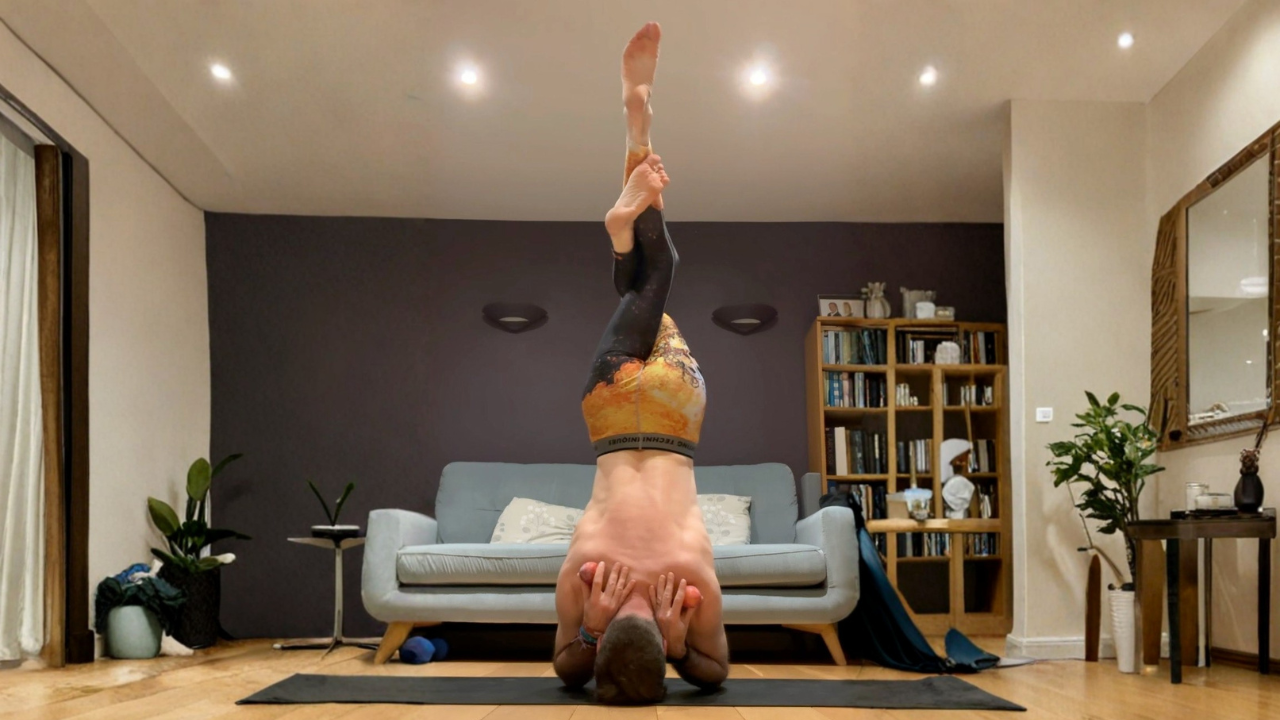
Bound Headstand (Version D)
This one usually gets a double take.
Your hands aren't on the floor at all. Instead, they wrap behind your shoulders while you balance on your elbows and head, which feels about as sensible as it sounds... until you try it.
What I love about this variation is that once you've found the sweet spot, the balancing almost becomes the easy part. Your legs become the playground. You can straddle them, split them, bend them, twist them or create completely different shapes from exactly the same foundation.
And if you're feeling extra spicy, you can even try massaging your shoulders with MFR balls while you're upside down, as Coach Stewart is doing here. (Psst... curious what MFR is? Check out this blog post!)
It's a brilliant reminder that inversions don't always have to be serious. Sometimes they're just a chance to play.
Fallen Angel
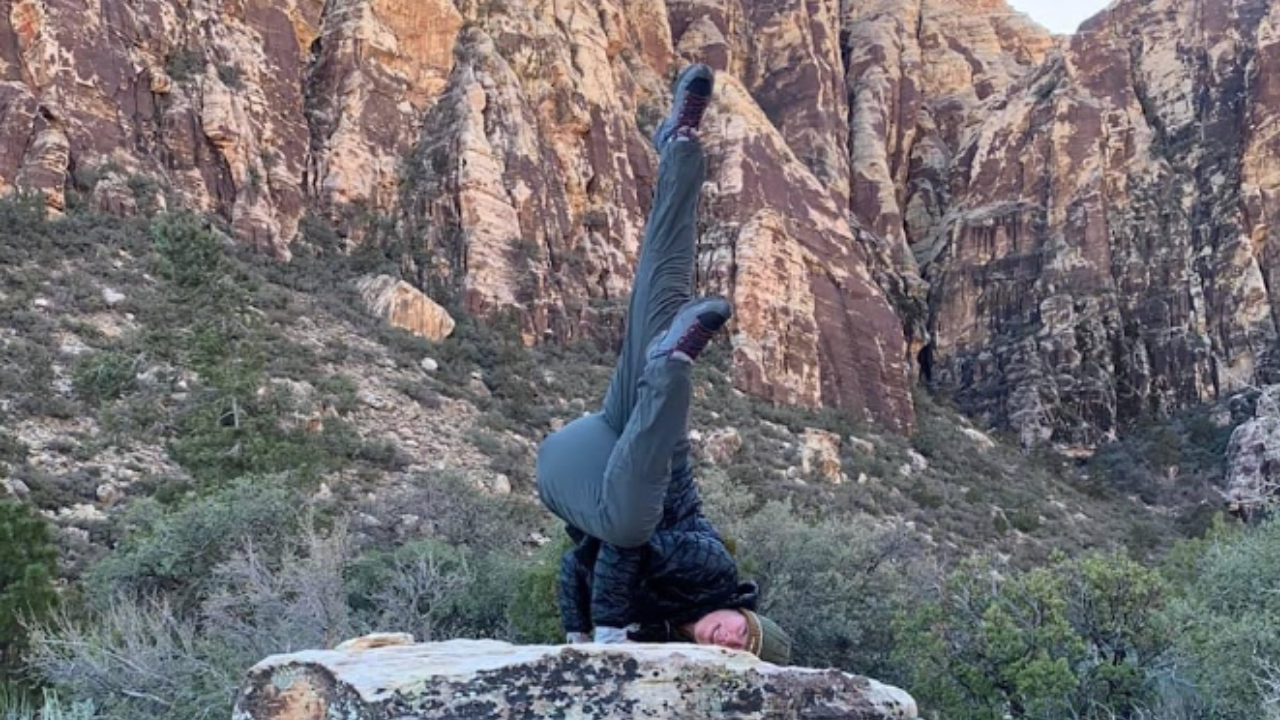
I affectionately refer to this one as the "intentional face plant."
If you've already met Side Crow, you're much closer to Fallen Angel than you probably realize. And the best part is? You can fly Fallen Angel even if you don't yet have side crow. One is not a pre-requisite for the other.
The dramatic-looking leg reaching overhead is usually the bit that convinces everyone it's impossible... but in reality, getting in is just about getting your body parts in the right place, in the right order, and learning where your center of gravity wants to be.
Once that clicks, the pose suddenly feels far less chaotic than it looks.
Grasshopper
Grasshopper is one of those poses that makes peoples jaws fall off their faces. It did for me anyway the first time I saw iti.
Your body twists, one leg shoots out to the side, and somehow your foot ends up standing on your upper arm. Yes... standing.
It looks like the sort of pose you'd accidentally invent after falling out of something else, but it's actually beautifully logical once you understand how it fits together.
Most people assume strength is what's holding them back here. Honestly, it usually isn't. Organizing the twist before you try to lift makes a far bigger difference than another ten push-ups ever will.
Flying Lizard
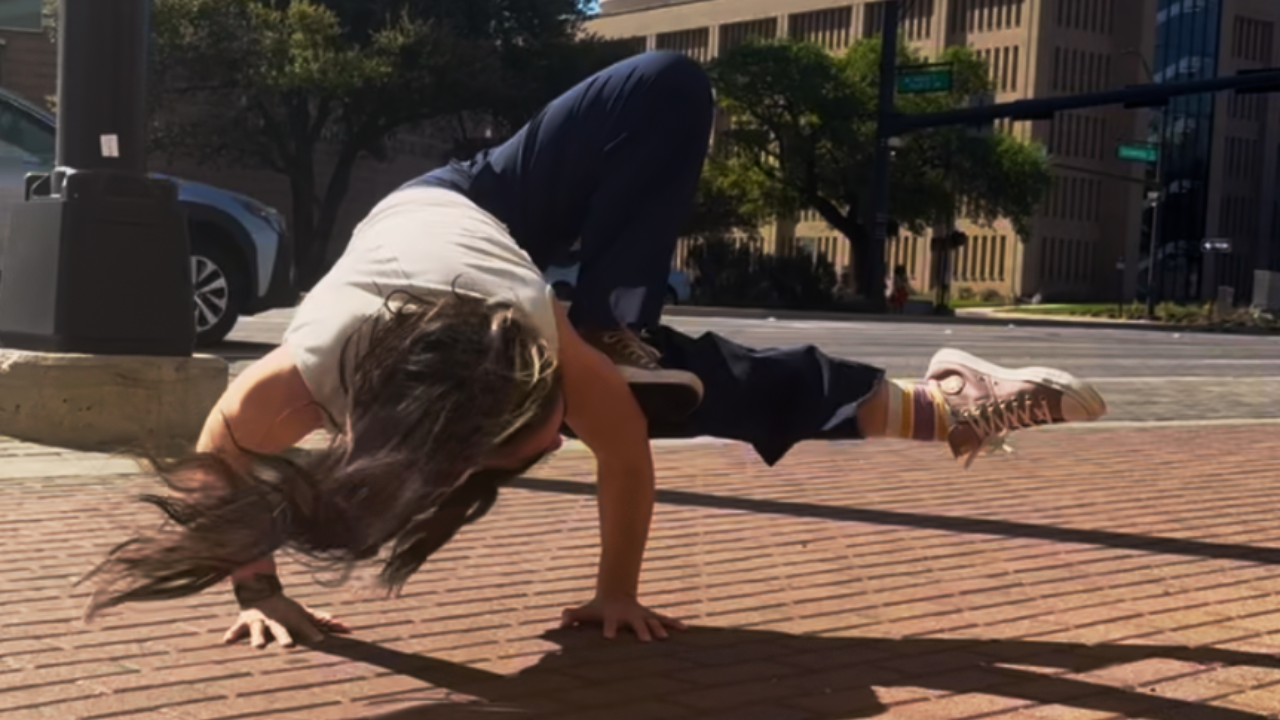
If regular Lizard Pose decided it wanted to become airborne, you'd end up here.
Your front leg hooks around your arm while your back leg floats off the floor with the knee bent. It creates one of those wonderfully odd-looking shapes that feels far more stable than it has any right to.
That's probably my favorite thing about Flying Lizard. Students expect it to feel terrifying, but once that front leg hooks into place there's an enormous amount of security there. It's one of those poses where people surprise themselves with how quickly they fly.
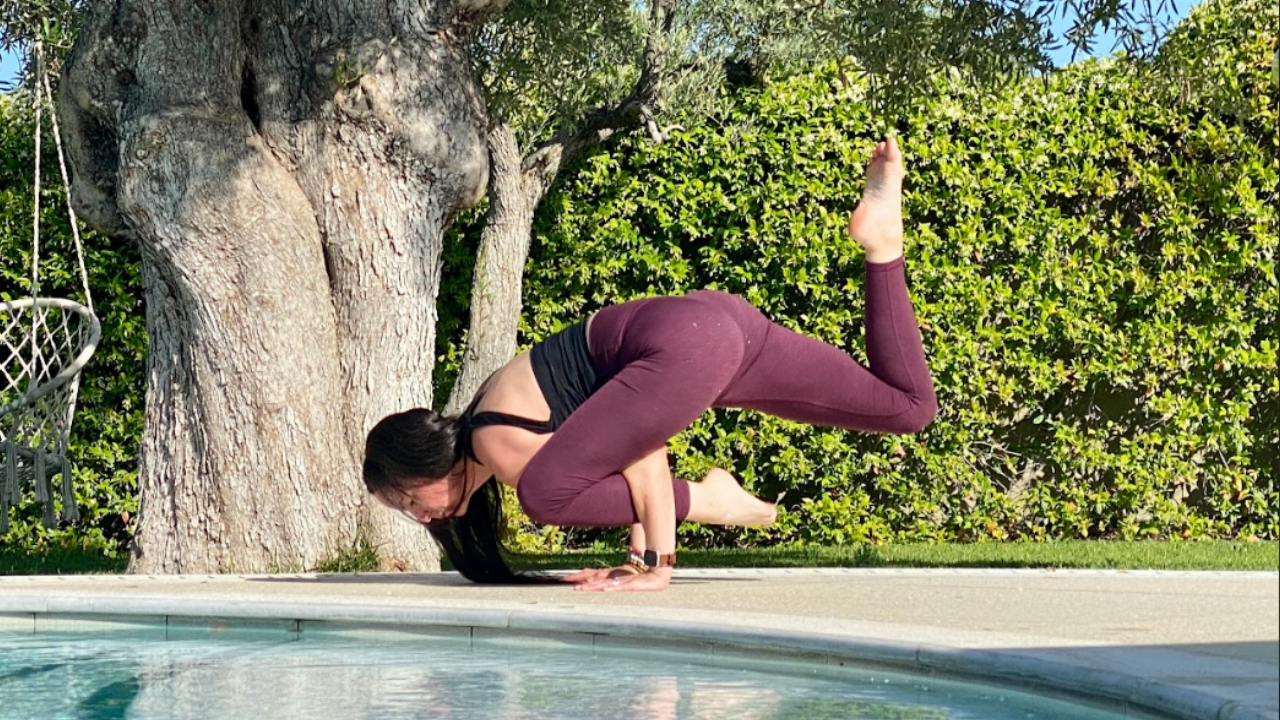
Funky One-Legged Crow
This pose really shouldn't work.
It looks like somebody took One-Legged Crow and Forearm Stand, mashed them together, and somehow made them balance.
One leg stays perched on your arm while the other reaches high overhead, creating this wonderfully wonky shape that's half inversion, half arm balance.
It's also one of my favorite reminders that yoga doesn't always have to be neat and symmetrical. Some of the most satisfying poses are the ones that look just a little bit weird.
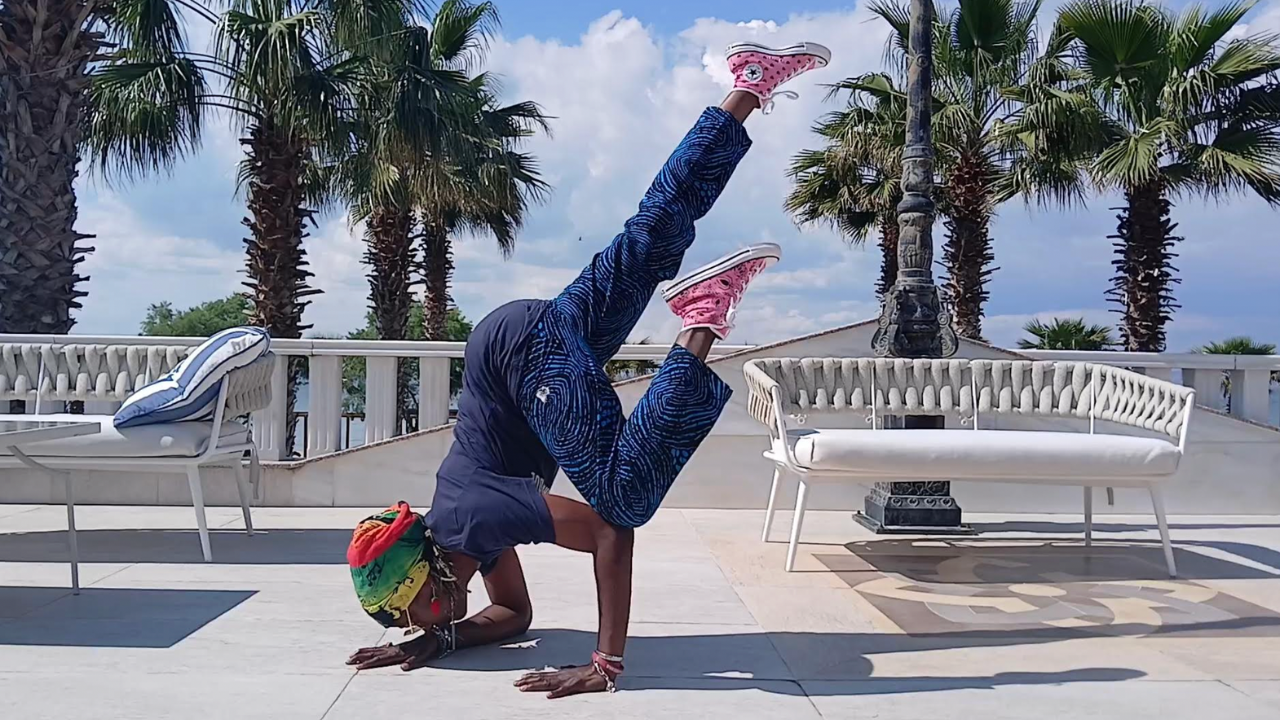
Crow Pose Is Just the Beginning
I think one of the biggest misconceptions about arm balances is that they require a tremendous amount of strength, flexibility and years of practice. But that coudn't be further from the truth.
Each of these funky shapes has a clear, step-by-step process to get into it, and if you've spent 10-15 minutes activating the exact body parts you need, in the way you need to use them, they're simpler than you think.
Crow Pose and Headstand... they're just the gateway.
If you want to expand your practice beyond them (or get those into your practice in the first place)...
Click here to see a complete list of the dozens of arm balances and inversions we teach inside Yogi Flight School. They're all within your reach.
Once you understand the mechanics behind balancing, all of these seemingly impossible shapes stop feeling like completely different skills.
You start recognizing familiar patterns. The weight shift from one pose shows up in another. A grip you've already learned suddenly unlocks something new. What looked like five unrelated poses starts feeling like five different ways of using the same building blocks.
That's exactly how I teach inside Yogi Flight School.
Rather than giving you a long list of poses to memorize, I teach you the mechanics that sit underneath all of them. Once those click, the "crazy Instagram poses" stop feeling random, and your practice suddenly gets a whole lot bigger.
And honestly... that's when arm balances become addictive!!
As a little extra treat, I'll break one of these poses down for you right now!
Want to see Flying Lizard in action?
Check out my YouTube video where I break it down step by step!
