
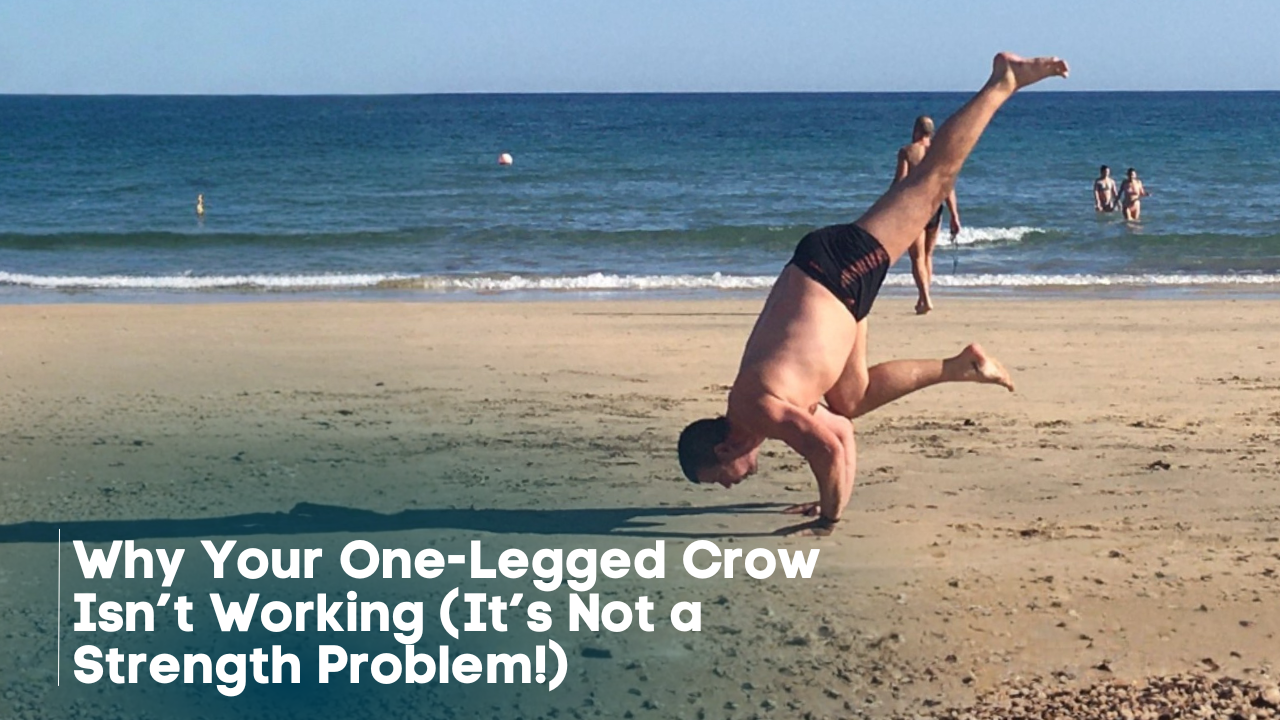
Why Your One-Legged Crow Isn’t Working (It’s Not a Strength Problem!)
You already have Crow Pose. You know how to balance on your hands. You know how to bring your knees onto your arms and find that little moment where your feet stop feeling quite so attached to the floor.
Then you try One-Legged Crow.
You bring one knee onto your arm, start shifting forward, and suddenly everything feels completely different. The back leg feels ridiculously heavy. Your weight starts drifting backwards. Your elbows begin doing their own little dance. And the leg that was supposed to magically float into the air seems to have decided it would actually prefer to stay glued to the ground.
So you do what most people do: You assume you need more strength.
More Chaturangas. More core work. More time convincing yourself you'll eventually be strong enough to fly that back leg.
But after teaching arm balances for well over a decade, I can tell you that strength is rarely what stops people from flying One-Legged Crow.
Most of the time, they're just missing one thing. And that's exactly what we're looking at today.
Why One-Legged Crow Feels So Hard
One-Legged Crow looks like it should be a tiny step up from regular Crow. In Crow, your body is compact. Both knees rest on your arms, your legs are tucked in close, and your weight sits in a place that's relatively easy to balance.
So your brain naturally thinks:
"Okay, I know Crow. Now I just do the same thing but with one leg in the air and... ta-da! New yoga party trick."
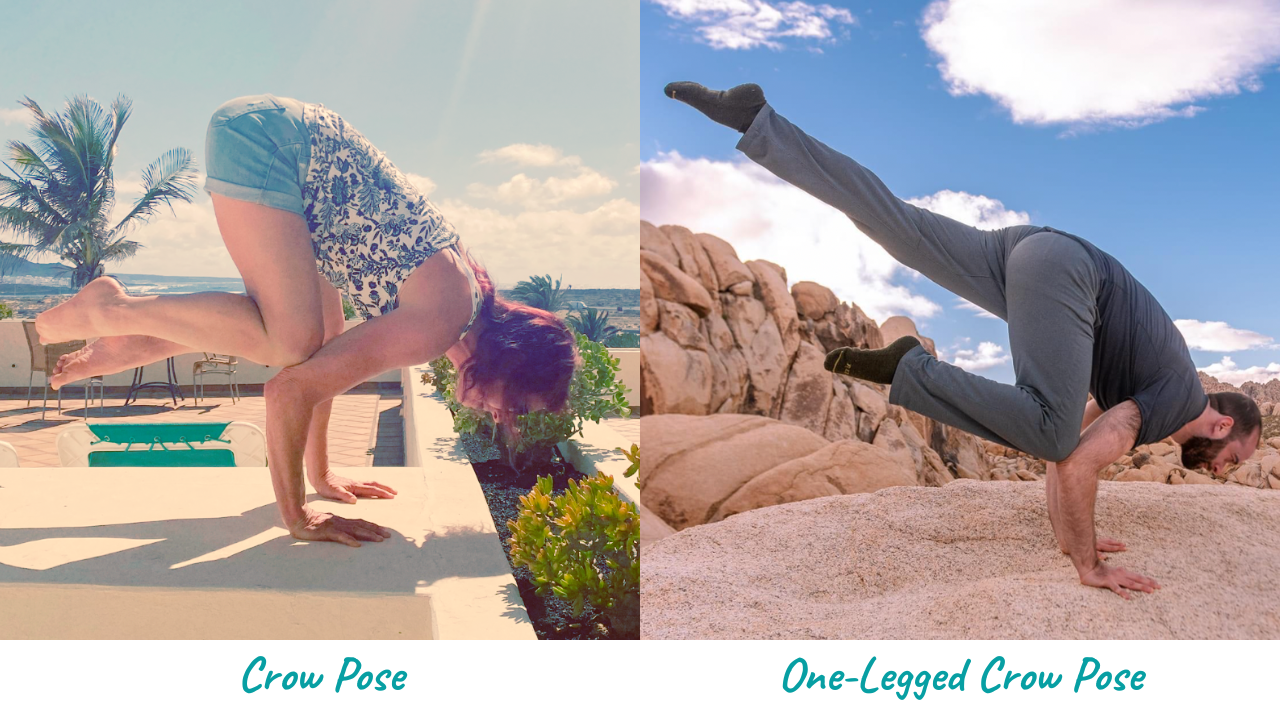
Except that one small change completely alters the mechanics of the pose.
The moment you have one leg out long behind you, your nice compact Crow suddenly becomes a much longer shape. And that back leg isn't just there for decoration. It shifts your centre of gravity backwards.
Think about holding something heavy close to your chest. A suitcase. A dog. A small child who has decided walking is no longer an option.
You could probably stand there quite comfortably.
Now hold that exact same thing at arm's length. The object hasn't become any heavier, but it suddenly feels much heavier because it's further away from you.
(For the record, holding Tito, my aunt's 30lb Chihuahua, at arm's length is a surprisingly effective way to understand this.)
Your back leg works exactly the same way in One-Legged Crow (and every other long-legged arm balance). Having it extended behind you creates a backward pull that wants to drag your weight back towards your feet.
Which means something else has to move forwards to balance it if you want to fly the pose.
That "something" is your chest.
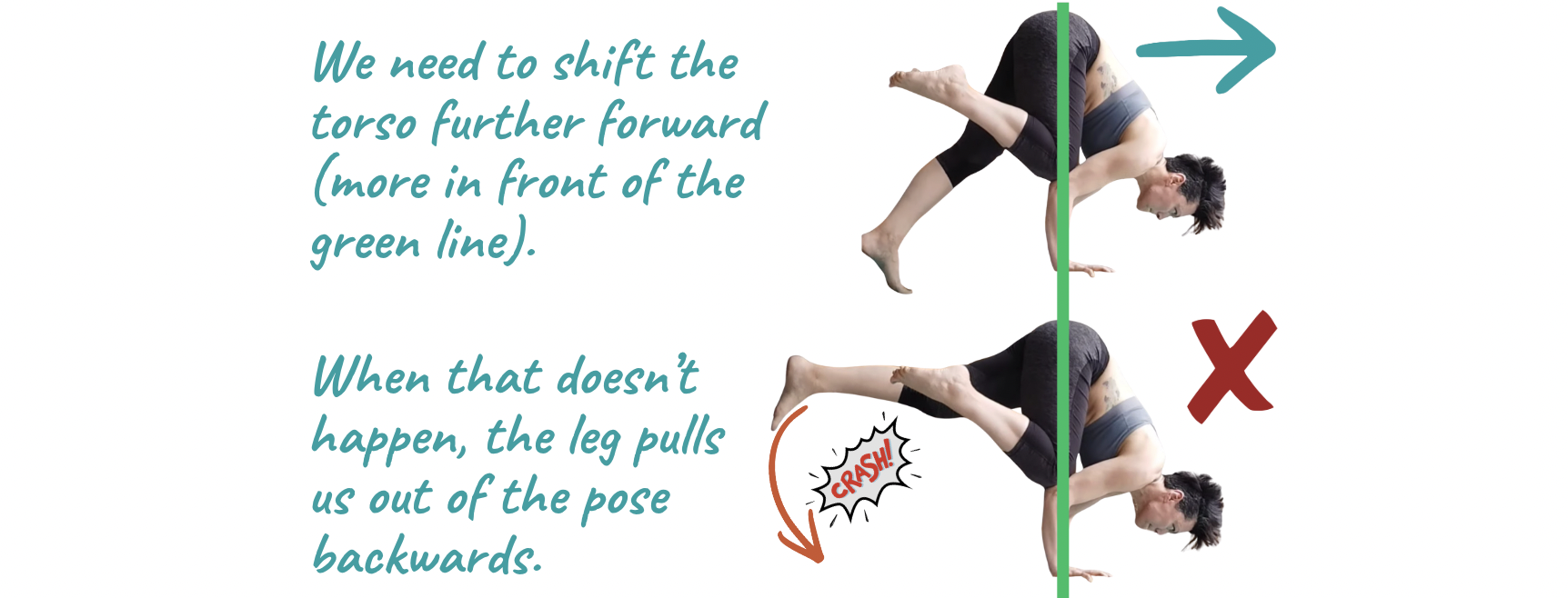
This is the mistake I see over and over again. People don't send their chest far enough forwards to match the heaviness of the long back leg. Their weight stays too far behind their hands, the leg feels impossibly heavy, and the pose spits them straight back onto their feet.
To them it feels like a strength problem.
But most of the time, it isn't. It's a balance problem.
The Shift Most People Never Commit To
Once you understand that your chest needs to travel further forwards, One-Legged Crow starts sounding surprisingly simple.
So why doesn't everyone just... lean further forward?
Because your brain has opinions.
The further forward you shift, the more your nervous system insists, "We are about to fall on our face." Which is a perfectly reasonable conclusion. (And if fear is the thing keeping you from committing, you'll probably enjoy this article on overcoming fear in arm balances.)
So without even realising it, most people stop the weight shift early. They try to lift the back leg, but they keep their chest almost exactly where it was in Crow because that feels safer.
Unfortunately, that's the one place the pose can't work. The leg feels impossibly heavy, confirming what you already suspected:
"See? I'm just not strong enough."
Except you probably are. You just haven't moved far enough forward for the mechanics to work.
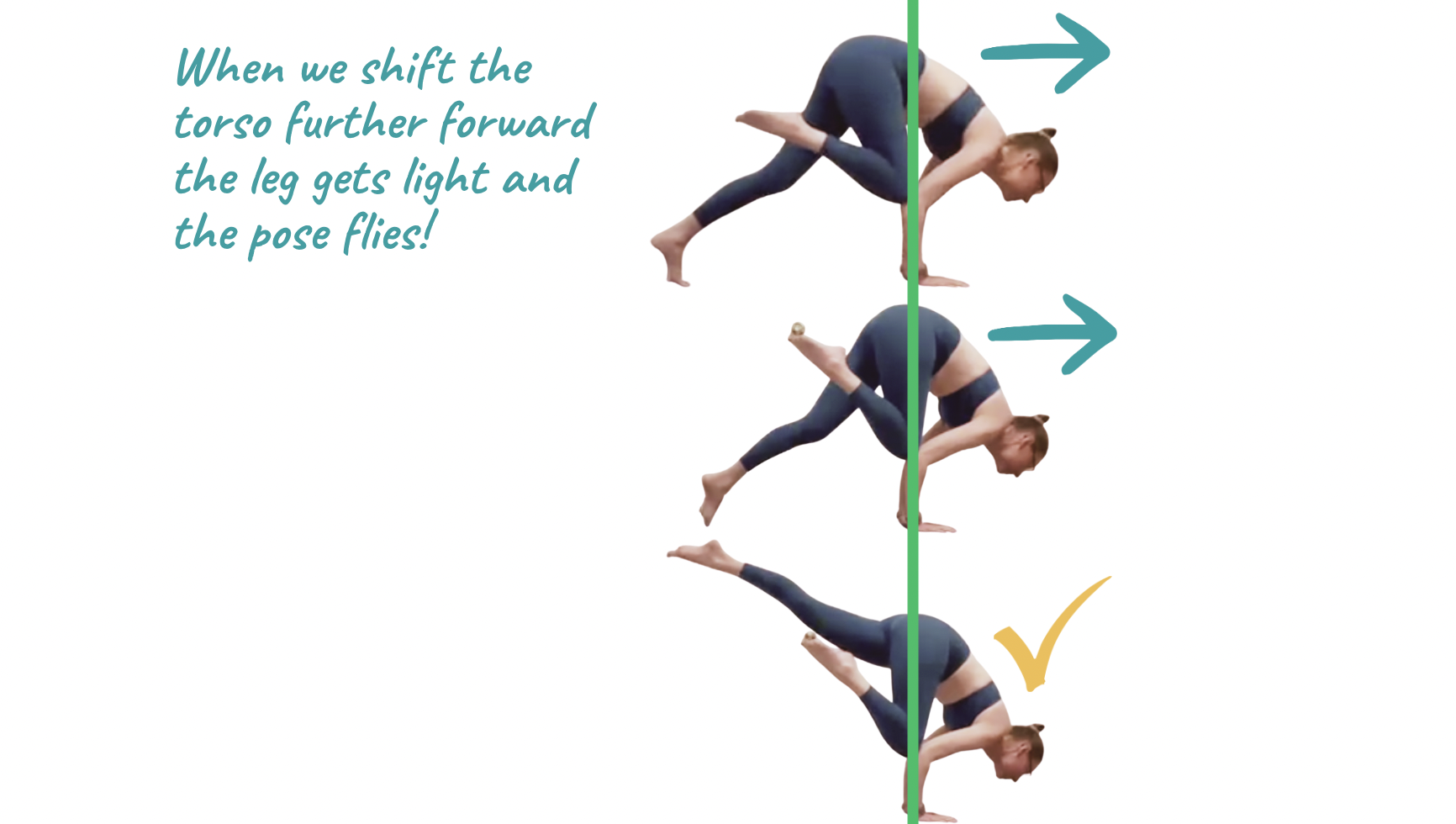
When you're able to counter the weight of the back leg by shifting further forward the pose feels completely different. The leg doesn't suddenly become stronger. It simply stops working against your balance.
If you've been stuck on One-Legged Crow because you're convinced you're just not strong enough, I hope you can see that probably isn't what's holding you back.
This is why I spend so much time teaching the mechanics of arm balances instead of handing out endless strengthening drills. Once you understand what your body is actually trying to do, the poses stop feeling like a battle against gravity and start feeling much more predictable.
Want to see this in action?
This weekend, I'm doing something super special.
I'm hosting a LIVE arm balance and inversions workshop on Zoom with my team of coaches.
We'll train the warmup and the mechanics of the poses together. I break everything down step by step...
And then we put you in a breakout room with a Yogi Flight School coach so we can take a look at your pose(s) in real time and give you the tips you need right then and there.
Most of the time, people unlock balance in those breakout sessions, and it's freaking magic.
Usually, the only way to attend these sessions is to be a Yogi Flight School member, but this week, you can join us as a drop-in for just $30.
