
Why "Flex Your Foot to Protect Your Knee" is BS (And What Really Protects Your Joints)
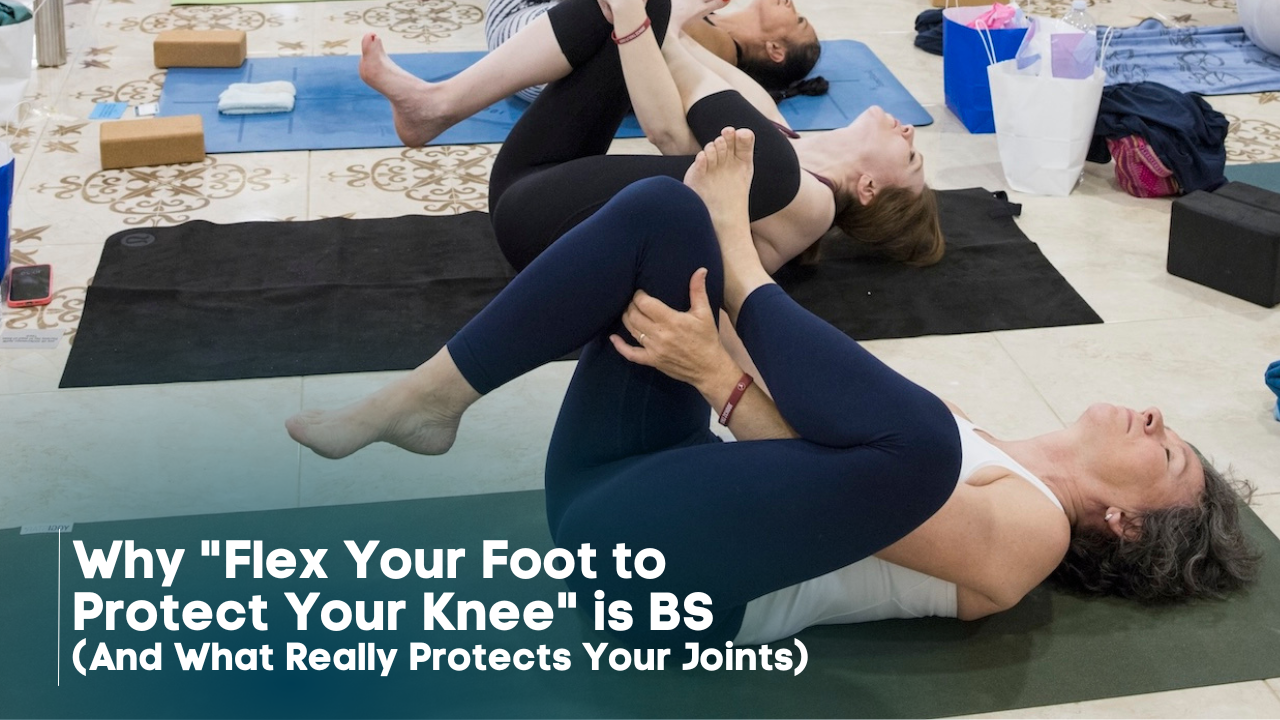
You've probably heard it a gazillion times in yoga class: "Flex your foot to protect your knee."
This cue usually appears when you're in some kind of "figure 4" shape (think pigeon pose, tree pose, or any variation where your knee is bent and your hip is externally rotated.)
But here's the thing: this cue is actually not accurate. And understanding why matters way more than you think.
Let's unpack it.
Joint Protection 101: What Your Yoga Teacher is Missing
In order for a joint to be "protected," a muscle must cross that joint. That's how stabilization works: muscles that span across a joint create tension and support to keep everything in place.
So when we're talking about protecting the knee joint, we need muscles that actually cross the knee. Makes sense, right?
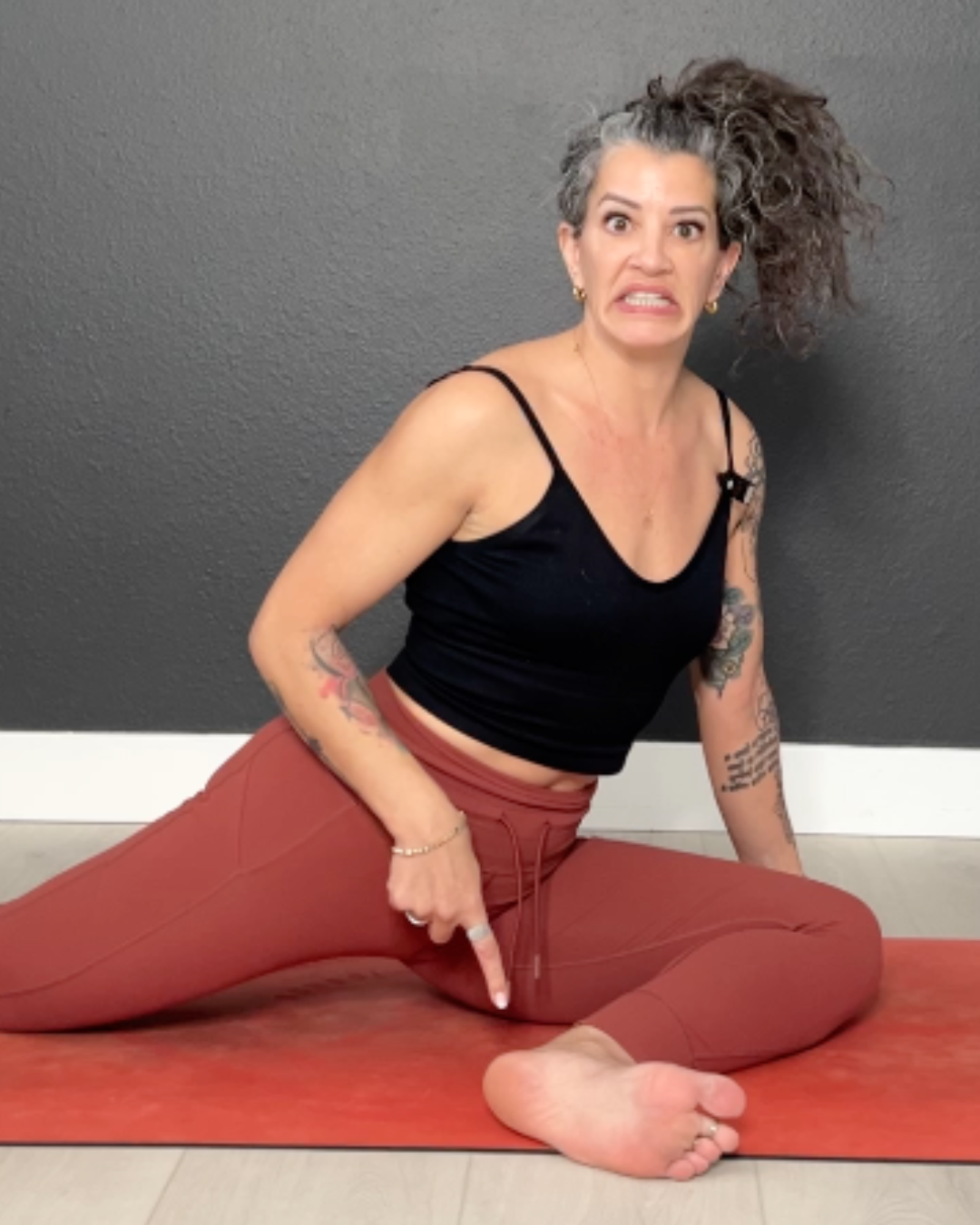
Here's where the common cue falls apart: the muscles that dorsiflex (flex) your foot do NOT cross the knee joint. And if they don't cross the knee joint, they can't really stabilize it.
Let me show you what I mean.
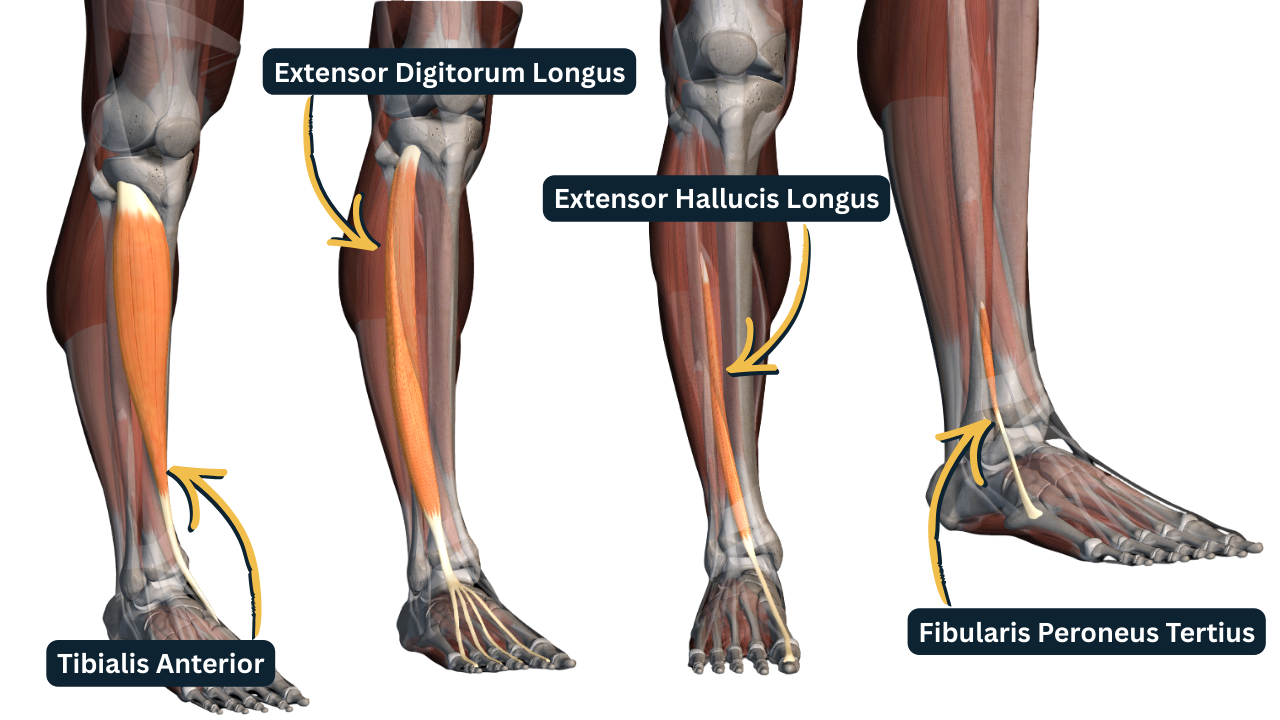
Meet the Dorsiflexors (That Don't Protect Your Knee)
Tibialis Anterior is the primary muscle that dorsiflexes the ankle. It's that big muscle running down the front of your shin. But here's the kicker: it does not cross the knee joint. What it DOES do is stabilize the ankle joint when the foot is dorsiflexed.
Extensor Digitorum Longus also dorsiflexes the ankle. But guess what? It also does not cross the knee joint.
Extensor Hallucis Longus? Same deal. Dorsiflexes the ankle but doesn't cross the knee.
And Fibularis Peroneus Tertius? Also goes nowhere near the knee.
Do you see the issue?
Since the primary dorsiflexors of the ankle do not cross the knee, they cannot create "protection" (stabilization) at the knee. Flexing your foot doesn't protect your knee. It protects your ankle.
So What DOES Flexing the Foot Do?
Here's what IS true: fascia plays an important role in distributing tension through the body.
When you dorsiflex the ankle, you create what's called global anterior chain tension (a line of tension that runs up the front of your body). This can improve force transmission through a joint, which can be beneficial in certain contexts.
But let's be clear: that's not the same thing as directly stabilizing the knee.
It's more about creating a connected chain of tension through your entire leg and body, which can support better alignment and load distribution.
The Bottom Line
We DO want to flex the foot.
But the reason we want to flex the foot isn't to protect the knee.
✅ We can flex the foot to increase proprioception.
✅ We can flex the foot to activate the fascial chain in the leg.
✅ We can flex the foot to stabilize the ankle.
✅ We can flex the foot to SUPPORT the joints of the leg (ankle and knee).
But "protect?" not so much.
Beyond that, the word "protect" insinuates that our knees are particularly fragile and need protecting.
For people with existing injuries, perhaps that's true. (If you experience knee pain in yoga, check out this article that outlines what to do about it.)
But for most people who walk into a yoga class, we actually want to STRENGTHEN our knees and make them more resilient. Not protect them.
Nocebic language (meaning, language that makes us afraid of doing something) tends to do more harm than good.
Rather than focusing on protecting something, why not focus on how to support and strengthen it instead? It's a much more empowering place to teach from.
If you’re a yoga teacher, this anatomy knowledge is what takes your yoga teaching to the next level.
Understanding the actual biomechanics helps you make smarter decisions in your practice. Instead of blindly following cues, you can tune into what your body actually needs in each pose.
And that's where the real magic happens.
