
Forearm Stand (Pincha Mayurasana): Why Your Hand Position Might Be Holding You Back
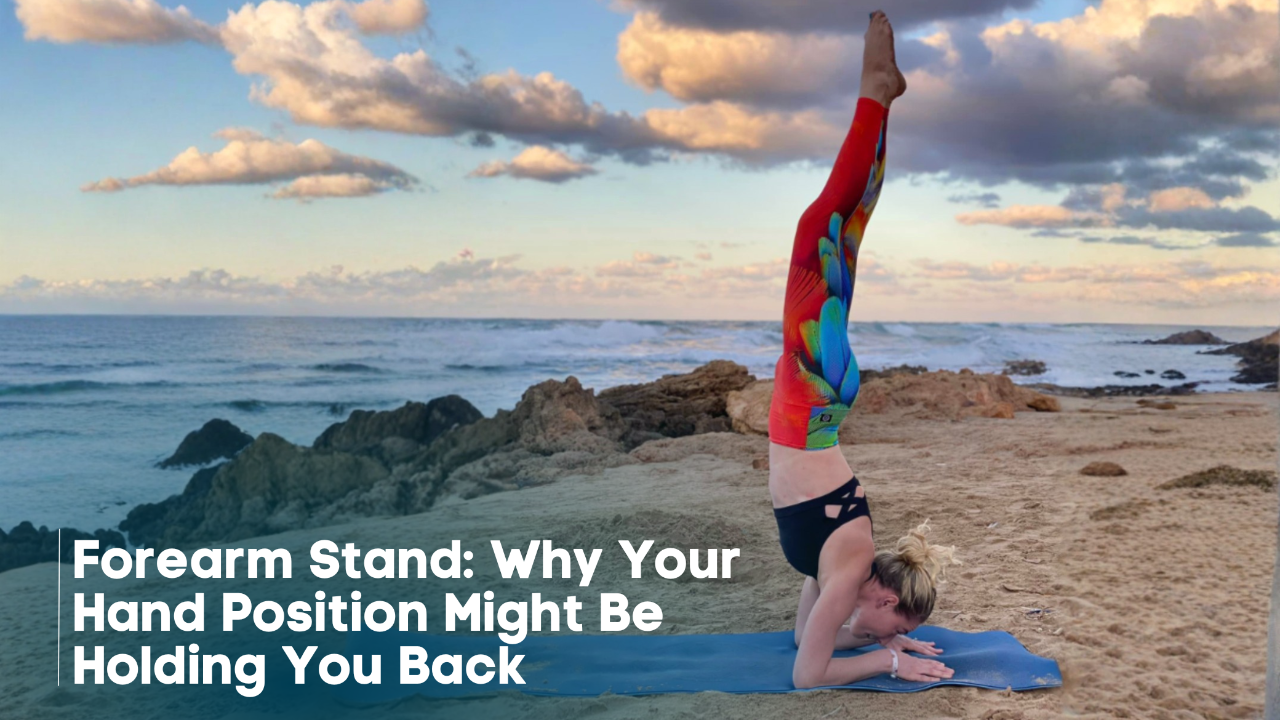
For the longest time, I thought my forearm stand problem was a strength problem.
Every time I kicked up into pincha, my elbows would slide apart, my chest would drop toward the floor, and my face would end up much closer to the ground than felt comfortable. No matter how much I tried to “hug everything in,” I could not maintain the shape I was being taught.
If you have had a similar experience, there is a good chance you have been given some version of this cue: keep your forearms parallel.
But because that setup simply was not working in my body, I started to question whether it actually needed to be the only way to do the pose.
Instead of forcing myself into an idealized shape, I began experimenting with different arm positions that worked better with my body. Almost immediately, pincha started to feel lighter, more stable, and much more accessible.
In this post, I want to look at what is actually happening in the shoulders anatomically, and how small adjustments in your setup can completely change the experience of the pose.
Why Parallel Forearms Can Feel So Difficult
Pincha asks a lot more of the shoulders than most people realize.
- The upper arms are externally rotated (the biceps turn outward)
- The shoulders are deeply flexed overhead (arms lifted up by the ears)
- Add forearm pronation into the mix (the forearms rotating so the palms press into the floor)
...then ask the body to maintain all of that upside down while weight bearing, and you've got quite the anatomical ask on your upper body.
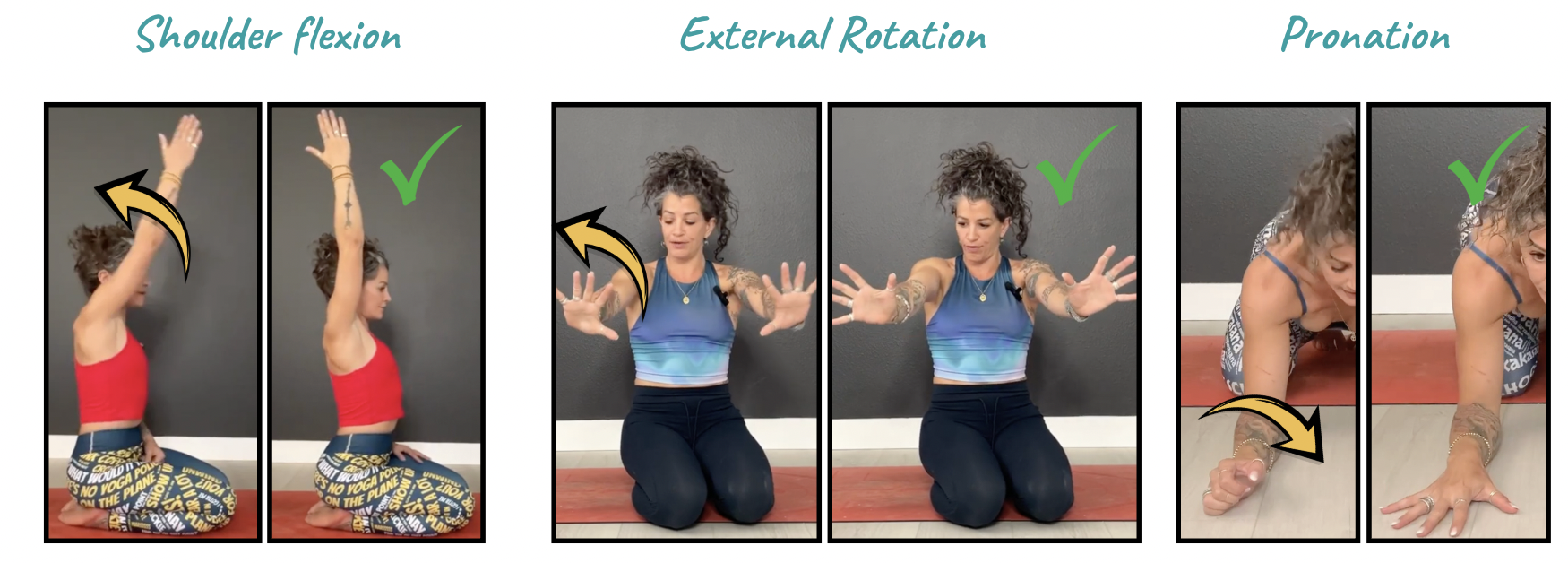
For some people, those ranges of motion are available and the shape feels relatively natural.
But for many of us, the combination of movements is difficult (and if that’s you, definitely check out my blog post on opening up the shoulders for inversions), and when the body cannot comfortably access the shape being asked of it, it will almost always find movement somewhere else instead.
In pincha, that usually shows up as the elbows widening apart, which is exactly what was happening to me.
And honestly, that makes sense biomechanically. The body is creating more space because the shoulders cannot comfortably maintain the amount of external rotation and flexion the position is demanding.
The problem is that this compensation usually comes at a cost.
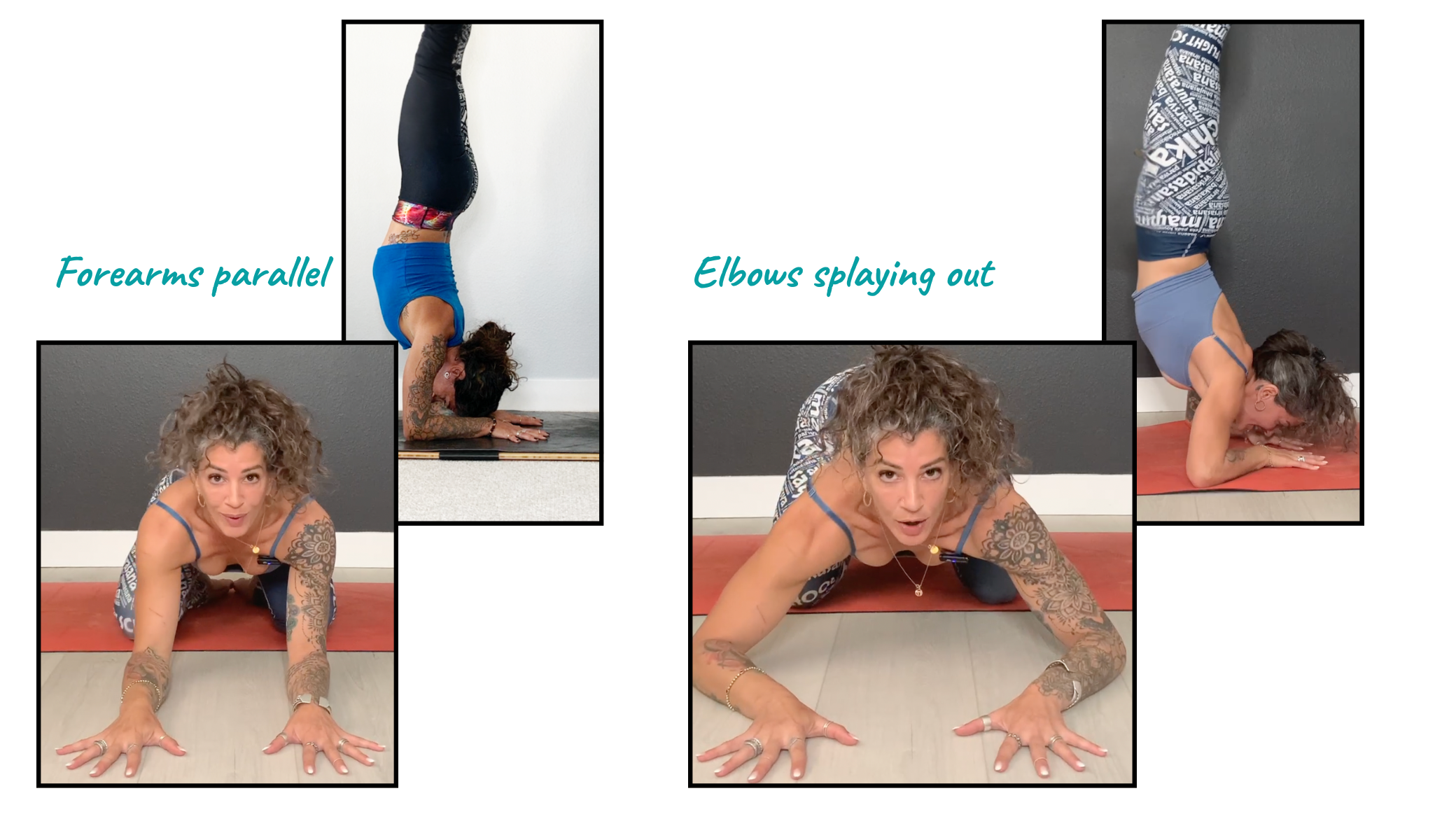
Once the elbows start sliding apart, the whole structure of the pose tends to collapse with it. The chest drops toward the floor, the weight shifts too far forward, and balance suddenly feels way heavier and harder to control.
Different Hand Placements You Can Try
Below are some of the hand positions that I like to teach my students. Depending on your body, one variation may feel better than another.
These variations all do one main thing: they reduce how much external rotation you need to maintain while the shoulders are in deep flexion overhead. That usually makes it much easier to keep the elbows underneath the shoulders without the whole pose collapsing forward.
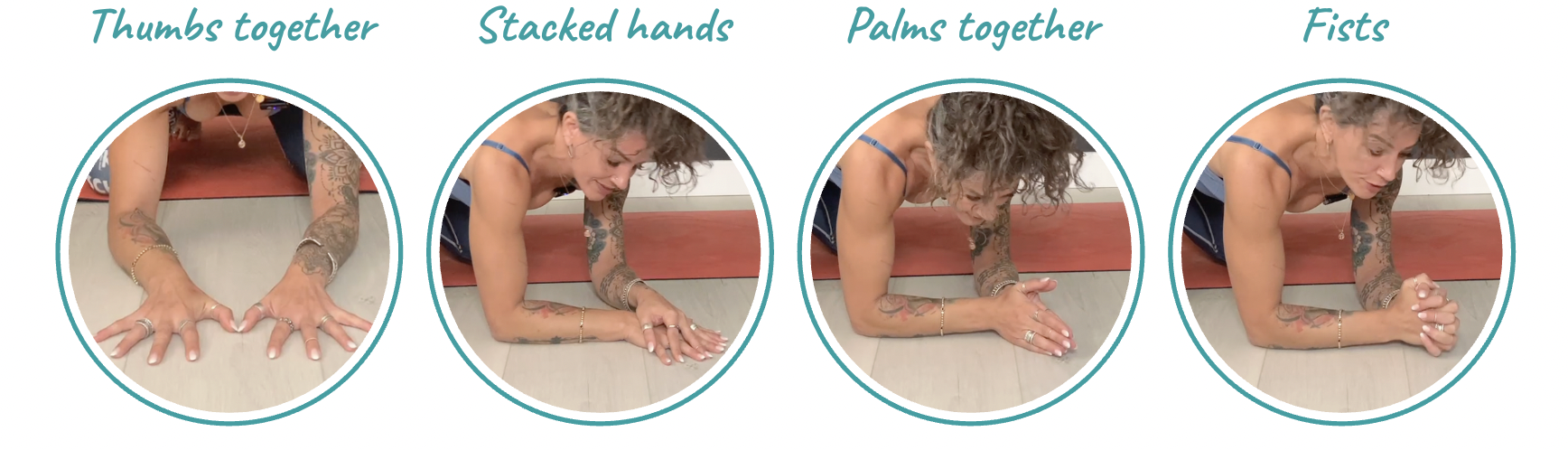
🟢 Thumbs Together
This is my go-to.
Bringing the thumbs together softens the demand for deep external rotation without completely changing the mechanics of the pose. You still have the hands flat on the floor, so you can use the fingers to correct and brake if you start tipping too far forward.
For a lot of people, this feels like the sweet spot between support and mobility.
🟢 Stacked Hands
This version reduces the external rotation demand even further because the hands are no longer trying to stay separated.
The hands work together a bit more as one unit, while still letting you use the fingers for balance adjustments. Just make sure all 10 digits stay grounded so you have access to your brakes.
🟢 Palms Together or Fists
These variations reduce both the external rotation demand and a lot of the forearm pronation required in a traditional setup.
But they also completely change the balancing strategy. Once the hands are no longer flat on the floor, you lose most of the subtle feedback from the fingers. There is much less ability to micro-correct if you start drifting forward. Instead, balance becomes much more about maintaining steady pressure through the blades of the hands.
Putting It All Together
If your shoulders feel restricted in pincha, working to improve external rotation, shoulder flexion, and general shoulder mobility will absolutely help over time.
But I also do not think we need to wait until our bodies perfectly match an idealized version of a pose before we practice it.
I think sometimes in yoga we assume that adapting a pose means avoiding the work. But often the adaptation is the thing that allows the work to happen.
For me, changing my hand position was not about “making pincha easier.” It was about finally finding a version of the pose where I could actually organize my body well enough to build balance, control, and confidence upside down.
So if parallel forearms feel amazing in your body, great.
But if they consistently create strain, instability, or that feeling of fighting yourself the entire time, it may be worth experimenting.
Because the thing holding you back might not be a lack of strength. It might simply be the assumption that there is only one correct way to do the pose.
If you're ready to fly your pincha, my signature program, Yogi Flight School, is exactly what you need! Check out all the details here.
Want to see all of this in action?
Check out my YouTube video where I break all of this (and more) down!
