
Why Your Hamstrings Still Feel Tight After Months of Stretching
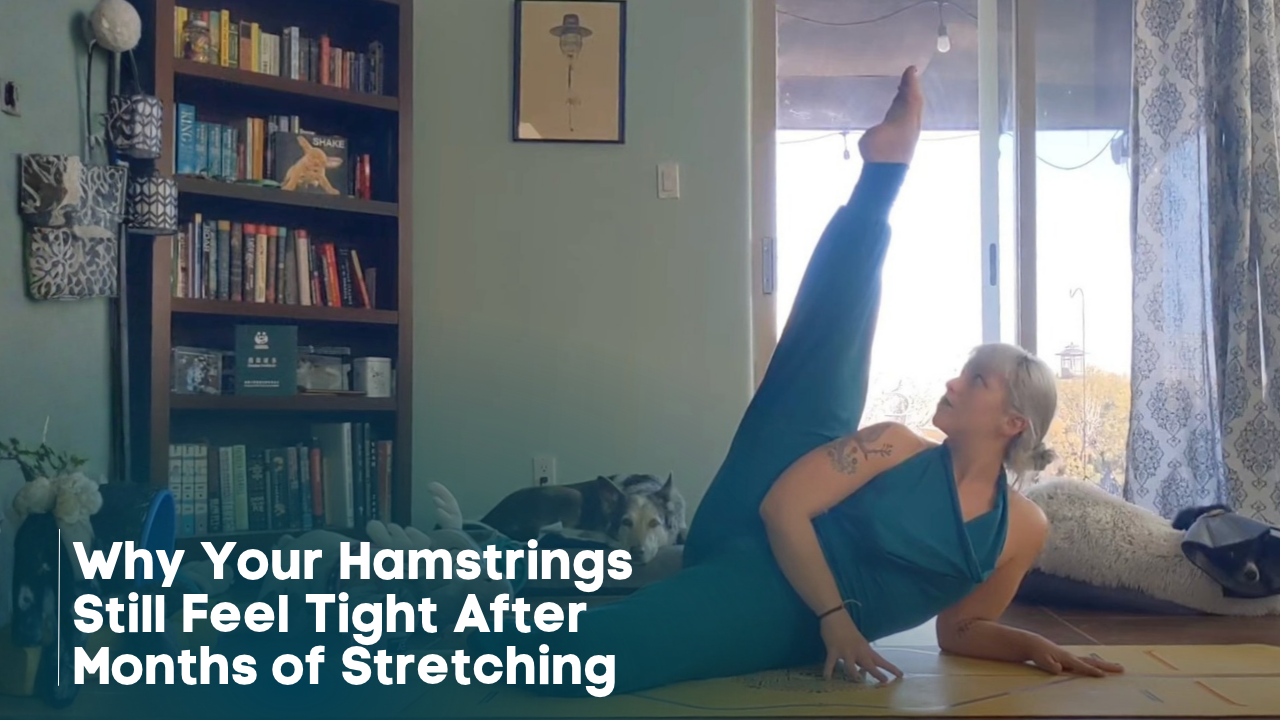
"Let your head hang heavy and soften into your fold," says the teacher.
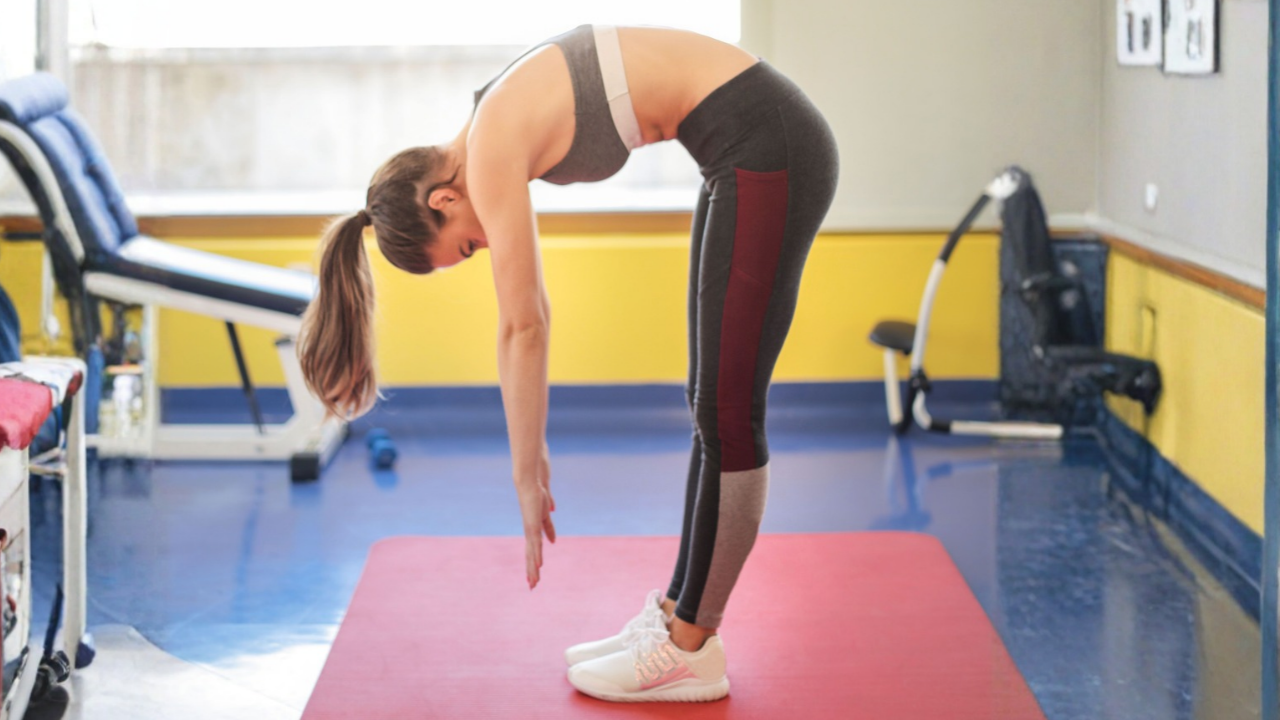
You let your head hang. You try to soften. Nothing happens. The backs of your legs feel like two guitar strings tuned for a heavy metal concert, and your fingertips are still hovering four inches above the floor. Exactly where they've been since July.
And you've been stretching every single day. So what gives?
If your hamstrings refuse to budge no matter how much you stretch, the answer might not be another forward fold.
Let's look at three reasons your hamstrings might feel tight, how to figure out what's going on, and what you can try instead.
Why stretching doesn't always work
"My hamstrings are SO tight" might be the sentence I hear most as a yoga teacher. And for years, the advice was pretty much always the same: stretch more, hold it longer, breathe into it. (As if your breath comes with a GPS.)
But here's what never made sense to me...
Some students got more flexible, while others stretched faithfully for months and couldn't get their fingertips a millimeter closer to the floor.
So I went down every anatomy rabbit hole I could find. And I discovered something important: feeling tight doesn't automatically mean your muscles need more stretching.
That tight feeling can have several causes. And until you have some idea which one you're dealing with, you could spend months working on the wrong thing.
Three reasons your hamstrings might feel tight
1. Your muscles are actually tight.
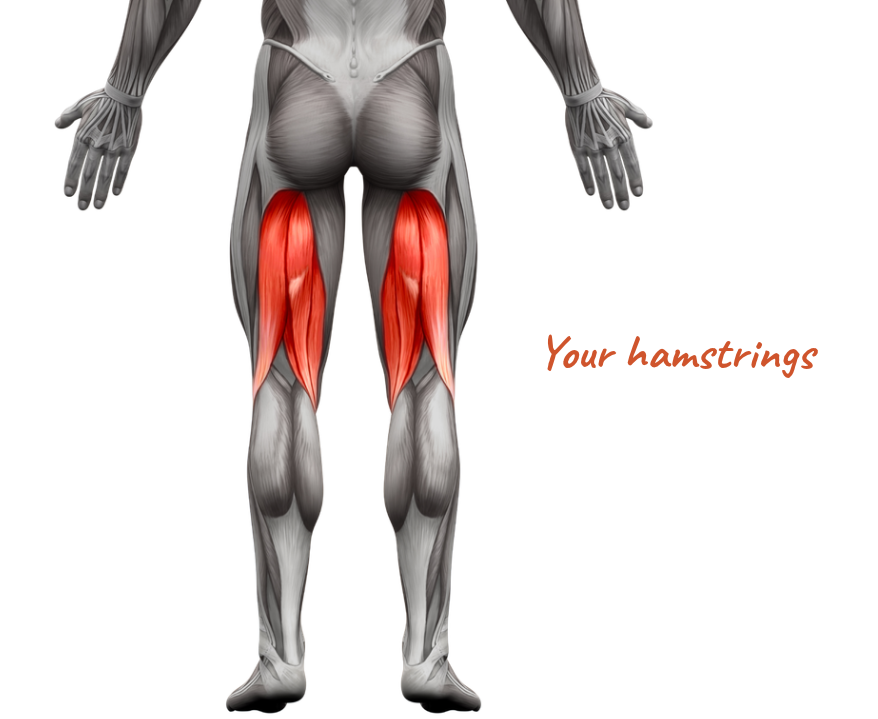
Sometimes, it really is the hamstrings. They run from your sit bones to just below the backs of your knees, and if they're not used to lengthening much, a forward fold can feel restricted. Gradual, consistent stretching may help here. Annoyingly, it takes time.
2. The surrounding tissues aren't moving as freely as you'd like.
Your muscles don't work in isolation. Fascia, the connective tissue surrounding and running through your muscles, is part of the picture too. How these tissues move relative to one another can influence how an area feels and moves. So if stretching your hamstrings over and over isn't changing much, it may be worth looking beyond the muscle itself.
3. Your hamstrings are picking up the slack for other weaker muscles.
Think of the intern who ends up doing three jobs because someone else isn't pulling their weight, then gets blamed for looking exhausted. If other parts of your body aren't contributing as you'd expect, your hamstrings may be working harder to make up for it. And that extra effort can feel like tightness.
The frustrating part? These different causes can feel remarkably similar. Which means one person's miracle stretch might do absolutely nothing for you.
Time to play detective
Rather than throwing another stretch at the problem, start paying attention to what changes the way your hamstrings feel. Over the next week, ask yourself:
→ Does your forward fold feel the same when you're cold as it does after you've warmed up?
→ Does it change after ten minutes of moving around?
→ Does it feel different after you foam roll the backs of your thighs?
→ Do your hamstrings only complain in a forward fold, or do they feel tight throughout the day?
You're looking for patterns, not a perfect diagnosis.
These clues can help you work out what to explore next, instead of automatically adding another stretch to your routine.
And that's the whole point: stop guessing, start paying attention, and use what you learn to decide what your body actually needs.
Try this before your next forward fold
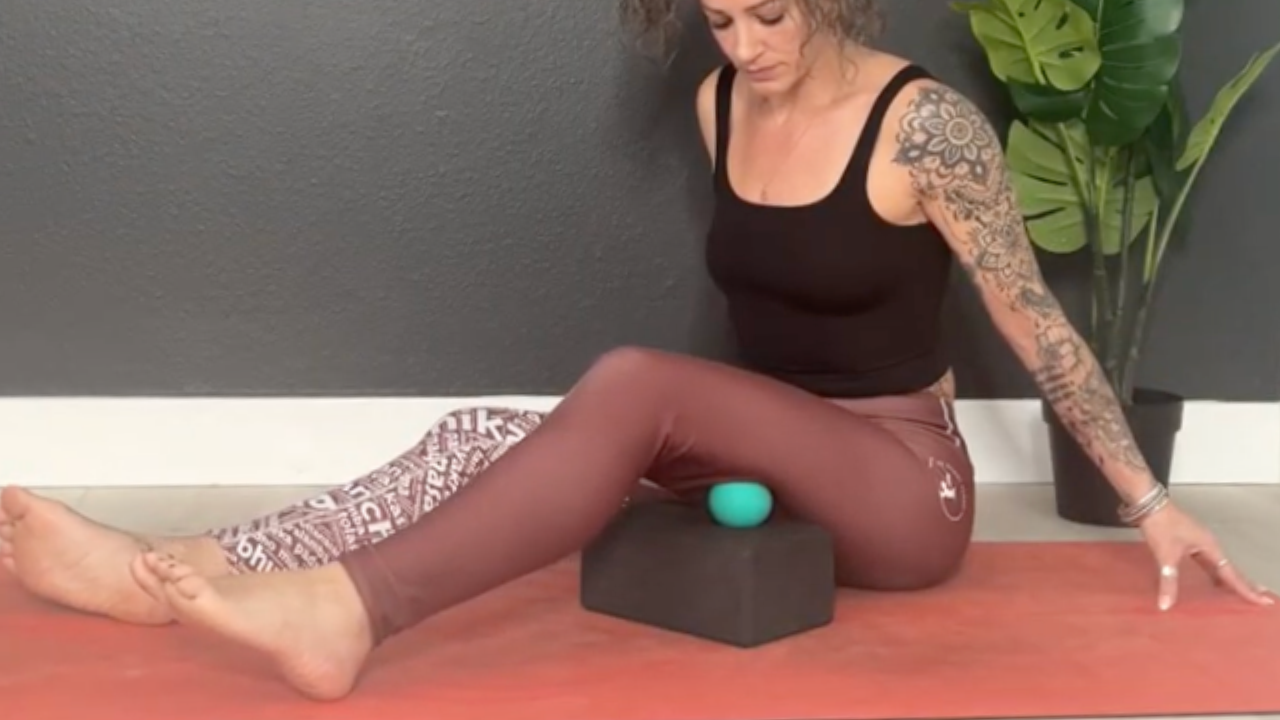
Here's a simple experiment. Grab a massage ball (a tennis ball works too) and sit on a yoga block or chair. Place the ball under the back of one thigh and slowly roll for a minute or two, pausing wherever you find a thick or tender spot. Keep the pressure comfortable.
Now stand up and fold forward. Let your arms hang, and compare how each side feels. Is one side moving differently?
If the rolled out side feels different or your fingertips get closer to the floor, you've learned something useful: your forward fold can change without simply stretching for longer. That's a clue worth exploring.
So, what should you do about it?
Now you can start making more informed choices about your practice. If your forward fold changes after warming up, pay attention to how movement affects the way it feels. If rolling changes the way you fold, that's worth exploring too.
And if nothing seems to make a difference, it might be time to look beyond your hamstrings rather than doubling down on the same stretch.
None of these clues gives you a definitive answer on its own, but they give you somewhere to start. Instead of treating every tight sensation as a request to stretch more, you can start exploring what helps and what doesn't.
The goal isn't to collect more stretches. It's to understand your body well enough to know what to try next.
Ready to stop guessing?
And if you're reading this thinking, "OK, but how am I supposed to figure all of this out?" that's exactly why I created UnF*ck Your Fascia.
It's where we dig into how your body actually works, why stretching helps some people but doesn't seem to do much for others, and what might be going on when a movement feels restricted. So instead of throwing random stretches at the problem and hoping one sticks, you can start making sense of what you're feeling and what to explore next.
Find out more about UnF*ck Your Fascia here.
Want to try it with me?
Grab your massage ball and join me for this 15-minute hips and hamstrings practice.
Those last four inches won't know what hit them.
