
How to Nail Freestanding Inversions (and Finally Ditch the Wall)
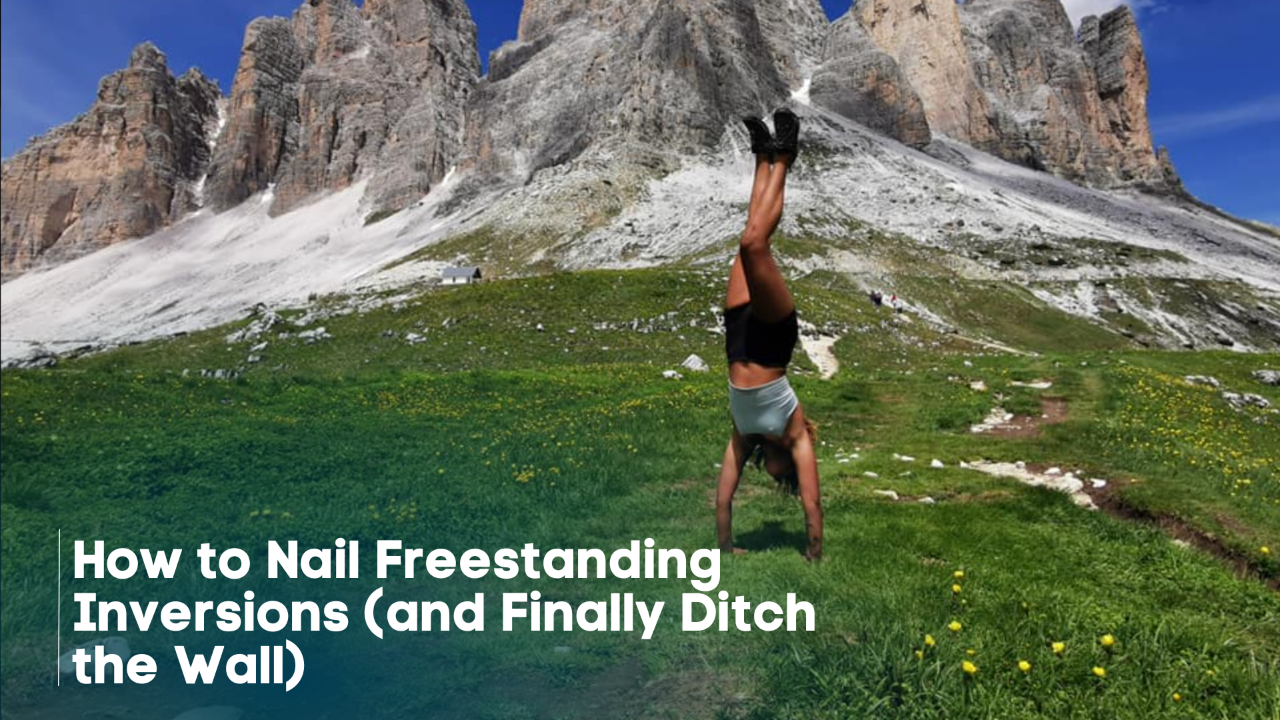
There's a point in learning an inversion where the wall stops being a prop and becomes a full-blown security blanket you drag everywhere.
You can reliably kick up to it. You can hold your Handstand there. It lets you post your "OMG 30 second handstand hold!!" Insta reels.
And then someone goes, "Okay, now try it in the middle of the room." And suddenly you're like...
Absolutely f*cking not.
Because the wall feels safe. You know exactly where it is and exactly where your feet are going to land, so you can kick up without stressing about what happens if you overshoot.
The middle of the room? Heck no. That's where all the scary shit lives.
I see this constantly with my students. Rock-steady Handstand at the wall, no problem, then the wall disappears and so does their balance. And nine times out of ten they figure the fix is more strength, more flexibility, more wall kick-ups.
Nope. Most of the time the wall's just been doing the work for them.
And until you learn to do that work yourself, you'll keep kicking up to the wall and wondering why the middle of the room feels like hiking into Mordor.
Let me explain.
Your fingers have a job (and the wall's been doing it for them)
When you kick up to a wall your feet hit the wall and the wall stops you for going any further. Simple. Job done.
Except that job (stopping you) is supposed to belong to your fingers.
In a freestanding inversion your fingers are your brakes. When you start tipping too far forward (and feel like you might go into a forward roll), you grip the mat to bring your weight back over your hands.
But you don't really learn that when the wall is doing the job for you.
You kick up, your feet hit the wall, and there's no reason for your fingers to do much of anything.
Then you move into the middle of the room, tip forward an inch, and suddenly you're like, "Oh sh*t. Abort mission!!"
Because you've never had to catch yourself before.
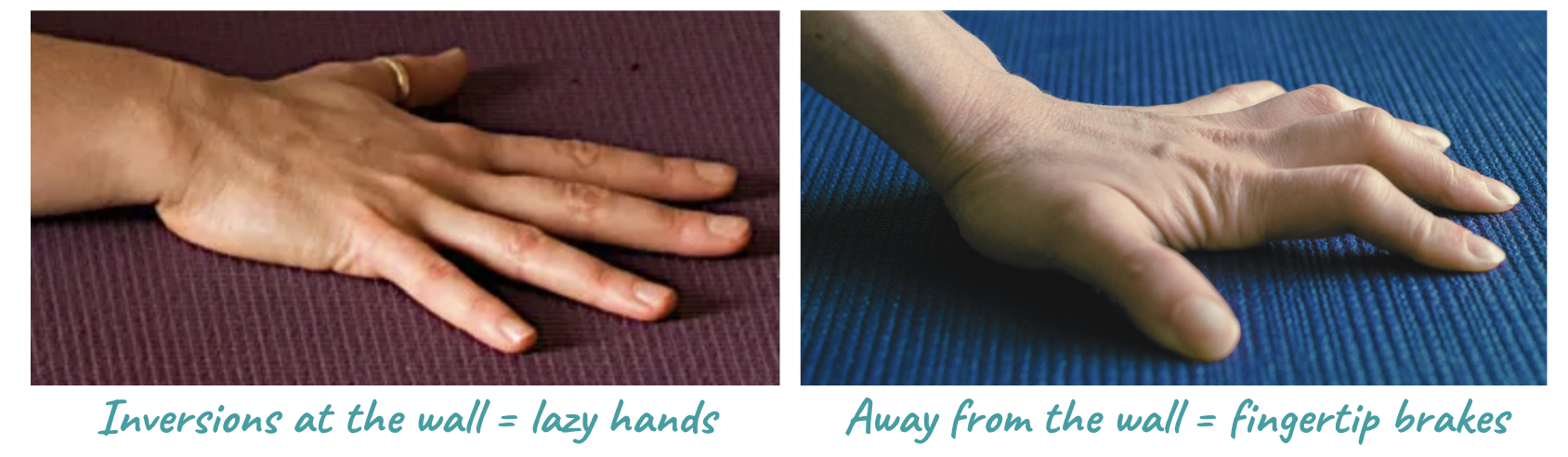
That doesn't mean you need to ditch the wall completely. It means you need to stop letting it do all the work.
Try kicking up close to the wall with the aim of not touching it at all. Grip the mat as you kick up and see if you can find a second or two of hang-time before landing on the wall.
You're teaching your hands to do the job the wall has been doing.
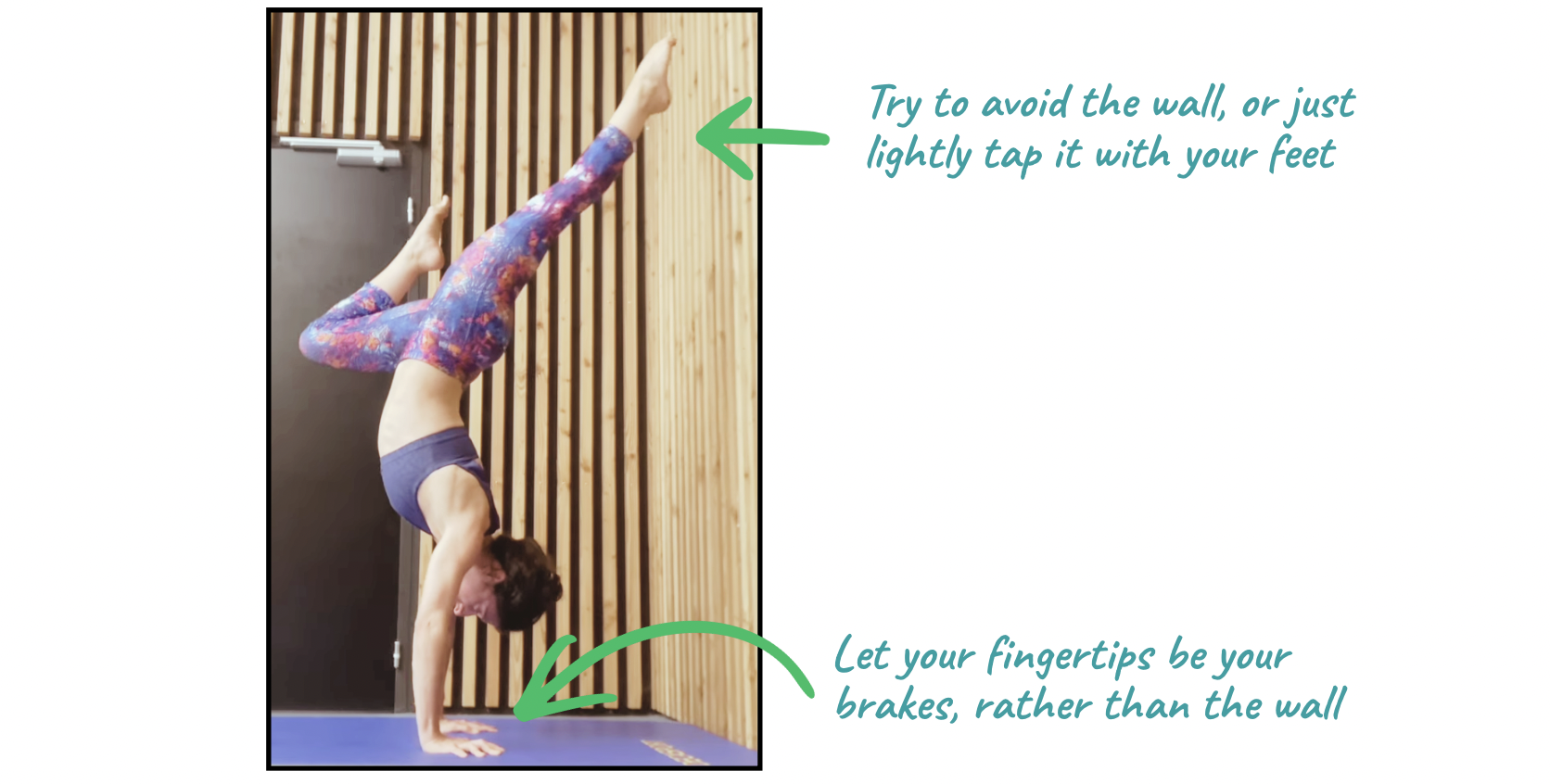
And while you're at it, pay attention to your kick-up. If every attempt ends with a massive BANG against the wall, your fingers don't have much of a chance to help you. A slow, controlled kick-up gives you a chance to actually find the balance. A wild kick-up just yeets you into the drywall (and maybe into a trip to Home Depot if you yeet hard enough).
You won't fly until you know how to fall
There's another reason people get stuck at the wall:
They're afraid of falling.
Which, to be fair, is not exactly irrational. Your brain sees you upside down with your hands on the floor and quite reasonably asks, "And what exactly is our exit strategy here?"
If you don't have an answer, you're going to hold back. You'll under-kick, bail the second you feel yourself getting light, or keep one foot on the wall because at least you know where the wall is.
So don't spend all your time learning how to stay in your inversion. Learn how to get out of it first.
For Handstand and Pincha, that usually means learning your cartwheel exit.
Move to the middle of the room and kick up super small...just a foot or so off the ground. Deliberately take one leg out to the side and step down.
Once that feels easy, kick a little higher... then a little higher... and so on.
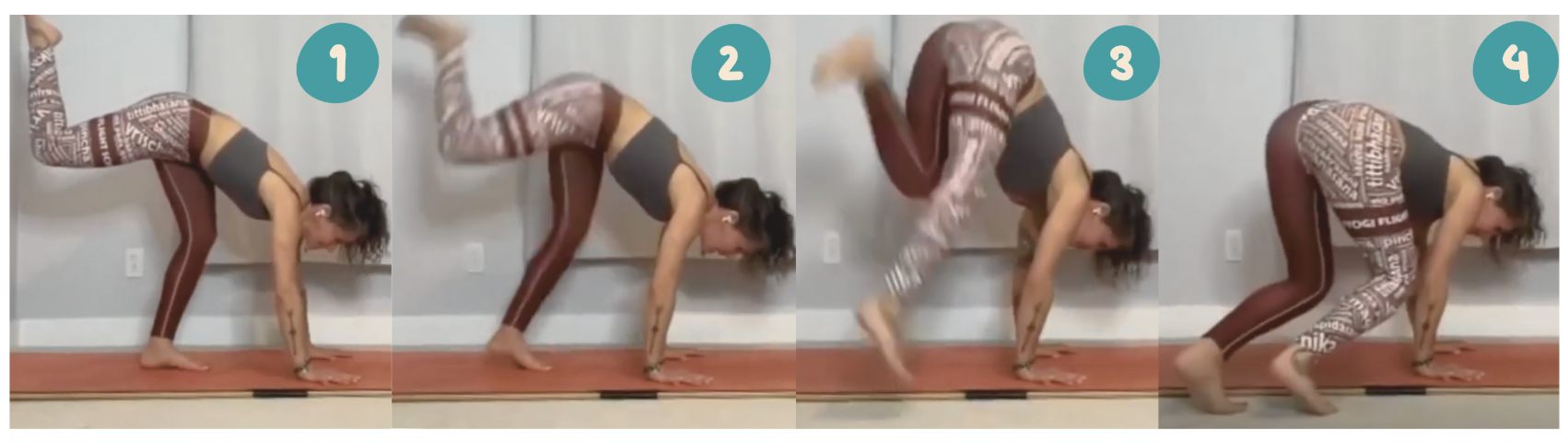
Practise exiting when you're not falling.
Don't wait until you're halfway into a terrifying wobble and hope your body figures it out. Practise it until stepping out feels as familiar as riding a bike.
Once your body knows, "Oh, I can get out of this safely," you don't have to be quite so cautious about kicking up in the middle of the room. And that's when you will let yourself actually find the balance instead of spending the entire attempt preparing for the moment you're going to lose it.
I'm not anti-wall
The wall is brilliant. It gives you somewhere to practise the shape, get comfortable being upside down, and work on your line without having to worry about falling over.
The problem is when the wall becomes the thing you rely on instead of a tool you use to learn with.
If you've been practising against the wall for months and still can't seem to leave it, don't automatically assume you need more strength.
Have you taught your fingers how to catch you? Have you taught your body how to get out safely?
If not, it makes perfect sense that the middle of the room feels terrifying. The wall has been doing both jobs for you.
Take those jobs back, and suddenly the middle of the room isn't some terrifying place where everything goes horribly wrong.
Take those jobs back, and the middle of the room stops being Mordor and starts being just floor.
Ready to Get Off the Wall?
This is exactly the kind of stuff we work on inside Yogi Flight School. We break down what's actually happening in your body, what you need to change, and how to build the skills that make freestanding inversions feel less like a circus trick and more like something your body actually understands.
Want to See It in Action?
Come watch me stage an intervention between you and your wall. Check it out in the video below:
