
Contentment Is Only Half of Santosha
A few weeks ago I wrote about Santosha, the yogic idea of contentment.
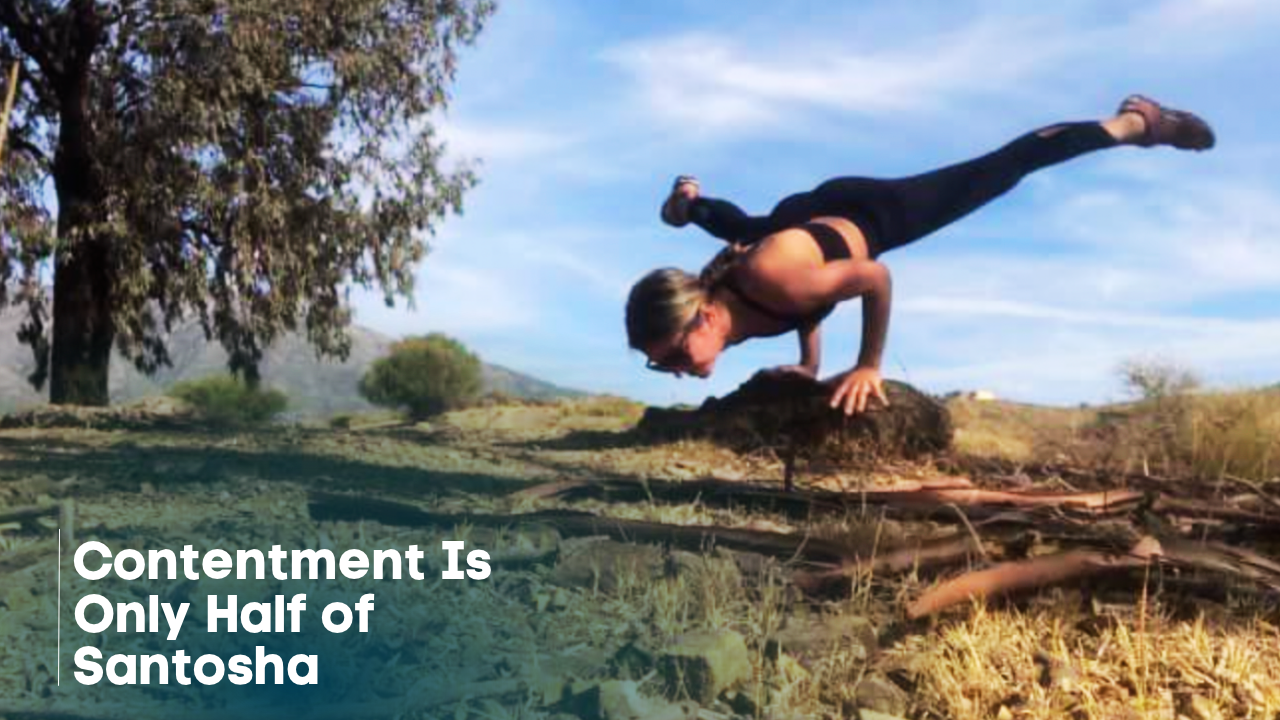
In terms of standing on our hands, I explained Santosha as being able to really, really want a handstand (or whatever your coveted pose is, for me it's peacock) while also not turning every failed attempt into an increasingly desperate cry of "FOR THE LOVE OF SHIVA, JUST HAPPEN ALREADY."
Here's that post in case you missed it.
Since I wrote that article, I've been pondering another question: If I'm content with where I am right now, unattached to whether or not I get the handstand, and I don't need it to make me happy, why am I bothering to work on it?
Because I could absolutely take the Santosha message and turn it into: "Well, I'm happy where I am, so there's no need to change anything." But that's not what I want you to take away from the idea of Santosha.
Yes, I can be perfectly happy with where I am while still wanting to learn something I can't do yet.
So how do we hold both things at the same time? How can I be content with where I am and unattached to the outcome, while still doing something about the thing I want to learn?
Practice and letting go
To answer that, we need to take a peek in something called the Yoga Sutras.
You can think of the Sutras as the Michelin Guide to Yoga (just with fewer Steak Tartares and more loin cloths). They are a collection of teachings on the practice and philosophy of yoga, and Santosha is one of those teachings.
There's also a part of the Sutras that speaks directly to the question we're looking at. In Sutra 1.12, Patanjali (the person who authored said Yogic Michelin Guide) talks about two things called Abhyāsa and Vairāgya, which are commonly translated as practice and non-attachment.
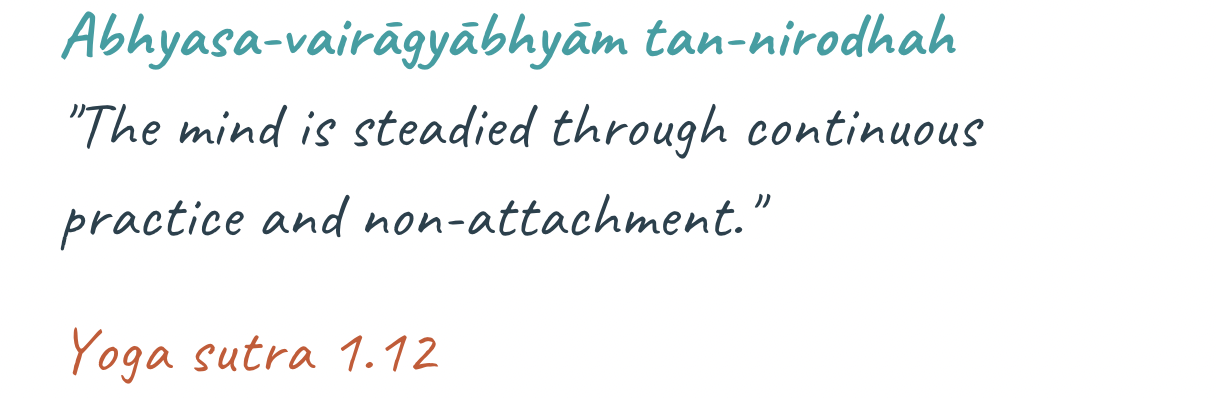
We talked about the non-attachment side of this in the Santosha article. You can want the handstand without clinging to the idea that it has to happen.
That's Vairāgya.
But to answer our question of "if I'm okay with where I am, what makes me get on the mat and do the work?" we need to look to Abhyāsa.
Abhyāsa is practice. But not just "I did some handstands one afternoon a few months ago, therefore I have practiced."
It's the commitment to keep showing up to the practice over time. To pay attention to what you're doing. To keep learning. To try something different when something isn't working instead of doing the same drill you've been doing for six months and hoping your body eventually gets the memo.
And importantly, you don't have to be dissatisfied with yourself to do any of that. You can practice simply because you want to learn. You don't need a lack of Santosha to make you practice. You don't need to feel frustrated or behind. You don't need to be secretly furious that your body hasn't caught up with the person you follow on Instagram.
You can be fully content where you are, unattached to any outcome, and still be curious about what else your body can do.
That's the version I'm after: content, unattached, and still quietly doing the work.
The trouble is that holding both Abhyāsa and Vairāgya at once is harder than it sounds. Lean too far one way and you end up with a big pile of one and barely any of the other.
When you have one without the other
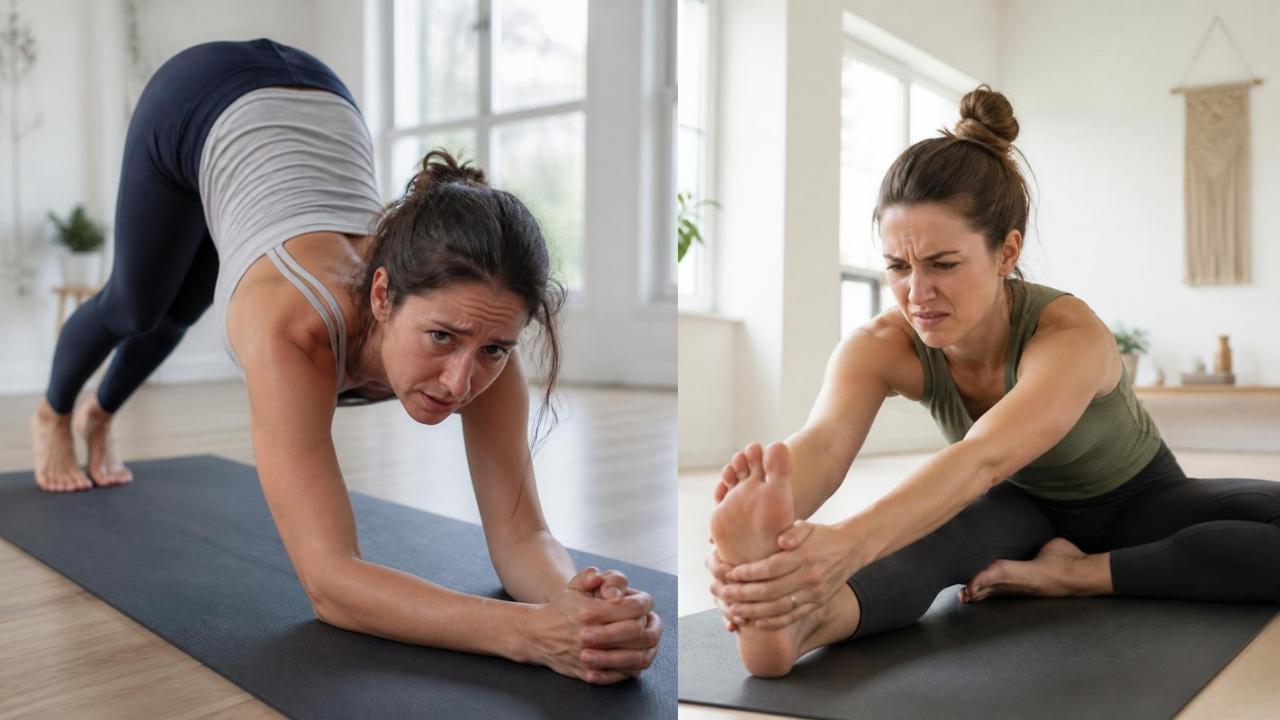
Abhyāsa without Vairāgya can very quickly become "I HAVE BEEN PRACTICING THIS FOR SIX MONTHS SO WHY THE F*CK AM I STILL NOT ABLE TO DO IT?"
You do the work, but you're gripping the outcome so tightly that every practice becomes a test of whether you're getting closer. Every wobble feels like you're falling behind. Every person who gets their handstand before you gets added to your sh*t list for reasons you would obviously never admit out loud. You're practicing, sure.
BUT...
You're also making the result responsible for how you feel (and most of the time that feeling is crap).
And then you can go the other way. You can get so focused on "letting go" that you stop engaging with the practice. "I'm content with where I am." Great, but are you practicing? Are you paying attention to what you're doing? Are you willing to try something different when what you're doing isn't working? Are you still curious about what your body might be capable of?
That's the balance I'm getting at here.
Santosha lets you be content with where you are.
Vairāgya lets you loosen your grip on where you think you should end up.
And Abhyāsa is what keeps you showing up in between.
You can be happy here. You can still want to go there. And you can keep practicing in the space between the two.
Want to go a little deeper? Check out the video below:
And if you want help with the practice part, with actual poses, drills, feedback and people who will cheer you on through the faceplants, that's what we do inside Yogi Flight School.
Come do the work with us.
