
Do You Need to Master Chaturanga Before Learning Arm Balances?
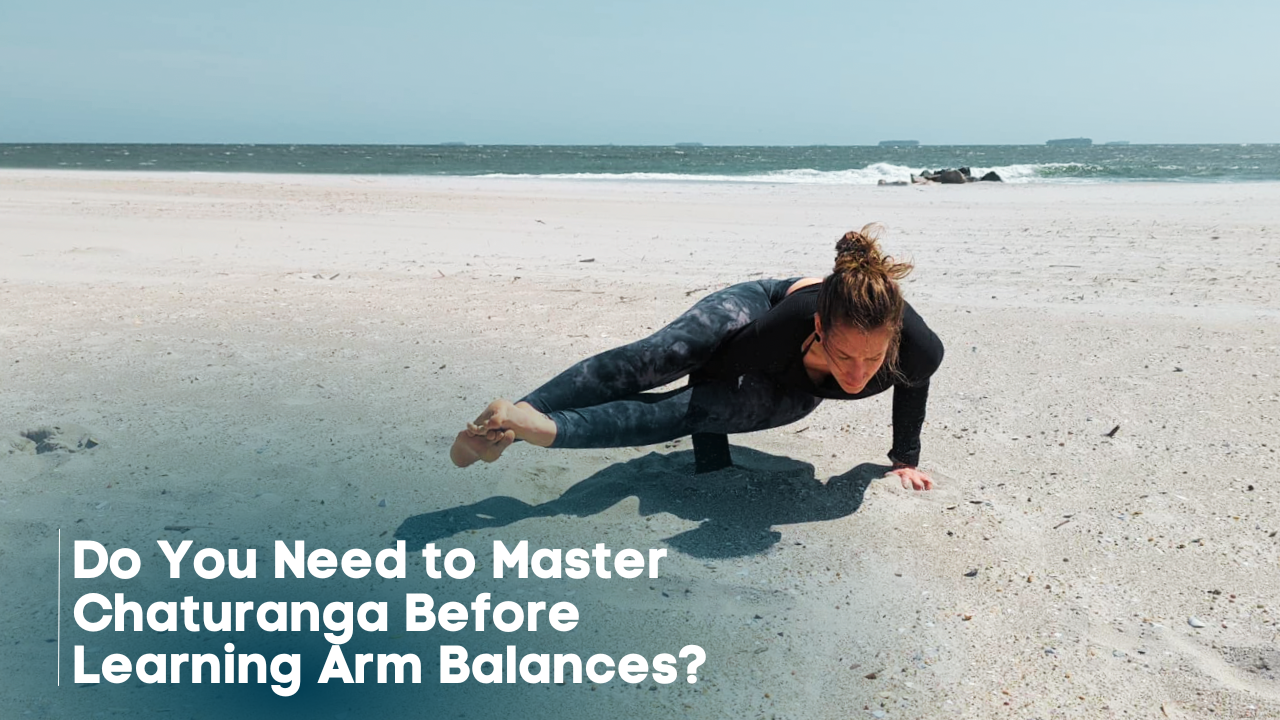
"No way I can do arm balances!! I can't even do a proper Chaturanga. I just sort of... collapse halfway down."
I get this one a lot.
Someone wants to learn arm balances, but they've decided they need to master Chaturanga first... as if there's some yoga committee handing out arm-balance licences and the first question on the application is, "So... how's your Chaturanga?"
So they spend months doing Chaturangas.
And more Chaturangas.
And then some lovely little Chaturanga drills designed to prepare them for their future Chaturangas.
Meanwhile, the arm balance they wanted in the first place is sitting over in the corner like, "Errrrr, remember me?"
So let me save you some time:
You do not need a good Chaturanga to do most arm balances. You don't even need a shitty one.
Where did this "must have Chaturanga" idea come from?
Chaturanga is one of the first yoga poses where your arms suddenly have to support a pretty significant chunk of your body weight - and that can feel f*cking hard.
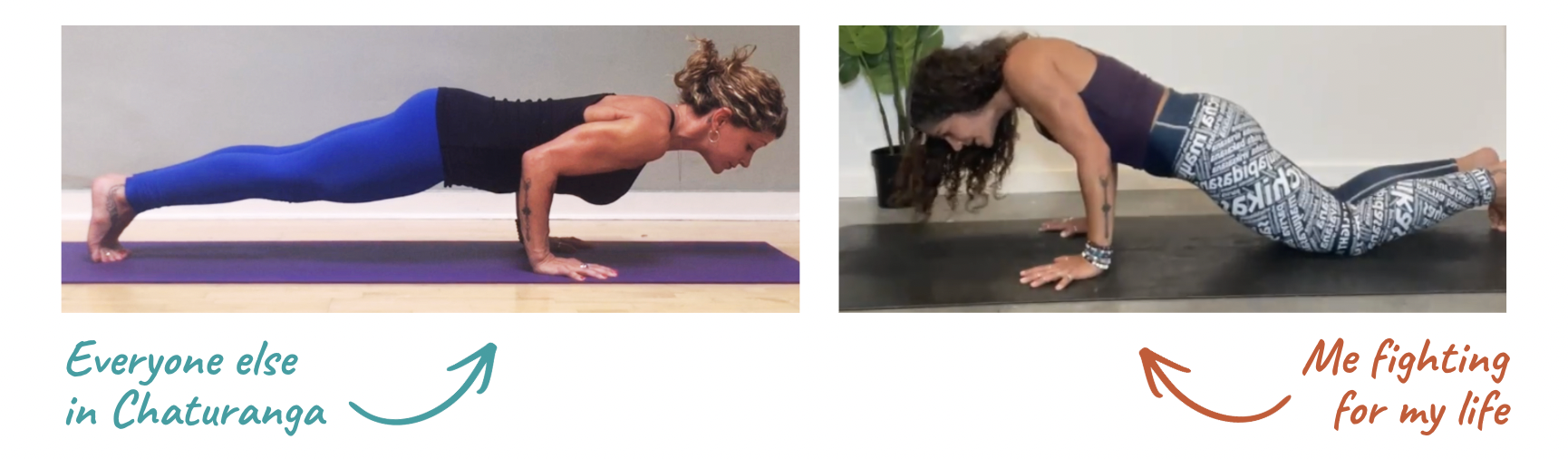
Then you look at an arm balance like Crow, where your arms look to be in a similar shape, but now your entire body is hovering off the floor. And you think:
“If I can barely hold myself up in Chaturanga when my feet are still on the floor, how the heck am I supposed to balance my entire body on my hands?”
Fair question.
But there's an important detail you probably haven't clocked: your arms are in a completely different position in Chaturanga than they are in most arm balances.
Why Chaturanga is so hard
Chaturanga is brutal on your arms. Pretty sure I could poll 100 expert yogis and 99 and a half of them would agree.
Your elbows are bent deep, you're fighting gravity to keep your chest hovering a few inches off the floor, and you're squeezing muscles you didn't even know existed.
And then you have to stay there for what seems like an eternity, and attempt to find inner peace.
The deep bend in your elbows is a big part of why it's so hard, and it comes down to who's doing the work.
When your arms are closer to straight, your bones stack up underneath you and take a lot of the load for free. Chaturanga takes that away: with your elbows bent that deeply, your skeleton can't do much of the supporting anymore, so your muscles have to step in and crank out a lot more force just to keep your chest from dropping to the floor.
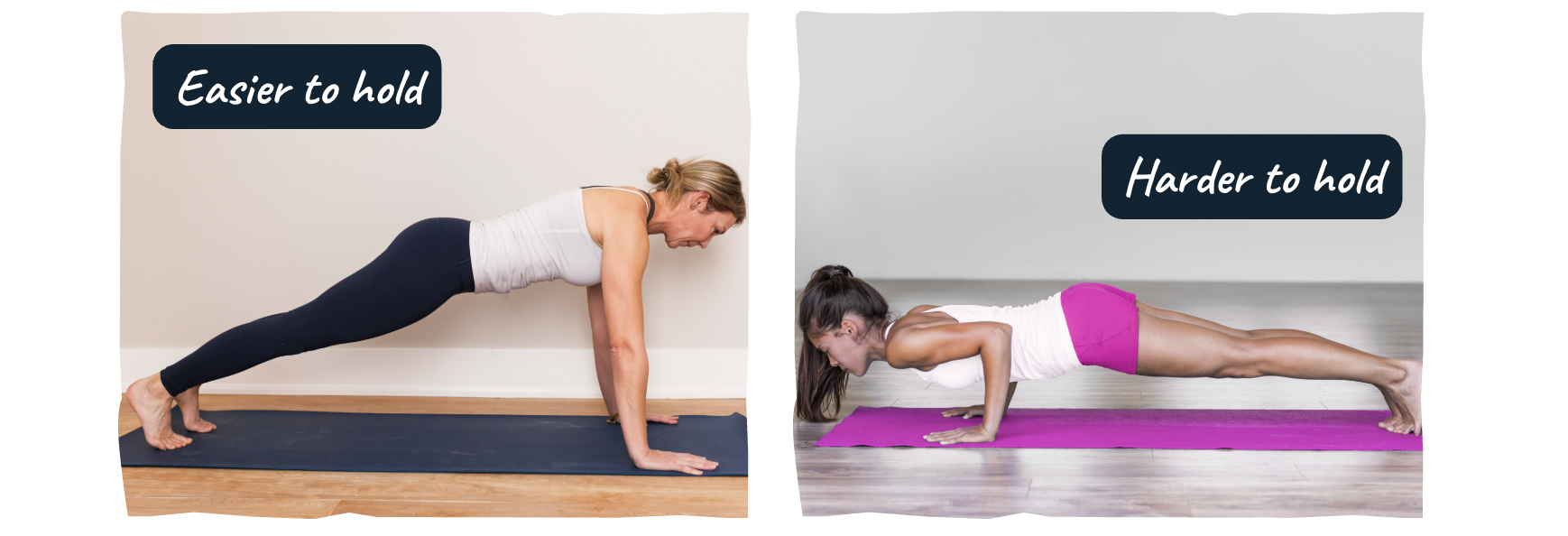
That's why you can hold a straight-arm plank for what feels like an eternity, but start internally screaming three seconds into Chaturanga. Same body, same hands on the floor. The one thing that changed is how deeply your elbows are bent.
Which is the part that confuses people about Crow. Your feet aren't even on the floor, so surely it has to be harder? All your bodyweight is in your hands, with nothing holding you up from below. And yet, for most people, Crow is the more doable of the two.
And the reason is sitting right there in your elbows
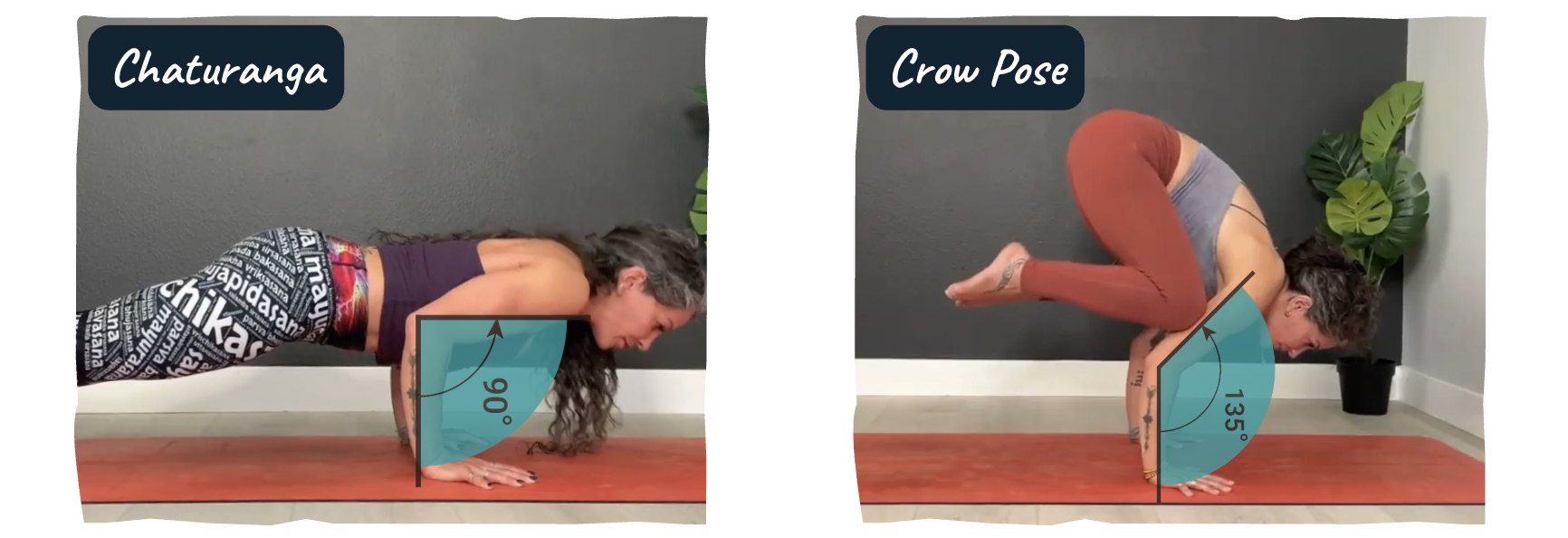
In crow your elbows are bent, yes, but nowhere near as deeply as in Chaturanga. That puts you much closer to the straighter position your skeleton is happiest in, so your bones carry more of the load and your muscles aren't screaming the way they do down in Chaturanga. This is exactly why someone can be rubbish at Chaturanga and still learn to fly their Crow, feet off the floor and all.
Are there exceptions?
A few. A handful of arm balances do bend the elbows much more deeply, closer to that Chaturanga angle. But they're the exception, not the rule.
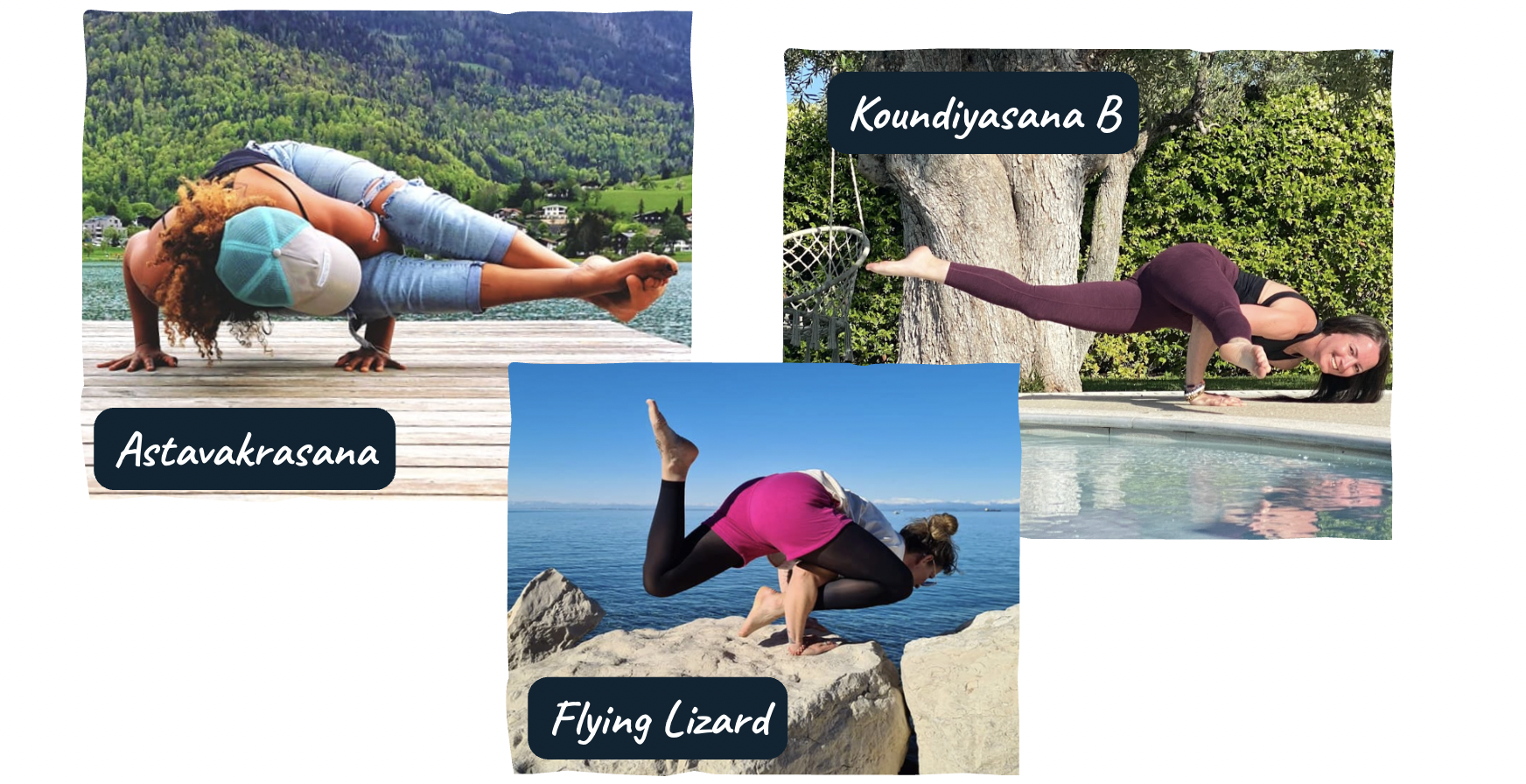
Putting it all together
If your Chaturanga currently looks like a slow-motion collapse into the floor, work on it.
I'm not saying it's useless. It builds strength, and if you practice vinyasa yoga, you're probably going to meet it approximately seventeen billion more times.
But it was never the gate you had to get through before arm balances were allowed.
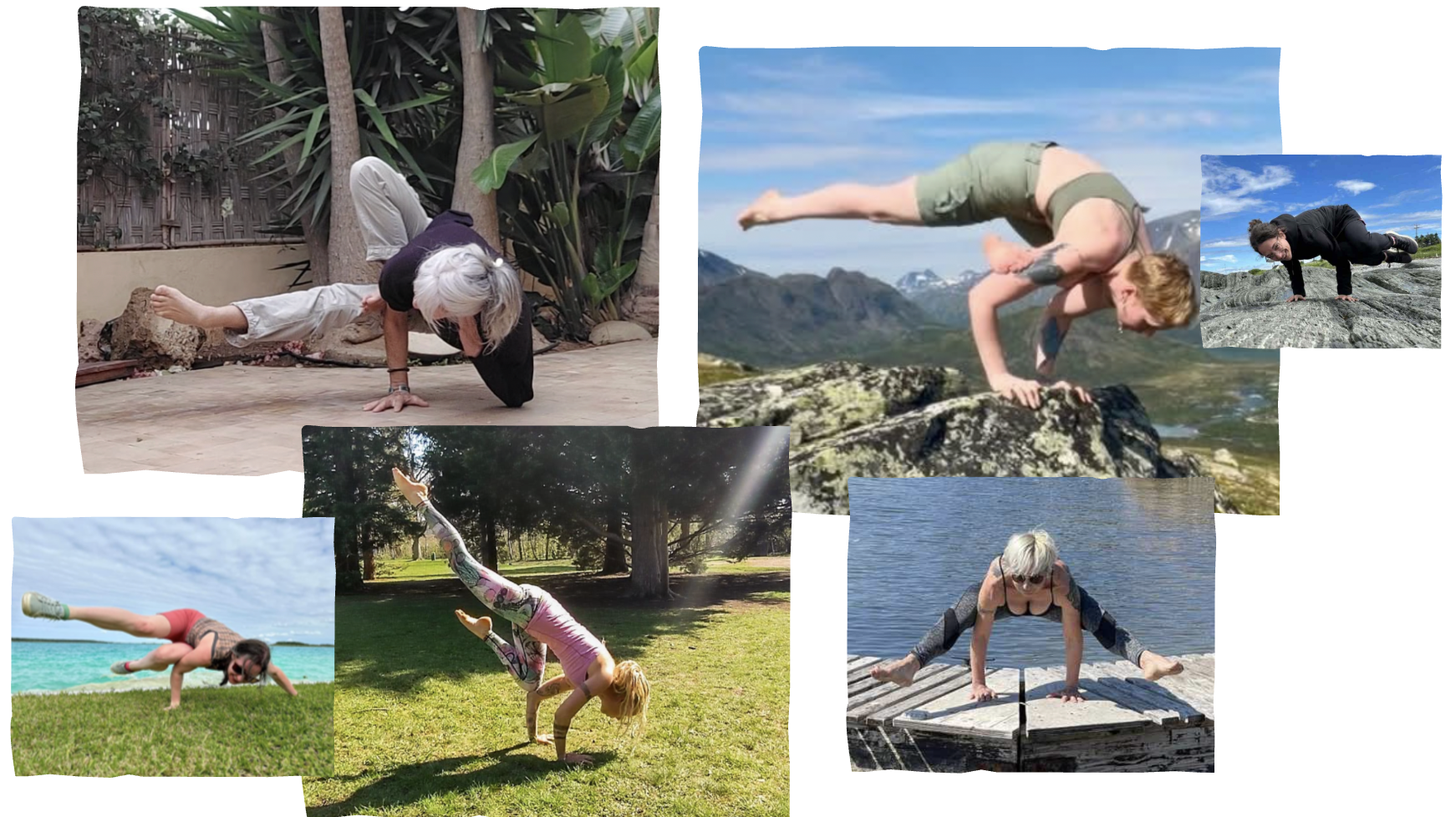
Arm balances ask something different from your arms, and you can start building that today, while your Chaturanga is still a hot mess. The two are happy to be works in progress side by side. You don't have to finish one before you're allowed to start the other. (And if "I'm not strong enough" is the story you've been telling yourself about arm balances, I wrote a whole post about that here.)
So if you've been waiting for your Chaturanga to get better before you try arm balances, consider this your official permission slip to stop waiting.
Your Chaturanga does not decide whether you can fly.
Ready to Fly?
If you want to learn the mechanics behind arm balances and inversions, come join us inside Yogi Flight School.
I'll show you how to break these poses down, understand what's really going on in your body, and build the skills you need to get yourself off the floor.
No perfect Chaturanga required.
Want to See It in Action?
Want the TLDR version? Watch the video below to see why you don't need a perfect Chaturanga before you start working on arm balances.
