
The Goal of Eagle Arms Isn't What You Think
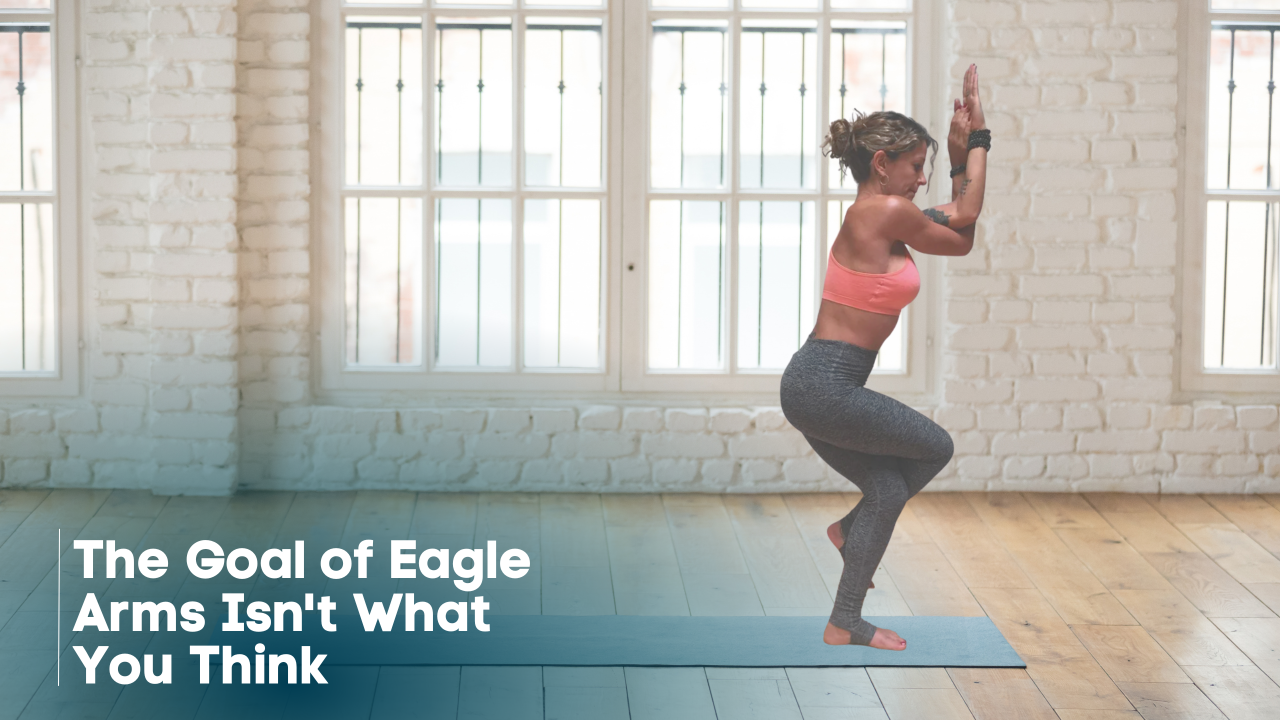
If you're in the tight upper body club, there's a good chance Eagle arms feel like a practical joke.
The teacher cheerfully says, "Wrap your arms," and somehow everyone around you manages to stack their elbows, intertwine their forearms, and press their palms together.
Meanwhile, you're standing there wondering if you missed the day they handed out the shoulder mobility.
I've seen this hundreds of times. Honestly, that was me for a long time.
I lifted weights and was tight AF in the shoulders, and the range of motion was intense.
Most people (myself included) aren't struggling because they're doing Eagle pose wrong. They're struggling because Eagle arms require a fair amount of shoulder mobility, and not everybody has that available yet.
So what do most of us do?
We go full stubborn.
We yank our arms into place, grit our teeth, and convince ourselves that if we just try hard enough, eventually our shoulders will get the memo.
But more effort isn't always the answer.
Because the goal of Eagle arms isn't actually to get your palms to touch. The goal is to create a broad, expansive feeling across the upper back by spreading the shoulder blades apart.
If you spend your day at a desk, carry tension in your neck and shoulders, or generally feel stiff through the upper back, this can be a really valuable action to practice.
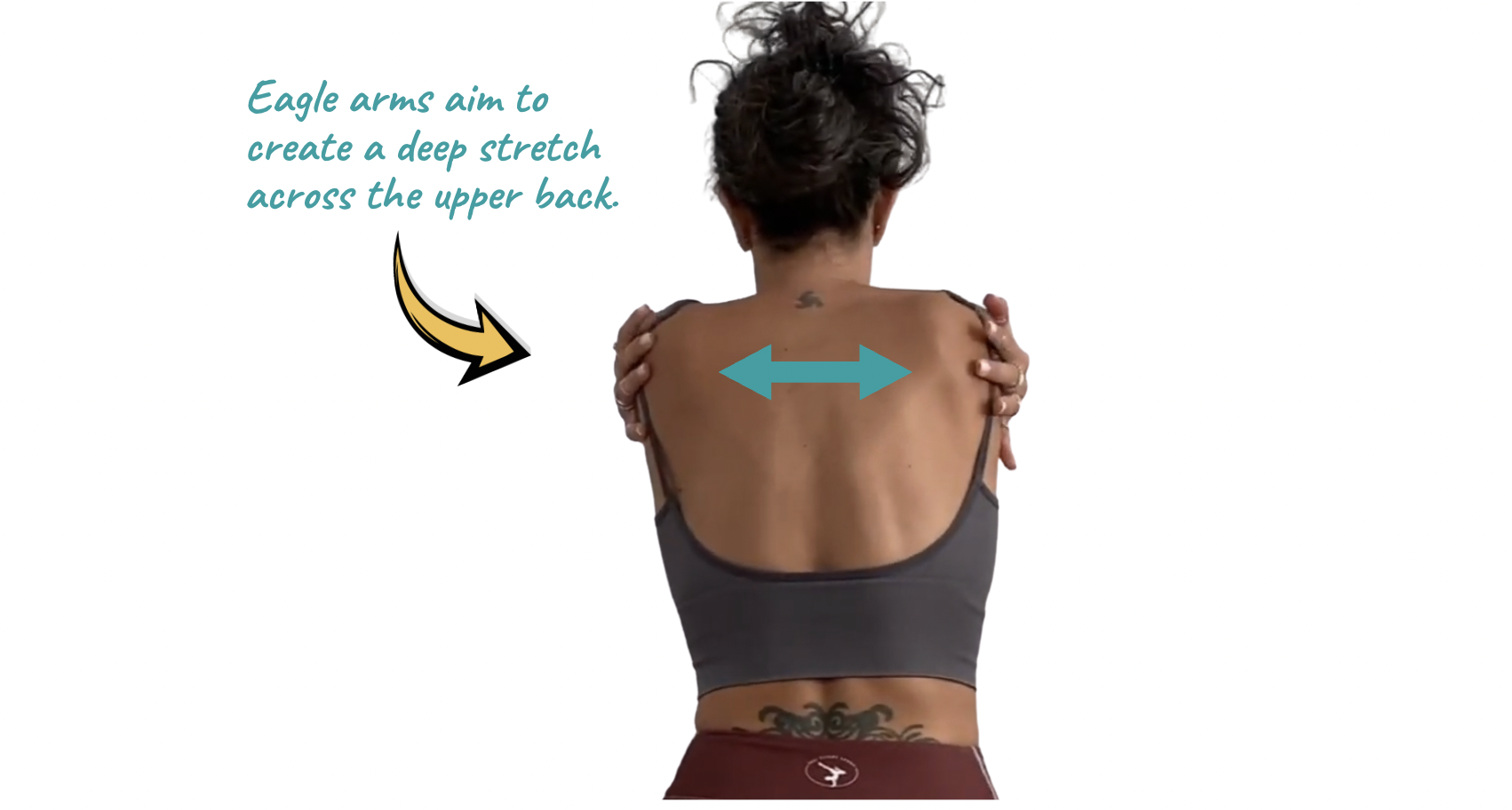
And the good news is that you don't need the full expression of the pose to get that benefit.
In fact, for many people with tight shoulders, modifying the arm position is actually the fastest way to access what the pose is trying to teach.
So in this week's blog post, I'm sharing two simple modifications for tight shoulders that allow you to work the same action without forcing your way into a shape your body isn't ready for. (And if binds also make your shoulders immediately think "oh crap," definitely check out this previous blog post)
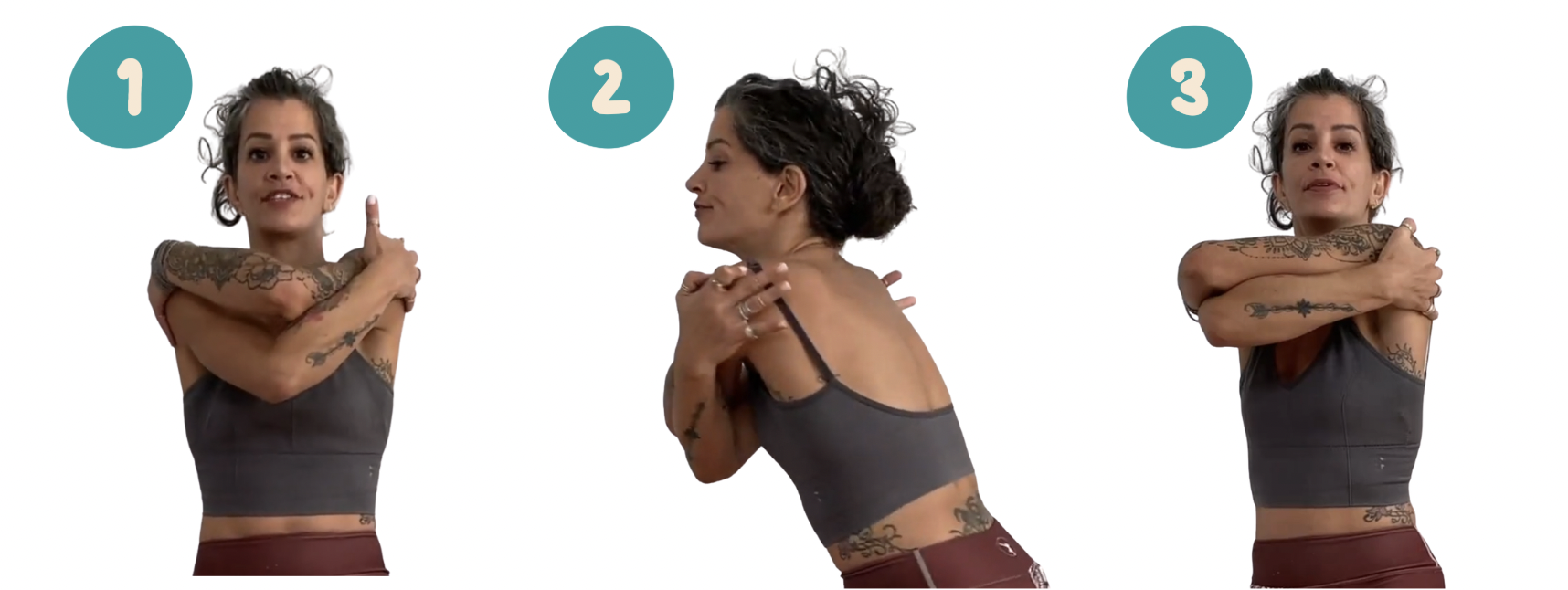
Modification #1: Give Yourself a Hug
This is usually my go-to modification for tight shoulders.
- Instead of trying to turn yourself into Gumby, simply give yourself a hug (pro tip: make a note of which elbow is on top so you can switch sides later.)
- Then crawl your fingertips around the sides of your body toward your shoulder blades.
- From there, lift your elbows away from the chest and actively spread your shoulder blades apart.
It looks simple. It is not.
You might immediately feel a strong stretch across the upper back. Happy noises are optional here.
Modification #2: Elbows Together, Palms Together
I love this modification because it takes all the ego out of Eagle arms.
- Bring the tips of your elbows together and press your palms together in front of your chest.
- Then lift the elbows forward and up while spreading the shoulder blades apart.
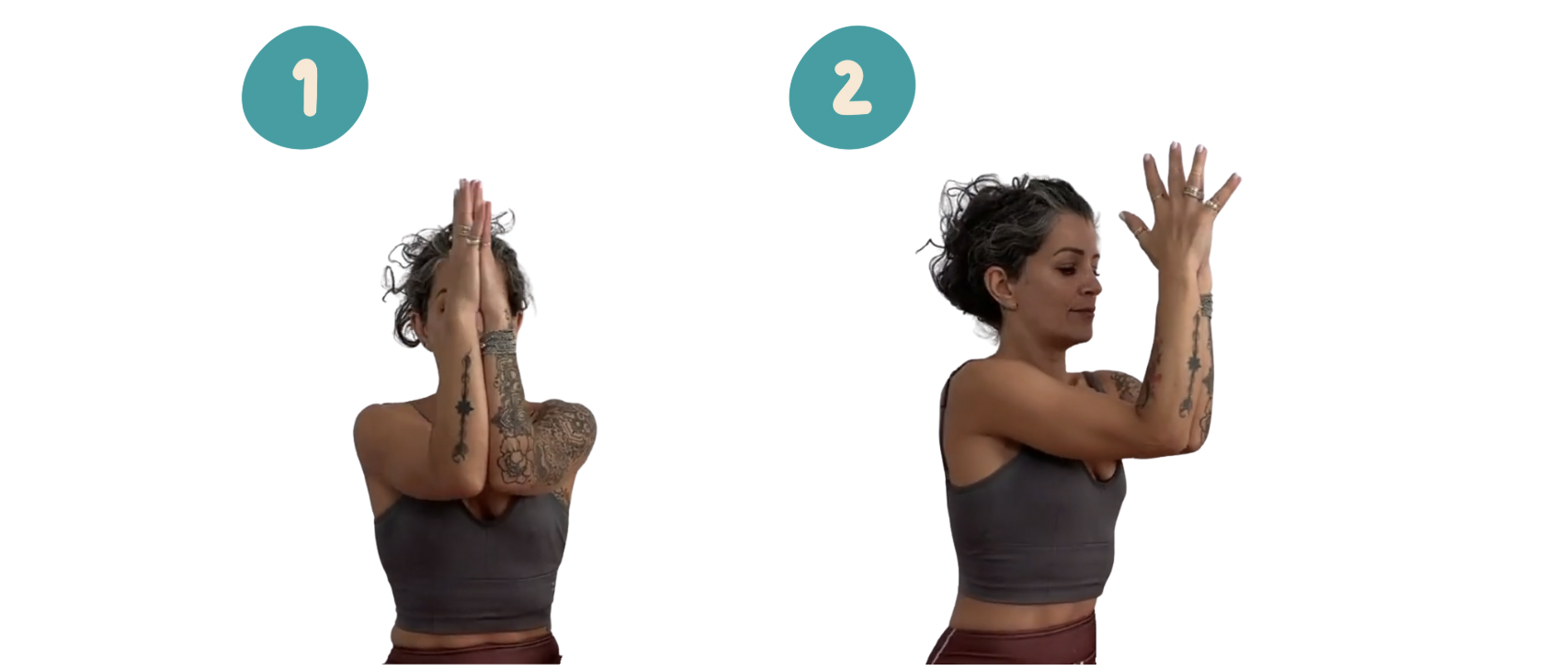 That's it.
The mobility demand drops significantly, but you're still working toward the same goal.
You're still:
- broadening through the upper back
- creating space between the shoulder blades
- getting the benefit of the pose
You're still doing Eagle pose.
In fact, if you're a card-carrying member of the tight shoulder club, you may find this variation challenging enough all on its own.
And that's okay.
Challenge is okay. Struggling to force yourself into a shape that your body isn't ready for is not.
Putting It All Together
If you've spent years thinking Eagle arms just "aren't for you," I hope these modifications show you something important:
One of the biggest misconceptions in yoga is that if you can't do the full expression of a pose, you're somehow not really doing the pose. I don't buy that.
To me, the goal of Eagle arms isn't to get your palms to touch. The goal is to create that broad, expansive feeling across the upper back.
If a modification allows you to do that, then you're getting exactly what the pose has to offer.
As your shoulders become more mobile over time, the traditional version may become available. Great.
But you don't need to wait until then to start benefiting from the pose. Because yoga isn't about proving what your body can do. It's about learning from the body you have today.
And if you're in the tight shoulder club, these Eagle pose modifications give you a way to do exactly that.
If you found yourself nodding along to this article, you'll love my No Bullsh*t Yoga Pose Library. I break down over 90 common yoga poses, including what they're actually trying to accomplish, how to modify them for your body, and how to stop forcing shapes that don't fit your anatomy.
No more guessing. No more wondering whether you're "doing it right." Just clear, practical instruction that helps you build a practice that actually works for your body.
Grab my No Bullsh*t Yoga Pose Library here!
Want to see all of this in action?
Check out my YouTube video where I break all of this (and more) down!
