
Why Your Props May Be Working Against You in Forearm Stand
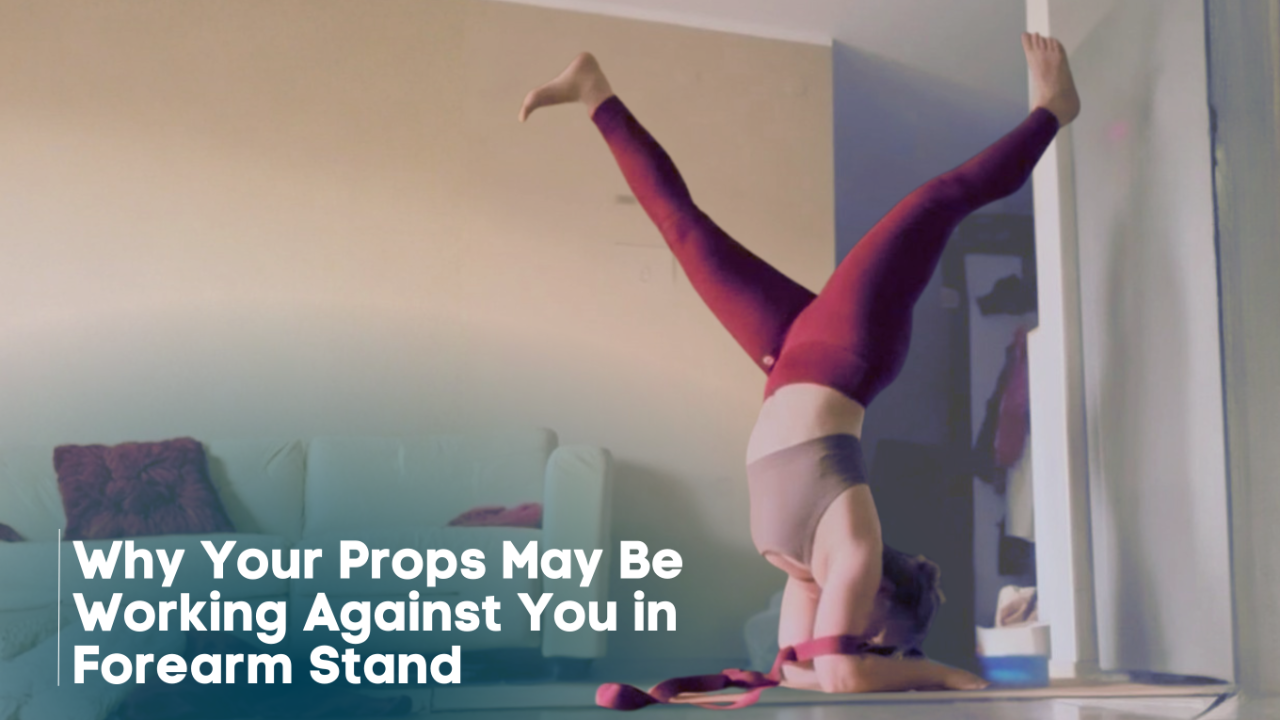
After I shared my recent article about alternative arm positions in pincha, I got quite a few comments and emails recommending different prop setups for forearm stand (click here if you have not had the chance to check the article out yet!).
A lot of people suggested using straps around the upper arms, or squeezing a block between the hands.
And honestly, these are very common approaches that are widely taught.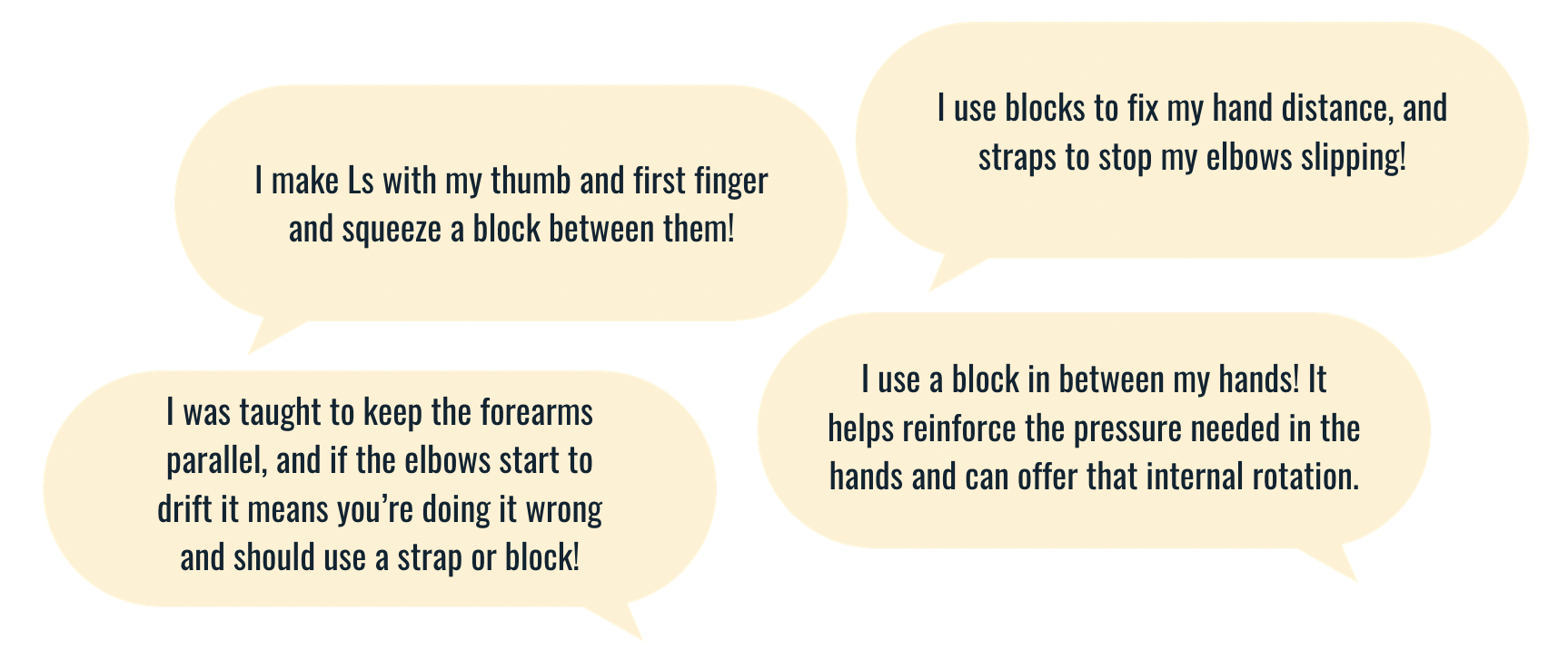
But as I read through the responses, I realized many of these suggestions were trying to solve a different question than the one I was exploring in the original post.
Because my intention was never to help people hold a “better” version of parallel forearms.
What I was actually doing was questioning whether parallel forearms need to be the goal for every body in the first place.
And that is exactly why I don’t teach Pincha Mayurasana using straps or blocks in this way.
Not because they are wrong, but because they often reinforce the shape more than they support the system that creates the shape.
Why I Don’t Teach Blocks Between the Hands
One of the most common variations is placing a block (or even a yoga wheel) between the hands or forearms.
Sometimes students squeeze the block directly between the palms. Other times they use the thumbs and index fingers to frame it and maintain alignment. I want to be clear: this can work really well for some bodies.
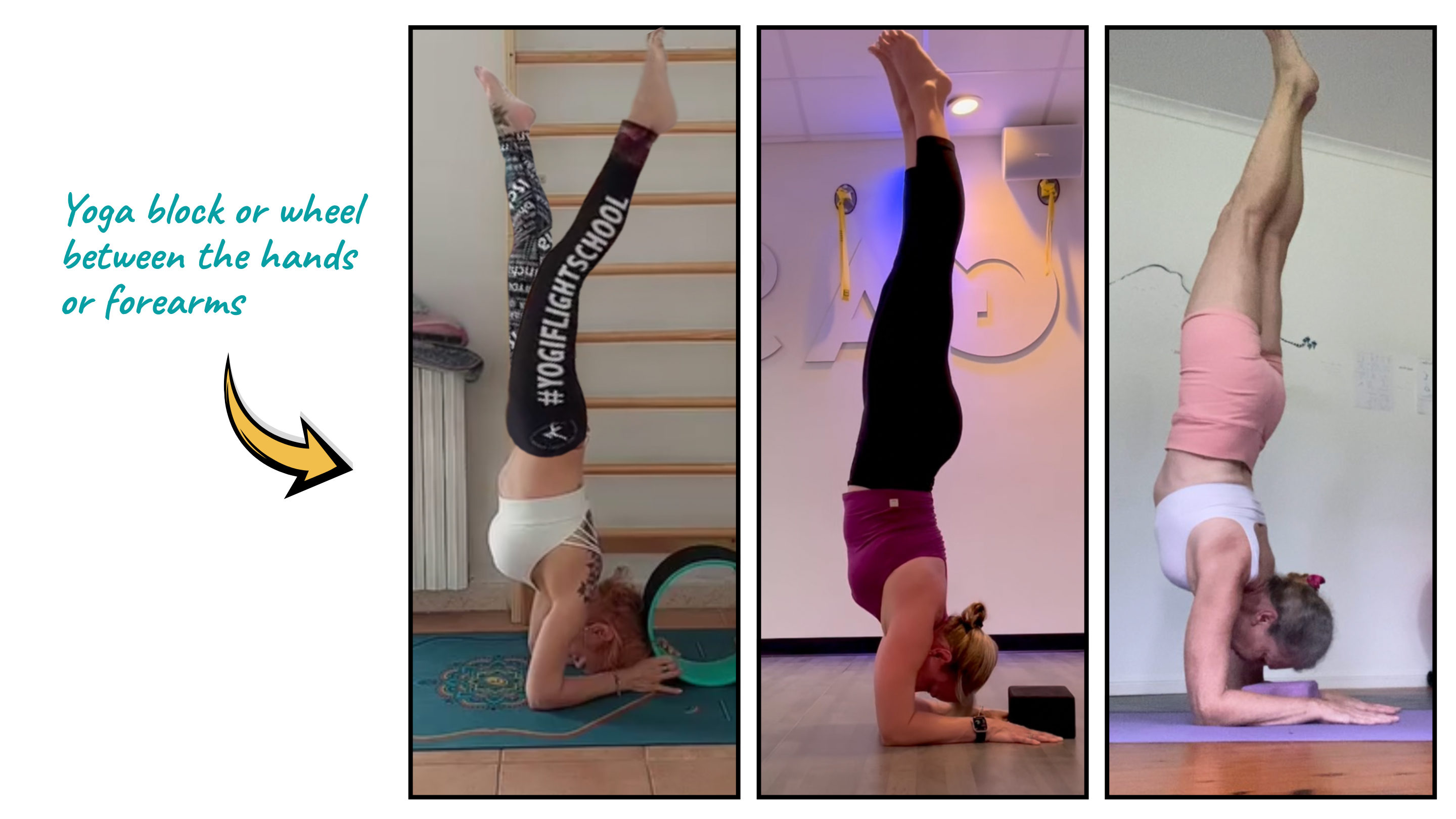
But the key point is this: the use of a block enforces parallel forearms. Which means the shoulders are still required to produce a significant amount of external rotation in flexion, in addition to holding one's full body weight.
For bodies that already have that range of motion in their shoulders, this can feel stabilizing and supportive.
However, when external rotation is a limiting factor for someone, the block does not resolve the issue. It simply reinforces the same position the body is already struggling to access.
Once the block is removed, the elbows widen again, the chest drops, and the same compensation returns.
This is why I am less interested in how we maintain a shape, and more interested in whether the shape itself is appropriate for the body we're working with today.
Why I Don’t Teach Straps for Pincha
Straps are slightly different, but the pattern is similar. Typically, the strap is placed just above the elbows to stop the arms from widening when someone kicks up.
Instead of reinforcing forearm position, straps reinforce a very specific type of effort: pushing out against the strap to create stability, rather than the active inward engagement of the forearms required to hold the pose without the strap.
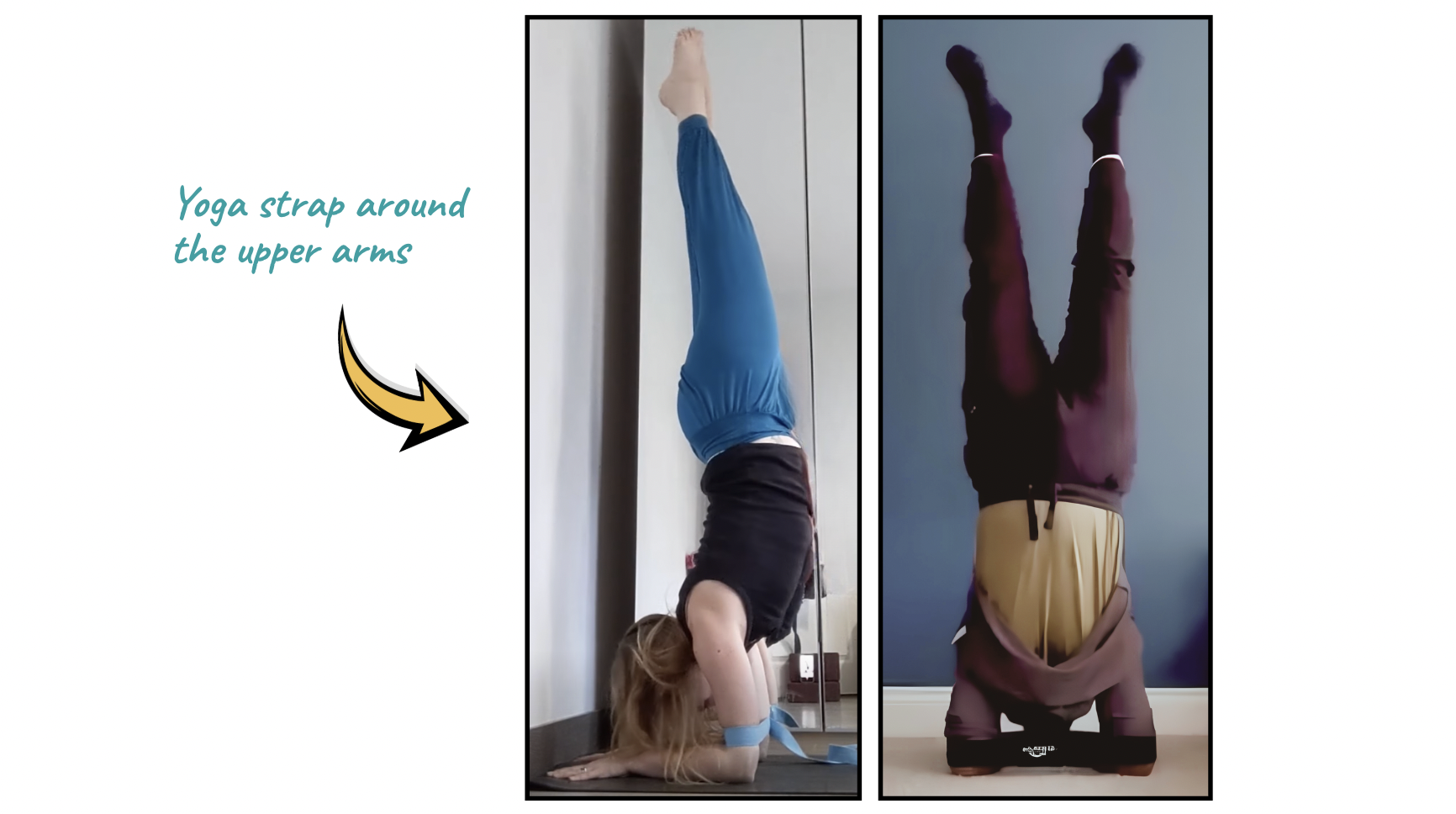 And to be fair, this can absolutely help people get upside down more easily. It can feel safer and more contained, especially in the early stages, which can build confidence and be incredibly supportive while getting comfortable being in this inverted shape.
It's important to consider, though, that the nervous system learns through repetition. So if someone repeatedly practices “push out to stabilize,” that pattern becomes their default strategy.
Then once the strap is removed, the elbows immediately splay because the body has not learned how to generate that stability actively.
Rather than supporting the desired action, the strap can unintentionally train its opposite.
Access First, Refinement Second
When I look at this whole conversation, what stands out to me is not really about props at all. It is about what we are actually trying to build when we practice a shape like Pincha.
Most traditional setups, whether it is a block, a strap, or a “perfect alignment” cue, are ultimately trying to stabilize a very specific version of the pose. Usually that means parallel forearms, a fixed shoulder position, and a clear external shape to reproduce.
And for some bodies, that works beautifully.
But for many others, especially when external rotation and flexion in the shoulders are the limiting factors, those same strategies can quietly reinforce the exact pattern that is making the pose feel unavailable in the first place.
So the question I keep coming back to is not, “How do we hold the shape better?”
It is, “What is actually helping this person learn how to organize the shape in a way that's accessible for the body they are currently working with?”
Putting It All Together
This is where props can become really interesting, as they are not inherently good or bad. The question is whether the use of props support active understanding of the pose, or replace it.
If a prop helps someone feel the correct action in their own body, that can be incredibly useful.
But if it does the work FOR them, or trains a strategy that they cannot reproduce without it, then it becomes less helpful for long-term progress.
Instead of locking the body into a fixed, traditional configuration, I am much more interested in what allows the student to find the underlying actions for themselves.
Sometimes that means changing the arm position.
Sometimes it means removing props entirely.
Sometimes it means stepping away from the “ideal” version of the pose long enough to actually feel what is going on inside it.
And none of that is about skipping work.
It's about making sure the work is actually going into the right place.
Beyond all of this, my goal at Yogi Flight School is for people to tap into their confidence, their joy and their FREEDOM of movement.
And for this reason, I don't harp on people to fight with their bodies in order to achieve "traditional alignment."
I would rather work WITH the body that is in front of me to give it the path of least resistance to get into the pose. Because once you feel the pose, something lights up inside you. You're more motivated to keep showing up on the mat, and you start to believe that YES YOU CAN, much more quickly than if you're holding out for "perfect" alignment.
Find the pose, and perfect it later.
Want to see all of this in action?
Check out my YouTube video where I break all of this (and more) down!
