
Crow vs Crane Pose: What’s the Difference Between These Arm Balances?
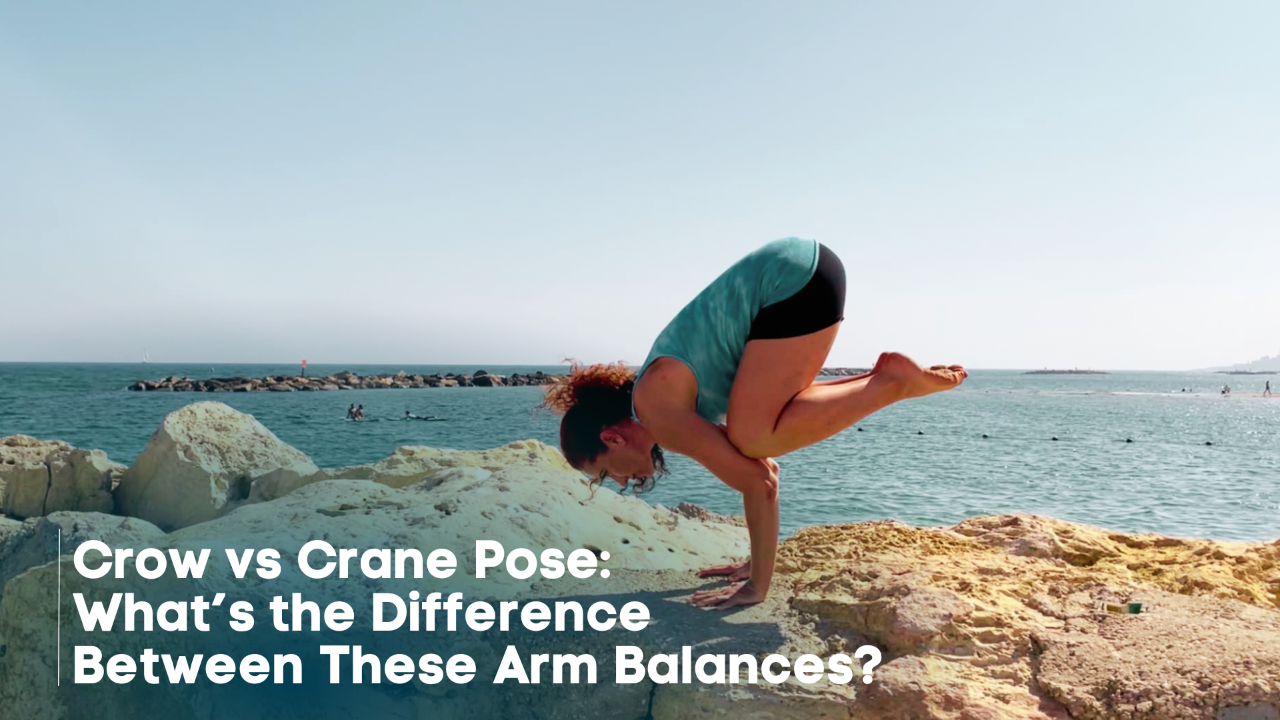
Let's settle something that has confused a LOT of yoga students:
Is Crane Pose just Crow Pose with straight arms?
Because if you look at the two poses, it certainly seems that way. Same general shape. Same arm-balance-y-ness. Same "why the hell are my feet not on the floor?" energy.
So when your teacher says, "From Crow, just straighten your arms to find Crane," it sounds pretty reasonable.
Until you try it.
You straighten your elbows....and suddenly your knees start sliding down your arms like they just realised they left the oven on, and you're left wondering why something that was supposed to be one tiny adjustment feels like you've completely changed poses.
It's because you have.
The problem isn't that you're not strong enough or that you didn't straighten your arms the right way.
It's that you're trying to keep the Crow setup while moving into an entirely different pose.
So let's look at what actually changes.
In Crow, your knees have options
In Crow, your elbows are bent, which means the backs of your upper arms give your knees somewhere to rest.

And because your knees are being supported by your arms, they have quite a bit of freedom. You can have them tucked high toward your armpits, or you can have them much lower, closer to your elbows. And both can be perfectly functional Crow Poses.
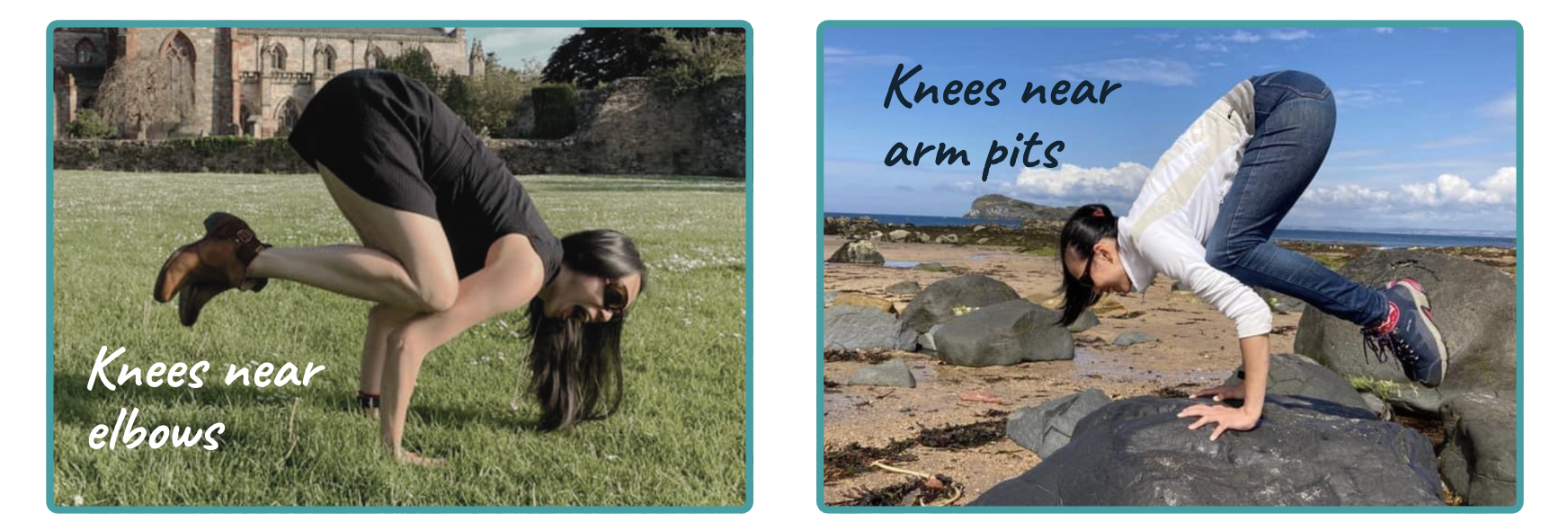
In fact, one thing I love to teach my students is that there isn't one magical knee position that makes your Crow "correct." Anything from armpit to elbow is fair game. And that's exactly why "just straighten your arms" can be a problem when you're trying to move from Crow to Crane.
(Psst... want to try the transition from Crow to One-Legged Crow? Check out this blog post!)
Crane requires your knees to come higher
Here's where "just straighten your arms" falls apart.
In Crow, your knees can sit anywhere from your armpits to your elbows because your bent arms are supporting them.
But when you straighten your elbows to move toward Crane, that support changes. If your knees stay low, they'll slide down your arms.

So as you move towards crane, your knees need to come higher. We're talking armpits. Really get them up there. You can worry about the deodorant stains on your Lululemons later.
And this isn't about making your Crane look prettier. Your knees need to come higher because your arms change position when you move from Crow to Crane.
Once your knees are high, you also have to actively keep them there. In Crow, your arms are helping support your legs. In Crane, they aren't, so your hip flexors have to actively pull your knees toward your chest.
That's why "just straighten your arms" is such a shitty cue.
You're not just straightening your elbows. You're straightening your arms, moving your knees higher and actively pulling your legs in all at the same time.
And then you still have to balance the damn thing
Because, of course, we're not done yet.
Once your knees are high, your arms are straight, and you're actively pulling your legs in, you still have to shift your weight forward to find the balance.
And Crane requires you to shift further forward than Crow.
Which is where your brain may start screaming:
NOPE. ABSOLUTELY NOT.
Because shifting that far forward can feel an awful lot like volunteering to faceplant.
But that forward shift is what brings your center of mass far enough over your hands for your feet to lift off the floor. You're not throwing yourself forward and hoping your hands catch you. You're gradually moving your weight forward and using your fingers to control the shift.
Putting it all together
The poses certainly look like close relatives, but mechanically, there's more going on than "straight elbows = Crane."
Crow: bent elbows, with your knees resting on your upper arms.
Crane: straight elbows, with your knees pulled high toward your armpits.
When you move from Crow toward Crane, your arms change position, so your knees have to come higher. Your hip flexors have to actively keep your legs lifted, and then you still have to shift your weight further forward to find the balance.
So yes, Crane is asking you to do more than straighten your arms.
Want to see the difference between Crow and Crane?
In the video, I'll show you the difference side by side, so you can actually see why your knees have to move and what happens when they don't.
Ready to stop guessing your way through arm balances?
This is exactly what we do inside Yogi Flight School.
You don't just learn how to do Crane. You learn how to look at a pose, understand what's happening mechanically, and figure out what needs to change when it isn't working.
That's the whole point of YFS: fewer "just do this" instructions, and a hell of a lot more understanding.
```
