
How to Use Blocks for Arm Balances (Because “Grab a Block!” Just Isn’t Enough Info)
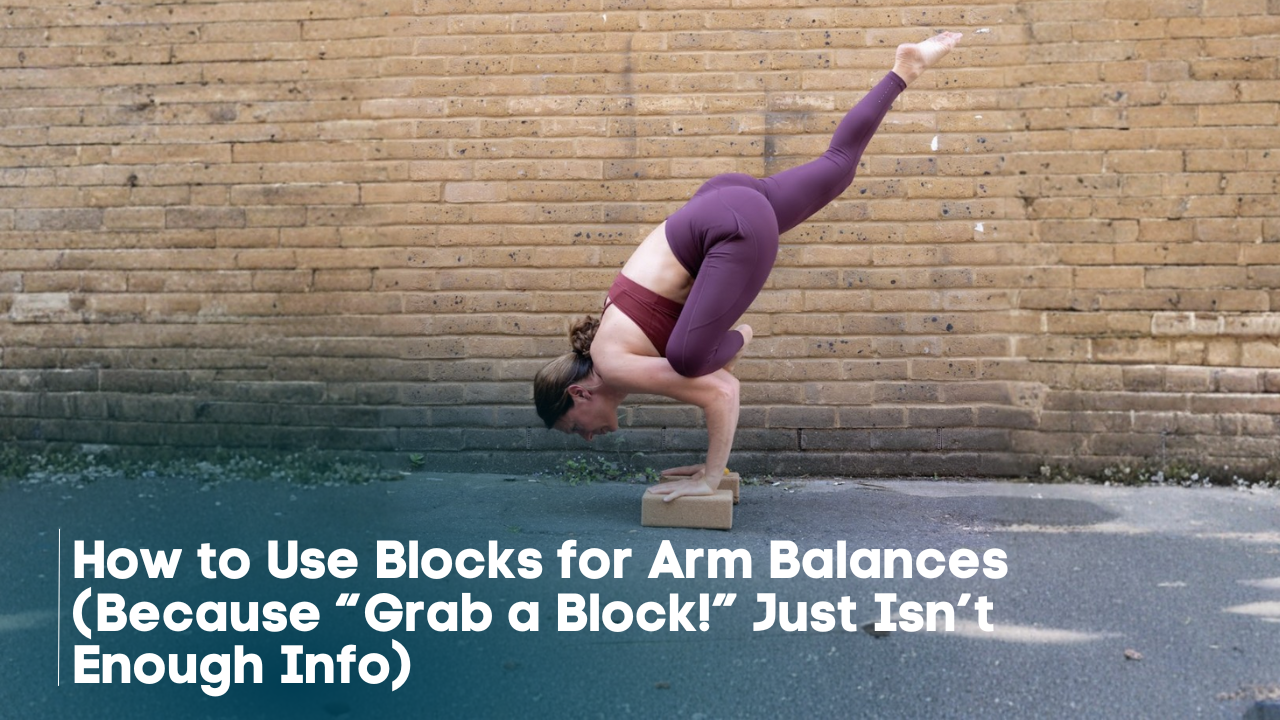
Ever been in yoga class, heard your teacher cue, “Crow pose…grab a block!” and instantly thought, "Okay but…why? And what exactly am I supposed to do with this rectangular mystery object?"
Same.
Blocks are one of the most useful tools in yoga (especially for arm balances) but most of us were never actually taught how to use them. We just get told to grab one, plop it somewhere near our mat, and hope it magically turns faceplant into flight.
But…you and I both know that’s not how it actually goes.
Used well, yoga blocks are total game changers...but only if you understand where they go and what they’re helping you do.
In this week’s blog article, I’m breaking down exactly how to use blocks for arm balances so you can stop guessing and finally start practicing with more ease and confidence (and fewer "wtf should I do with this thing?" moments).
The type of block you're using matters.
Before we even talk about where to put your block, let’s talk about the tool itself. Not all blocks are created equal...your choice here can make or break your arm balance practice.
First off, firm is your friend.
If you’ve got a soft, squishy block from the bargain bin, your wrists will likely sink into the block, and your hands won’t get the feedback they need for you to hold the pose. Arm balances are all about using your hands as a base for control, and a floppy block just won’t cut it. Ideally, you want a dense foam, cork, or wooden block. If all you’ve got is a soft one, a hardcover book stacked on top can work in a pinch.
Next: how to hold the block.
This is key. No lazy, floppy hands here. Your fingers should be spread wide and gripping the block like you’re palm-holding a basketball with one hand: thumb on one side, pinky on the other, and your entire hand actively engaged. Imagine trying to lift the block off the floor without it slipping out of your grip - that’s the kind of hand engagement we want.
Why does this matter? Because when you distribute weight through your fingers instead of dumping it all into your wrists, you get more control and less wrist pain. Basically, your block becomes an extension of your hand, not a wet sponge you’re somehow balancing on.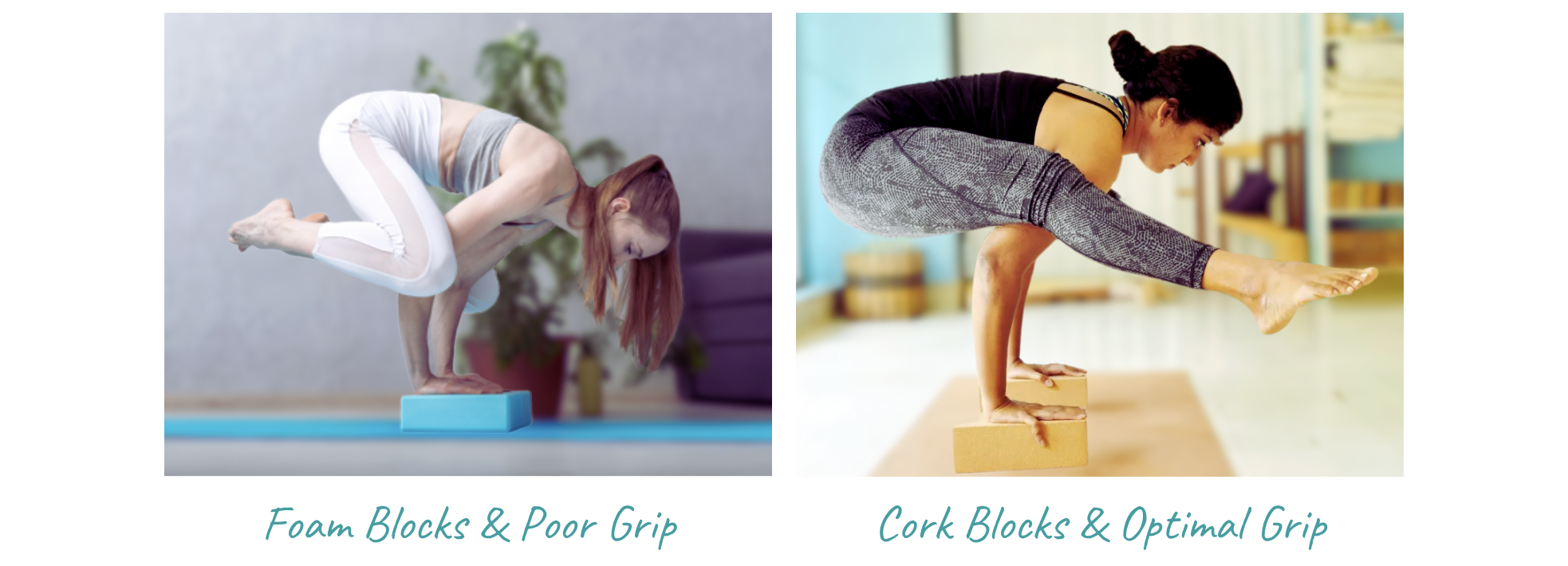
Blocks can change your arm balance practice in two main ways.
Blocks aren’t just random rectangles you throw under your hands. When you actually use them the right way, they can turn arm balances from “I’m-about-to-faceplant” chaos into something way more manageable.
They do two main things: lift the floor to meet you, and give you a safety net so you can stop panicking and start experimenting.
1. Lifting the Floor Up
Some arm balances feel impossible at first, not because you’re weak or you don't understand the mechanics, but because they’re insanely low to the ground. Take flying lizard, for example - when you're learning the pose, it can seem like you’re basically smooshed against the floor with zero space to move. It can feel awkward, uncomfortable, and, honestly, a little claustrophobic.
This is where blocks come in. Placing a block under each hand gives your body a little extra height away from the floor, providing you with a little more breathing room and space to actually explore the shape, practice the mechanics, and build confidence without making out with your mat.
2. Reducing Fear and Boosting Confidence
Fear is the number one thing that holds people back in arm balances - when we fear the faceplant, it can stop us from shifting far enough forward to be able to fly the pose. In such cases, blocks can act like a mini safety net. In crow pose, you can set a block or two stacked blocks a few inches in front of your face, and you instantly have a target to aim for. If you start to tip too far forward, your noggin has something to gently land on - it’s like training wheels for your upper body! Blocks used this way make arm balances less scary, so you can focus on technique instead of terror.
If you're ready to fly your crow pose, my signature program, Yogi Flight School, is exactly what you need! Check out all the details of Yogi Flight School here!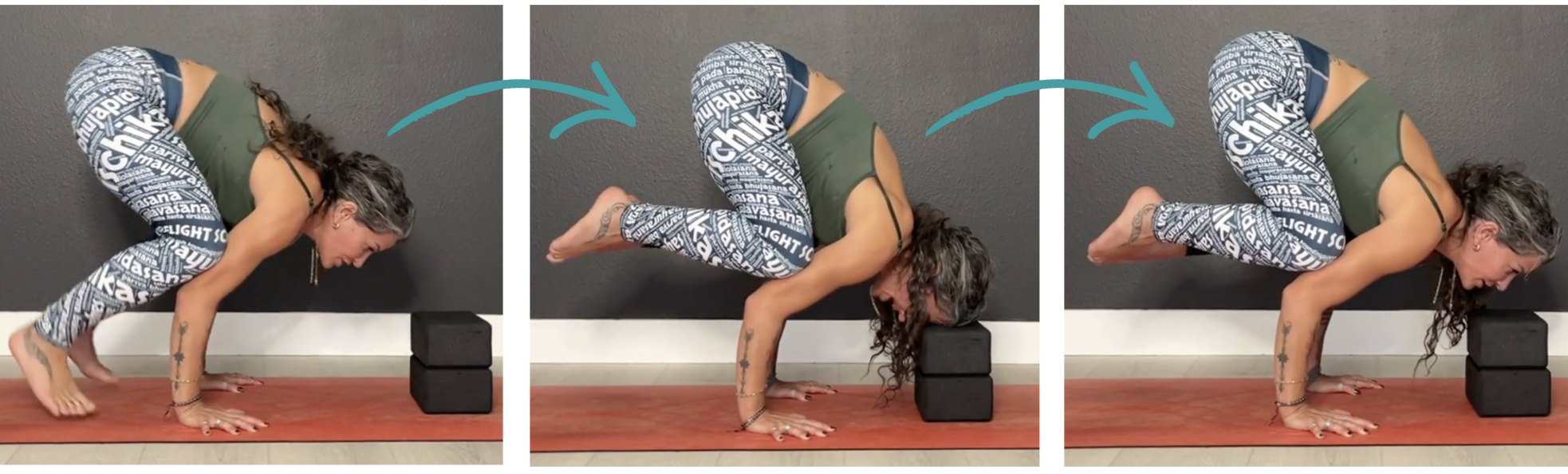
Put it all together and...
Blocks aren’t just props - they’re amazing tools that let you experiment with arm balances without the constant fear of faceplanting or the feeling of being pressed up against the floor with no wiggle room.
Start small. Use the blocks to get comfortable shifting your weight forward, stacking your elbows over your wrists, and feeling how your body balances. The blocks give you permission to explore the shape, make tiny adjustments, and gradually build strength and confidence.
Blocks are there to teach your body what safety and support feel like so you can eventually fly without them.
Want to see all of this in action?
Check out my YouTube video where I break all of this (and more) down!
